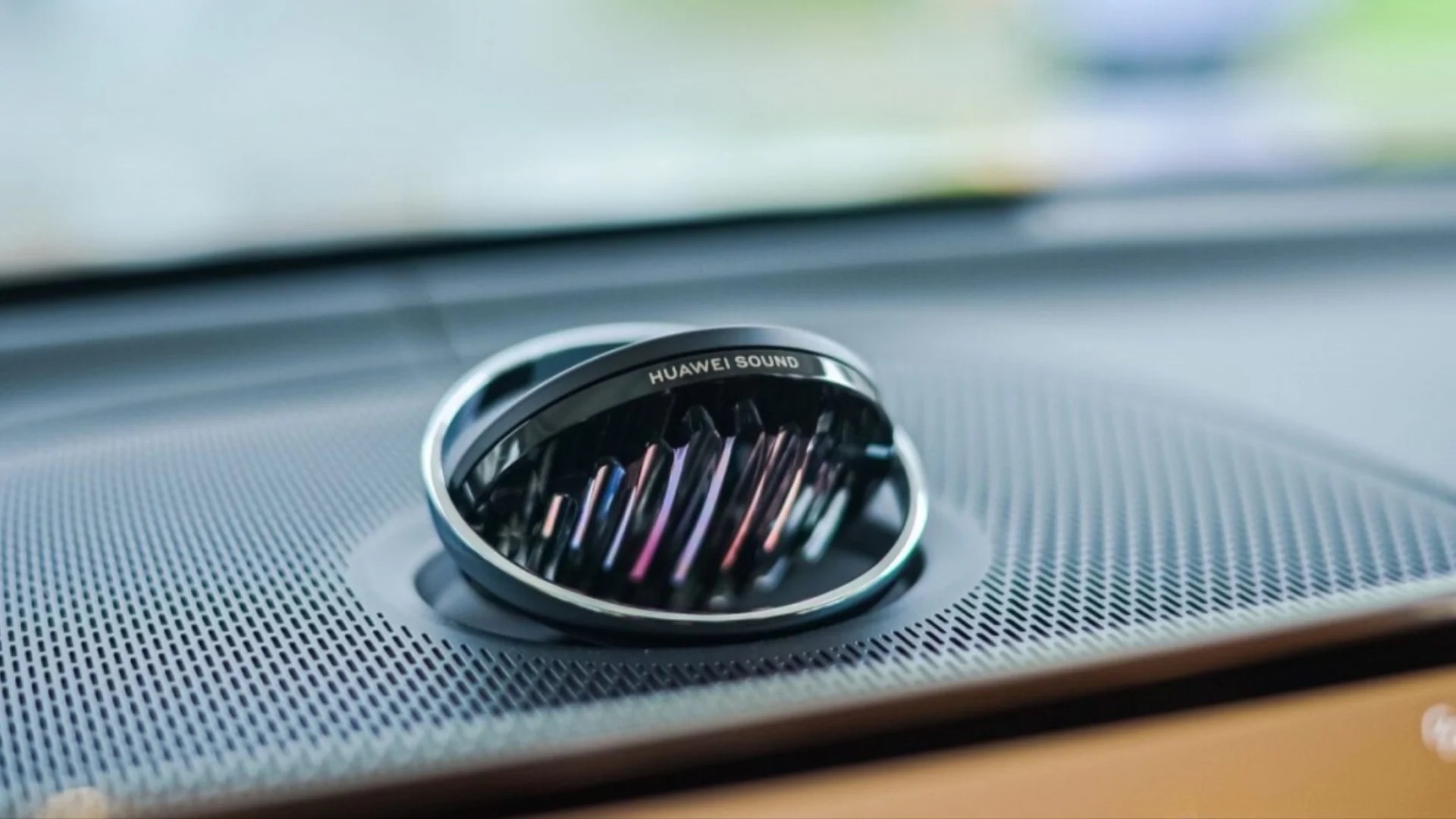
In an audacious leap forward in automotive entertainment, Huawei has unveiled a groundbreaking 43-speaker audio system designed for cars, promising a revolutionary listening experience unlike anything currently on the market. Most notably, this advanced system allows front and rear passengers to listen to completely different music at the same time — all without disturbing each other. It’s a feature that could redefine in-car audio and passenger comfort for the luxury vehicle segment.
A New Era for Car Audio
Automotive audio systems have evolved significantly over the past decade, moving from basic stereo setups to multi-channel surround sound experiences. But Huawei’s latest innovation is pushing the boundaries even further by integrating a colossal 43-speaker array within a vehicle cabin. This is more than just a numbers game; it’s a carefully engineered acoustic environment designed to provide crystal-clear sound quality while also offering unprecedented spatial control.
This massive speaker setup is part of Huawei’s “Sound Ultimate” series and will debut in the Maextro S800 — an ultra-luxury sedan that aims to blend cutting-edge technology with opulent design. What sets this system apart is not just its scale, but its ability to create separate sound zones within the cabin. In practical terms, this means that passengers sitting in the front can enjoy one audio source, while those in the rear can listen to something entirely different — all without audio bleed or cross-interference.

How It Works: Sound Zones and Isolation
The key technical breakthrough behind this system is what Huawei calls “ultra-surround acoustic design,” which enables the creation of independent sound zones inside the car. Achieving such separation is a significant challenge because vehicle interiors are small, enclosed spaces where sound waves bounce off surfaces like windows, seats, and door panels. Typically, this results in audio bleeding between seats, making it impossible to listen to different music streams simultaneously without interference.
Huawei’s system reportedly achieves about 30 decibels of sound isolation between the front and rear zones — an impressive feat in such a confined space. The system uses advanced “sound field control algorithms” and energy separation technologies that focus sound precisely where it’s intended. This means each speaker’s output is carefully controlled and tuned to minimize overlap and maintain a high degree of clarity and separation for every passenger.
Additionally, the system includes 10 overhead speakers and multiple exciters that add tactile feedback by syncing vibrations with music or video content, enhancing immersion through what Huawei calls “4D” effects. These vibrations simulate physical sensations aligned with audio cues, bringing an added dimension to the in-car experience, especially during movie watching or immersive soundscapes.
Power and Innovation in Design
Powering this colossal system are two amplifiers delivering a combined output of nearly 3,000 watts — an immense amount for a car audio setup. This level of power ensures that sound remains rich and dynamic at any volume, with deep bass and crystal-clear highs. To complement the speakers, Huawei has introduced novel components such as a “Tangential Force Woofer,” which differs from traditional woofers by being rotated 90 degrees to reduce panel resonance. This results in cleaner, more precise bass response without unwanted vibrations.
The system also features a “Dual-Diaphragm Subwoofer,” designed to leverage the car’s interior space for enhanced bass reproduction without the constraints of traditional enclosures. This innovative approach promises powerful low-frequency sound that fills the cabin with minimal distortion.
The audio experience is further enhanced by ambient lighting that syncs with the music, as well as a striking “Crystal Star-Ring Diffuser” that rises elegantly when occupants enter the vehicle. These elements are designed to create a fully immersive atmosphere that engages multiple senses simultaneously.
What This Means for Passengers
The practical implications for drivers and passengers are considerable. Imagine a family on a long road trip: the front seats could be tuned into a podcast or radio show, while the kids in the back enjoy their favorite playlist or a movie soundtrack. Alternatively, couples with differing musical tastes can coexist peacefully without audio conflict.
Beyond convenience, the 4D exciters and overhead channels bring a new level of engagement to in-car entertainment, making music, movies, and games feel more vivid and emotionally resonant. The ability to customize audio experiences for individual zones may also improve driver focus and comfort, reducing distractions and enhancing safety.
Challenges and Considerations
While Huawei’s claims are impressive, the system’s real-world performance will be closely scrutinized. Achieving perfect sound isolation in a car cabin is notoriously difficult due to acoustic reflections and the confined space. Even with advanced algorithms and hardware, factors such as open windows, seating positions, and interior materials can affect the listening experience.
Another potential challenge lies in the system’s complexity. With 43 speakers and multiple amplifiers, the setup requires precise calibration and ongoing tuning to maintain balance and fidelity. Additionally, the system’s high power consumption and heat generation must be managed carefully to avoid impacting vehicle performance or reliability.
There is also the question of content compatibility. For passengers to enjoy different audio streams simultaneously, the car’s media system must support multiple independent sources or complex channel mixing — something that many current streaming services and Bluetooth standards may not easily facilitate. User interfaces will need to be intuitive and user-friendly to allow seamless control over the multiple sound zones without confusion.
Finally, the cost factor cannot be ignored. Such a sophisticated and component-heavy system is likely to be expensive, potentially limiting its availability to flagship or ultra-luxury vehicles. Maintenance and servicing may also pose challenges given the system’s complexity.
Setting a New Benchmark in Automotive Luxury
Huawei’s 43-speaker, multi-zone in-car audio system is a bold statement of intent from a company increasingly positioning itself as a pioneer in automotive technology. By focusing on the interior experience — where sound, lighting, and tactile feedback converge — Huawei is helping redefine what luxury means in the electric vehicle era.
As the automotive industry shifts toward electric and autonomous vehicles, cabin experience is becoming a key battleground for differentiation. Huawei’s innovation may set a new standard for audio immersion and personalization, forcing other manufacturers and suppliers to rethink their strategies.
While it remains to be seen how this system performs in everyday use, the ambition and scale of Huawei’s approach signal exciting times ahead for in-car entertainment. For passengers, the future may well involve traveling in a mobile concert hall — where every seat can have its own soundtrack.