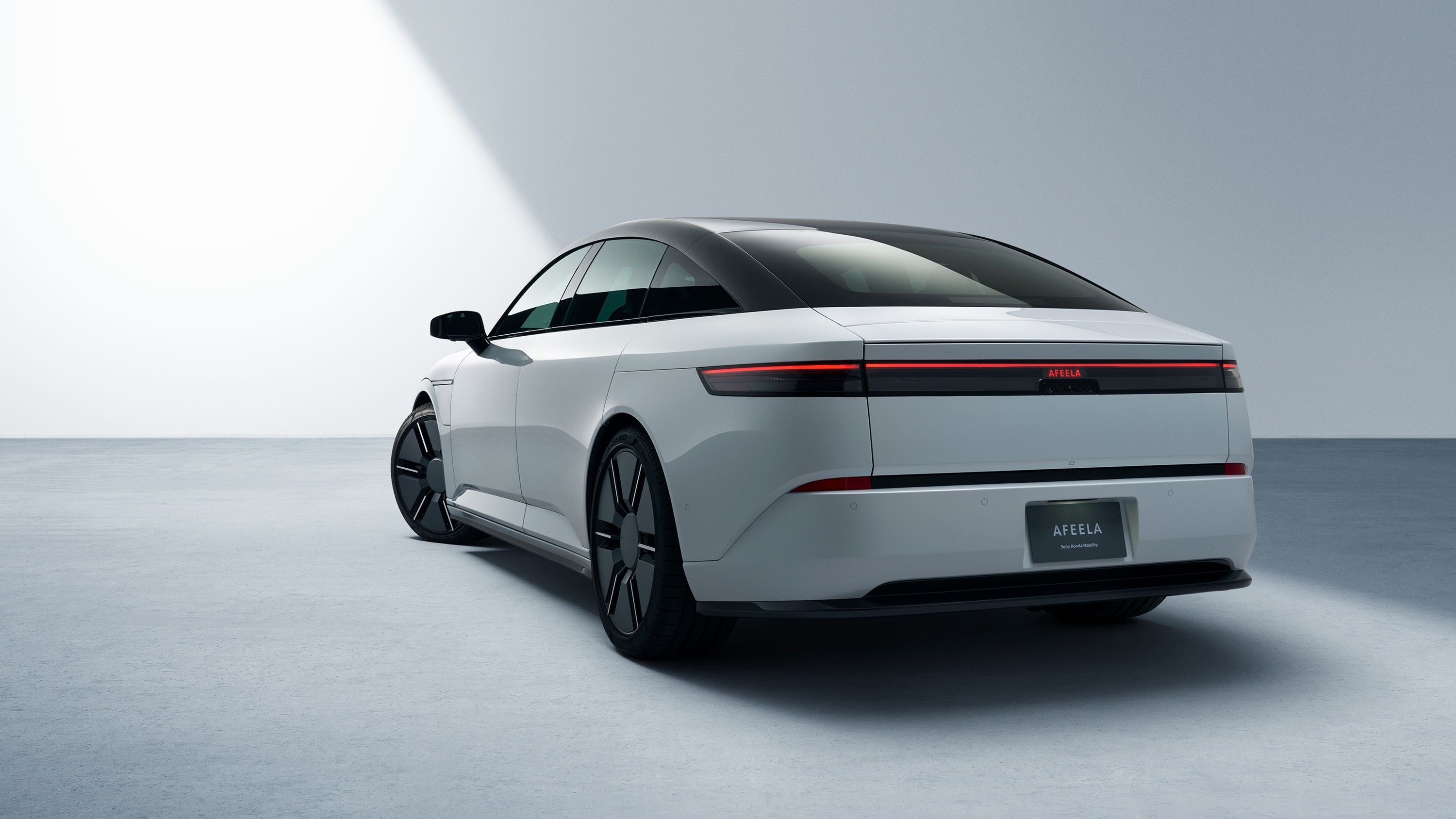
A new chapter in electric mobility began this month as the highly anticipated Afeela 1 Sedan, a joint creation of Sony and Honda, officially entered pre-production at Honda’s East Liberty plant in Ohio. The vehicle, which blends advanced EV engineering with cutting-edge digital technology, is scheduled to move into full-scale production in 2026.
This pre-production milestone is not just about early prototypes rolling off an assembly line—it marks the beginning of rigorous testing, refinement, and quality assurance ahead of Afeela’s entrance into the competitive premium EV market.
A Symbolic Partnership Comes to Life
The Afeela brand was introduced to the world as a result of a bold collaboration between two powerhouses in their respective industries: Sony, a global leader in electronics and entertainment, and Honda, an established force in automotive engineering. Their goal? To redefine what it means to drive in the digital age.
With Sony contributing technology, sensors, and user experience design, and Honda providing deep expertise in safety, manufacturing, and powertrain development, the Afeela 1 Sedan represents more than just a car—it’s a platform for the future of smart mobility.
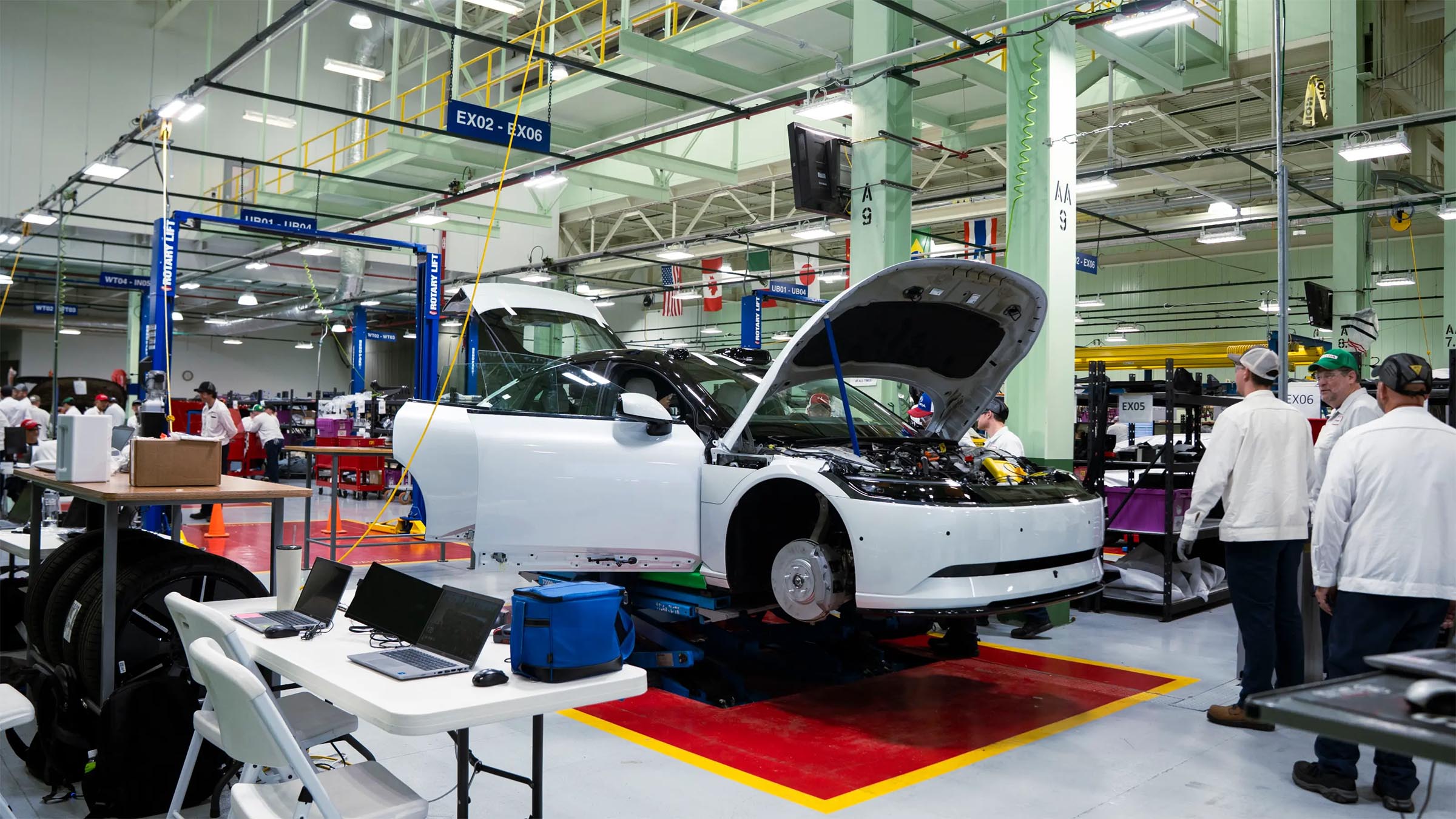
The decision to build it in Ohio reinforces Honda’s long-standing investment in the American manufacturing landscape. The East Liberty plant has produced vehicles for nearly four decades, but the Afeela project has brought with it a new wave of innovation, workforce training, and precision tooling.
Precision-Focused Pre-Production
During this pre-production phase, the focus is on precision, consistency, and validation. Engineers and technicians are assembling limited numbers of Afeela 1 units using specialized jigs and calibration equipment. These vehicles aren’t meant for sale—instead, they’ll be used for internal testing, safety validations, and final design checks.
Particular attention is being paid to the build quality. Panel gaps are measured within microns, paint finishes are examined under high-intensity lighting, and each component—from seats to sensors—is scrutinized. The body design features a seamless, minimalistic aesthetic that demands near-perfect alignment between parts—making early-stage production particularly challenging.
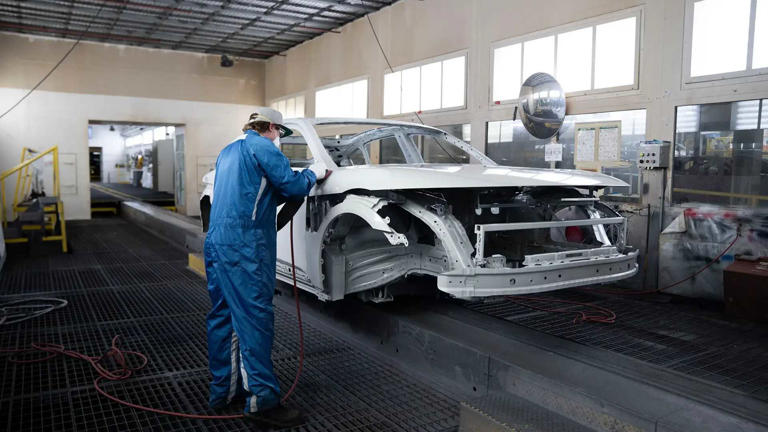
Even the paint application follows a meticulous multi-step polishing and inspection process, designed to produce a glossy, uniform finish free from visual distractions like molding seams or trim breaks.
A Technological Powerhouse on Wheels
The Afeela 1 is not just another electric vehicle—it’s a showcase of how digital technology and automotive design can merge.
The all-wheel-drive sedan will be powered by a dual-motor setup with an estimated range of around 300 miles on a single charge, thanks to its high-capacity 91 kWh battery. But what sets the Afeela apart is its digital core.
Inside, the vehicle boasts an expansive suite of screens across the dashboard, including infotainment, driver assistance, and passenger-facing displays. The system will support immersive audio, cloud connectivity, and real-time software updates, with Sony’s entertainment ecosystem deeply embedded into the user experience.
Most notably, the Afeela 1 includes a semi-autonomous driving system powered by dozens of cameras, radar sensors, and lidar units, offering advanced driver assistance at launch, with the potential for higher-level autonomy as regulatory conditions evolve.
Built for the Future, Delivered with Experience
Honda’s Ohio facility has undergone upgrades to accommodate the Afeela program. From robotics to employee training, the factory is being retooled to handle the demands of manufacturing a high-tech, software-defined vehicle.
This includes the creation of a dedicated inspection area known as the “Quality Gate,” a Sony-led checkpoint that adds an extra layer of scrutiny after traditional quality control. Here, engineers will validate hardware-software integration, connectivity performance, and visual design uniformity before any vehicles reach the public.
As part of its pre-production rollout, Afeela is also preparing backend systems, charging network integration, and remote diagnostic capabilities—ensuring the ownership experience matches the car’s futuristic appeal.
Market Strategy and Expectations
The Afeela 1 Sedan will be offered in two premium trims when it launches: a Signature model expected to arrive in mid-2026, and a slightly more affordable Origin trim launching in 2027. Both trims will include a suite of standard digital services, including voice-based AI assistance, connected navigation, and media subscriptions.
Pricing for the sedan is expected to start just under $90,000, putting it in the same league as high-end EVs from Tesla, BMW, and Lucid. But Afeela is betting that its deep integration of entertainment, smart services, and Sony brand prestige will carve out a unique space in the growing luxury EV segment.
Pre-orders have already opened in select U.S. markets, with early adopters securing their place in line via fully refundable deposits. Additional availability is expected to expand nationally closer to the production start date.
Looking Ahead
The transition from prototype to production is one of the most critical phases in any automotive project, and the Afeela 1 has now entered that make-or-break window. For Sony Honda Mobility, the success of this vehicle will determine the future of their brand—and the credibility of their vision for the smart car of tomorrow.
With pre-production now underway and testing ramping up, the automotive world will be watching closely. If all goes according to plan, the Afeela 1 Sedan could become one of the defining EV launches of the decade—uniting Japanese craftsmanship, American manufacturing, and digital innovation in a single, stunning package.