For nearly a decade, millions of people around the world have walked through streets, parks, and public spaces while playing the augmented reality mobile game Pokémon Go. Players search for virtual creatures, visit digital landmarks, and complete challenges that require them to explore real-world environments. But behind the entertainment, experts say this global gaming phenomenon may have quietly contributed to an unexpected technological breakthrough: helping train the navigation systems used by delivery robots.
One of the game’s core features involves locating and scanning real-world landmarks, statues, buildings, and public spaces that appear as points of interest within the game. When players interact with these locations, their smartphones capture spatial and visual data about the environment.
Over time, these interactions have created a vast crowdsourced database of real-world locations. The collected information includes images, geographic coordinates, and three-dimensional spatial scans of thousands of public areas. This massive dataset has become useful far beyond gaming, particularly for researchers and engineers working on artificial intelligence and robotics.
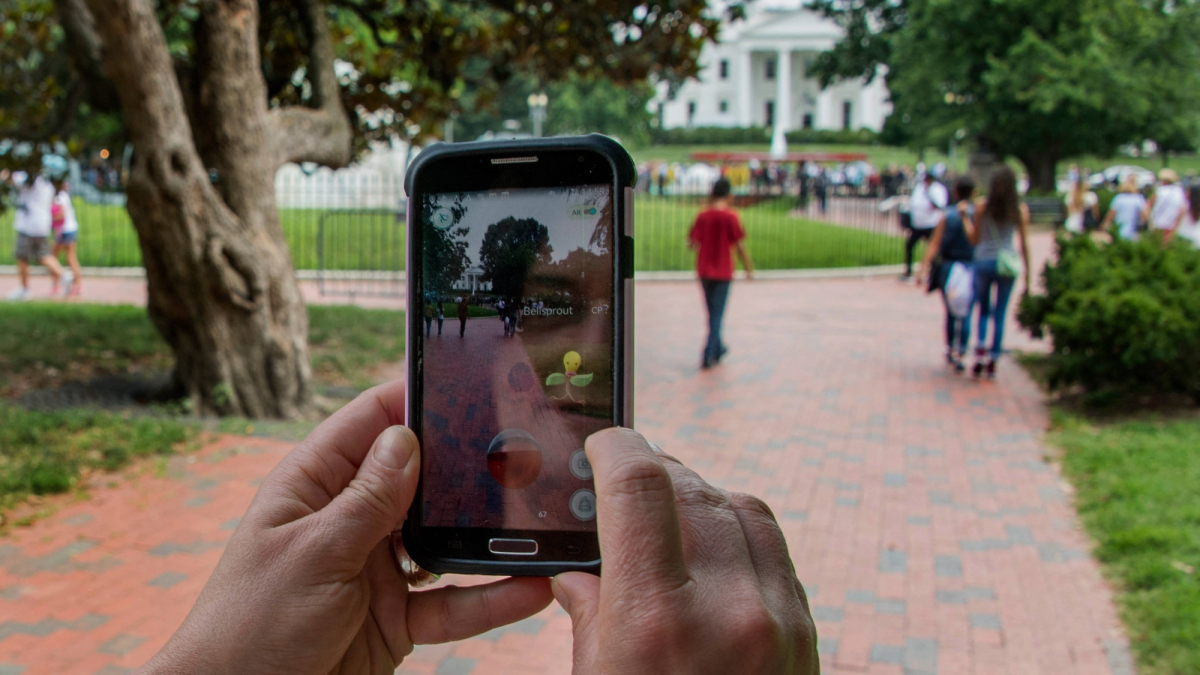
Developers in the robotics industry are increasingly exploring how such real-world mapping data can be used to train machines to navigate complex environments. Delivery robots, which are designed to transport food, groceries, or small packages across short distances, must be able to move safely through sidewalks, building entrances, pedestrian paths, and urban obstacles. To do this effectively, they need detailed information about their surroundings.
Traditional navigation tools such as GPS provide general location data but are often not precise enough for machines operating in crowded urban spaces. For example, a robot delivering a pizza to an apartment building must be able to identify specific pathways, doorways, or entrances rather than simply reaching a street address. This is where visual positioning systems become important.
Visual positioning technology allows machines to recognize landmarks and physical features in their environment, much like humans use familiar buildings or street corners to orient themselves. By comparing real-world surroundings with previously mapped images, robots can determine their precise location and navigate more effectively.
The crowdsourced mapping created through Pokémon Go has helped build exactly this type of visual database. As players scan locations in the game or interact with augmented reality features, they contribute additional environmental data that improves digital representations of real-world spaces. Over time, these scans create detailed three-dimensional models that can help machines better understand the world around them.
Experts say the scale of this data collection is unprecedented. Unlike traditional mapping projects that rely on specialized survey teams or expensive equipment, Pokémon Go collects spatial information through the everyday activities of millions of players. Each time a player explores a new location or scans a landmark, they add another piece to a growing global map.
For companies developing delivery robots, this information can be extremely valuable. Robots trained using richer environmental data are better able to recognize pathways, detect obstacles, and determine safe routes through pedestrian areas. This could significantly improve the efficiency and reliability of autonomous delivery services.
Several technology companies are currently experimenting with small robots capable of delivering food orders or groceries across short distances in cities and university campuses. These machines typically travel along sidewalks and pedestrian paths, navigating around people, bicycles, and other obstacles. Accurate mapping and environmental awareness are essential for them to operate safely.
By learning from vast datasets of real-world imagery and spatial information, robots can gradually improve their ability to interpret surroundings. The more varied and detailed the data, the better the artificial intelligence models become at identifying different types of terrain, structures, and urban layouts.
What makes this development particularly interesting is that most Pokémon Go players are unaware that their gameplay may contribute to such technological progress. For them, the experience remains focused on catching Pokémon, completing quests, and exploring new places. Yet the cumulative effect of millions of players interacting with real-world locations has created a valuable training resource for emerging technologies.
The phenomenon also illustrates the growing intersection between entertainment platforms and advanced technological research. Video games are increasingly being used to generate data that can train artificial intelligence systems, whether through simulated environments or real-world interactions. In the case of Pokémon Go, the game’s augmented reality design naturally encourages users to map and scan the physical world.
At the same time, the use of crowdsourced data raises important questions about transparency and digital privacy. While companies generally state that collected data is anonymized and used to improve services, experts argue that users should have clearer awareness of how their interactions contribute to broader technological ecosystems.
Despite these concerns, the potential benefits for robotics and automation are substantial. Delivery robots are expected to play a growing role in urban logistics as cities look for faster and more efficient ways to transport goods. Autonomous machines could reduce delivery times, cut costs for businesses, and limit traffic congestion caused by traditional delivery vehicles.
For such systems to become widely adopted, however, robots must be able to navigate real-world environments with a high level of accuracy and safety. The type of large-scale mapping produced through Pokémon Go gameplay may help accelerate that progress.
In an unexpected twist, a mobile game built around catching fictional creatures may end up shaping the future of real-world technology. As augmented reality platforms continue to expand, the data generated by everyday users could quietly power innovations far beyond gaming—including the robots that may one day deliver dinner to our doors.