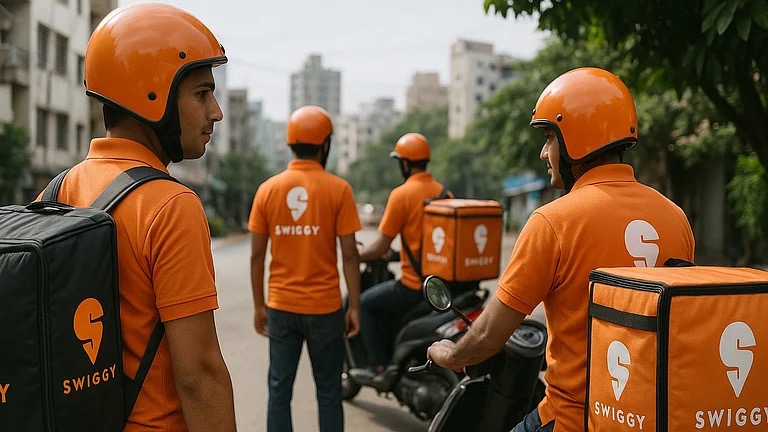
Swiggy has crossed a significant milestone in its corporate restructuring journey, with domestic ownership rising to 50.24%, strengthening its efforts to qualify as an Indian-Owned and Controlled Company (IOCC). The development marks an important step for the food delivery and quick commerce major as it seeks greater operational flexibility, particularly for its rapidly expanding Instamart business, which increasingly relies on inventory-led operations.
The increase in domestic shareholding comes just weeks after Swiggy’s shareholders voted against a set of governance changes that were proposed to support the company’s transition to an IOCC structure. While the rejection highlighted concerns over aspects of the proposed governance framework, the latest ownership milestone signals that the company remains committed to achieving its long-term strategic objective through a combination of ownership restructuring and continued stakeholder engagement.
Crossing the 50% domestic ownership mark is considered a crucial benchmark for companies seeking recognition as Indian-owned and controlled under the country’s foreign investment regulations. However, ownership alone does not automatically qualify a company for IOCC status. Regulatory authorities also assess factors such as board composition, voting rights, management control, and decision-making authority to determine whether effective control rests with Indian entities.
For Swiggy, the transition carries significant strategic importance. As the company expands beyond food delivery into quick commerce, logistics, and other digital services, it is looking for greater flexibility in operating business models that involve direct ownership of inventory. Such flexibility could help the company optimize its supply chain, improve operational efficiency, and enhance customer experience across its fast-growing businesses.
The announcement comes at a time when India’s quick commerce sector is witnessing intense competition. Companies are racing to deliver groceries, household essentials, electronics, personal care products, and other everyday items within minutes, requiring extensive investments in warehouses, dark stores, logistics infrastructure, and inventory management systems.
Unlike traditional marketplace models, inventory-led businesses allow companies to own or directly manage products before selling them to customers. This model enables tighter control over stock availability, product quality, pricing, and delivery timelines. However, inventory-based operations are governed by different regulatory frameworks, making corporate ownership structures particularly important for companies operating in this space.
Swiggy’s Instamart platform has emerged as one of its fastest-growing businesses over the past few years. Initially launched as a grocery delivery service, Instamart has expanded its product offerings to include fresh produce, packaged food, beverages, electronics, home essentials, beauty products, toys, and lifestyle items. The service has benefited from growing consumer demand for convenience and rapid deliveries, particularly in urban markets.
The company’s push towards an IOCC structure is widely viewed as an effort to strengthen Instamart’s long-term growth strategy. Greater regulatory flexibility could allow Swiggy to streamline procurement, warehousing, and inventory management while responding more effectively to evolving customer preferences.
The recent shareholder vote, however, demonstrated that restructuring a large technology company involves balancing multiple interests. The proposed governance changes linked to the IOCC transition reportedly sought to modify aspects of board oversight and decision-making processes to align with regulatory requirements. Shareholders ultimately chose not to approve those proposals, reflecting the importance investors place on governance standards, transparency, and shareholder rights.
Despite that setback, Swiggy’s ability to increase domestic ownership above 50% indicates continued progress in reshaping its ownership profile. Analysts believe the company is likely to continue discussions with investors and regulators to identify governance arrangements that satisfy regulatory requirements while maintaining investor confidence.
The move also reflects broader trends within India’s technology sector. As startups mature into large publicly traded companies, they face increasingly complex regulatory and governance considerations. Many companies are evaluating their ownership structures to ensure they remain well-positioned for future expansion while complying with evolving investment regulations.
Domestic institutional investors have also become increasingly influential in India’s startup ecosystem. Mutual funds, insurance companies, pension funds, and other local investors now hold larger stakes in technology companies than in previous years. This shift has contributed to rising domestic ownership across several high-profile firms and reduced dependence on overseas capital.
For Swiggy, stronger domestic ownership could also improve strategic decision-making by aligning the company’s structure more closely with India’s regulatory environment. The food delivery and quick commerce markets continue to evolve rapidly, requiring companies to make substantial investments in technology, artificial intelligence, logistics networks, customer acquisition, and operational efficiency.
Quick commerce, in particular, has emerged as one of the most competitive segments in India’s digital economy. Consumers increasingly expect deliveries within 10 to 20 minutes, placing pressure on companies to optimize every stage of the supply chain. Inventory management, demand forecasting, warehouse placement, and last-mile delivery have become critical competitive differentiators.
Greater flexibility under an IOCC framework could support Swiggy’s efforts to refine these operations and improve profitability over the long term. By maintaining better control over inventory and fulfillment, the company may be able to reduce delivery times, improve product availability, and manage operating costs more effectively.
Industry experts note that Swiggy’s ownership milestone is significant not only for the company but also for the broader startup ecosystem. It illustrates how Indian technology firms are adapting their corporate structures to accommodate changing business models while responding to regulatory developments. As digital commerce expands into new categories, ownership and governance frameworks are becoming increasingly important components of long-term business strategy.
Looking ahead, Swiggy is expected to continue working towards completing its IOCC transition. This will likely involve further discussions with shareholders, regulators, and other stakeholders to establish governance mechanisms that meet the legal requirements for Indian ownership and control without compromising corporate governance standards.
The company’s management has repeatedly emphasized its commitment to sustainable growth across all business segments. Food delivery remains a core pillar of Swiggy’s operations, while Instamart continues to drive diversification and capture growing demand for instant commerce. Achieving greater operational flexibility could strengthen the company’s ability to compete in both segments while supporting future innovation.
Although challenges remain before Swiggy can fully achieve IOCC status, crossing the 50.24% domestic ownership threshold represents an important milestone in that journey. It demonstrates the company’s determination to align its ownership structure with its long-term strategic ambitions while positioning itself for the next phase of growth in India’s rapidly evolving digital commerce landscape.