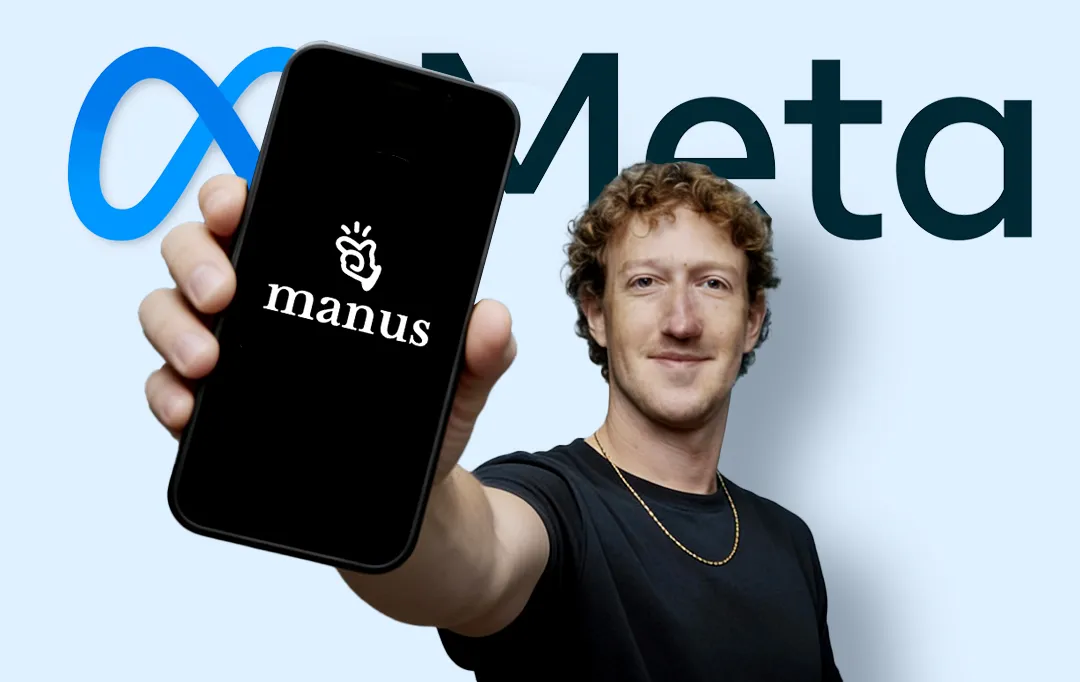
Meta Platforms Inc. is set to acquire Manus, a fast-rising artificial intelligence startup founded by Chinese entrepreneurs, in a move aimed at significantly strengthening its capabilities in advanced AI and autonomous digital agents. The deal, reportedly valued in the multibillion-dollar range, marks one of Meta’s most ambitious bets yet as it races to stay ahead in the intensifying global competition for artificial intelligence leadership.
The acquisition underscores Meta CEO Mark Zuckerberg’s determination to position the company at the forefront of next-generation AI systems that go beyond chatbots and image generation. Instead, Meta is focusing on intelligent agents capable of executing complex, multi-step tasks independently—technology that could fundamentally reshape how users interact with digital platforms.
What Manus Brings to Meta
Manus has gained industry attention for building general-purpose AI agents designed to act rather than merely respond. These systems can conduct research, analyse large volumes of data, write detailed reports, and complete workflows with minimal human guidance. Unlike conventional conversational AI, Manus’s technology is geared toward automation at scale, targeting both professional and enterprise use cases.
Founded in China and later headquartered in Singapore, Manus reflects a new wave of globally oriented AI startups that blend engineering talent from Asia with international market ambitions. The company has seen rapid growth since launching its flagship AI agent earlier this year, attracting enterprise clients and individual users seeking advanced automation tools.
For Meta, Manus’s technology represents a shortcut to capabilities that would otherwise take years to build internally. By integrating Manus’s AI agents into its ecosystem, Meta aims to enhance products across Facebook, Instagram, WhatsApp, and its broader Meta AI platform.
A Strategic AI Power Play
The acquisition fits squarely into Meta’s broader strategy of making artificial intelligence the core engine of its future growth. Over the past two years, the company has poured billions into AI infrastructure, research talent, and large-scale computing power. While Meta has made strides in open-source AI models and consumer-facing tools, the purchase of Manus signals a sharper focus on autonomous systems that can perform meaningful work.
These advanced agents could be deployed in several ways: assisting businesses with marketing analysis, automating customer support, managing content creation pipelines, or even acting as personal digital assistants capable of executing tasks across apps and services. Industry analysts see autonomous AI agents as the next major frontier, potentially unlocking new revenue streams and redefining productivity in the digital economy.
By acquiring Manus, Meta positions itself more directly against rivals such as Google, Microsoft, and emerging AI-focused companies that are also investing heavily in agent-based systems.
Deal Structure and Integration Plans
While Meta has not publicly disclosed the full financial terms, the acquisition is expected to rank among the company’s largest strategic deals. Manus will reportedly continue operating its existing products in the near term, ensuring continuity for its user base, while gradually integrating into Meta’s AI division.
Key members of Manus’s leadership and engineering teams are expected to join Meta, bolstering its AI talent pool. Their expertise in building autonomous agents is likely to play a central role in shaping Meta’s future AI roadmap.
Meta has indicated that the integration will focus on maintaining strong data governance and security standards, particularly given the startup’s cross-border origins. The company has emphasised that all AI development and deployment will comply with applicable regulations in markets where Meta operates.
Geopolitical and Regulatory Dimensions
The acquisition also carries geopolitical significance. As tensions persist between major global powers over technology leadership, Meta’s purchase of a Chinese-founded startup highlights the increasingly complex nature of innovation in a globalised AI ecosystem.
Manus’s relocation to Singapore prior to the acquisition reflects a broader trend among AI startups seeking neutral jurisdictions that allow them to operate internationally while navigating regulatory sensitivities. Even so, experts expect the deal to draw scrutiny from regulators, particularly around data usage, intellectual property, and national security considerations.
Meta has sought to pre-empt such concerns by stressing that Manus’s operations and data practices will align with global compliance frameworks under Meta’s oversight.
Why This Matters for Meta’s Future
For Meta, the stakes are high. The company is betting that advanced AI will not only improve existing products but also open entirely new categories of services. Autonomous agents could transform how businesses advertise, how creators produce content, and how users manage daily digital tasks.
The acquisition also reflects a shift in Meta’s acquisition strategy. Rather than focusing primarily on social platforms or hardware, Meta is increasingly targeting foundational technologies that could define the next decade of computing.
If successful, the Manus deal could accelerate Meta’s transition from a social media-centric company into a broader AI-driven technology platform. However, execution risks remain significant. Integrating cutting-edge AI into consumer products at global scale poses challenges around reliability, ethics, and public trust.
Looking Ahead
As Meta finalises the acquisition, industry watchers will closely monitor how quickly Manus’s technology is woven into Meta’s platforms and whether it delivers on its promise of truly autonomous AI agents. The move sends a clear signal that Meta intends to compete aggressively in the race to define the future of artificial intelligence.
In a sector where speed and innovation often determine winners, Meta’s bet on Manus may prove pivotal—either as a breakthrough that reshapes its AI ambitions or as a high-risk gamble in one of the most competitive technology battles of the decade.