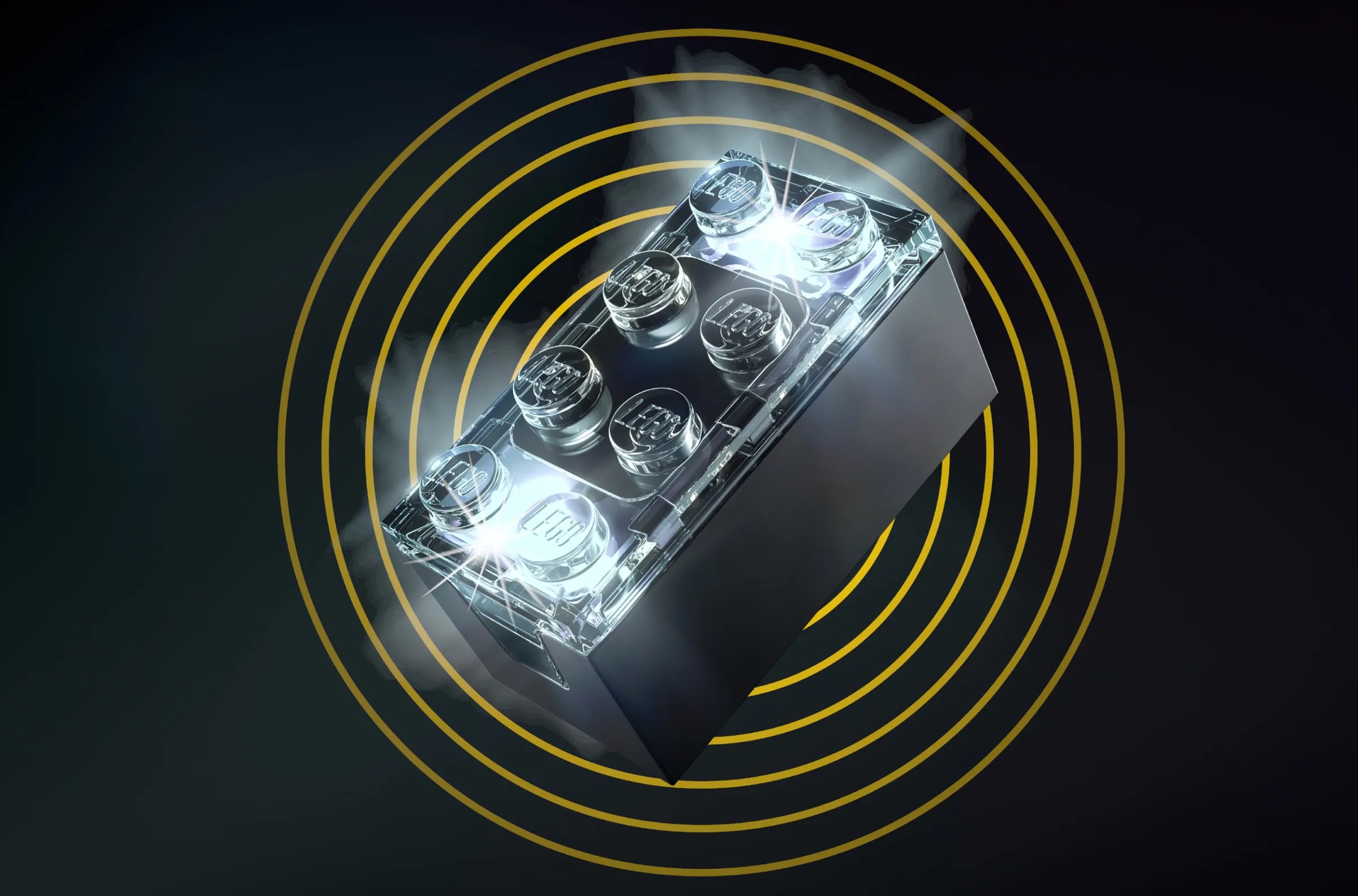
Lego has unveiled what it describes as the most important transformation of its iconic brick system in half a century, announcing the launch of the Smart Brick, a new technology-infused building element designed to bring Lego creations to life without relying on screens.
Revealed at a major global tech showcase, the Smart Brick looks nearly identical to a classic Lego brick but contains embedded electronics that allow physical builds to respond to movement, orientation, and interaction. Lego executives say the innovation represents the biggest shift in the company’s play philosophy since the introduction of the Lego minifigure in the late 1970s.
The Smart Brick forms the foundation of a new ecosystem Lego calls Smart Play, a platform that blends traditional hands-on construction with responsive sound, light, and motion-based feedback. Unlike earlier Lego experiments that depended heavily on smartphone apps or tablets, Smart Play is designed to function entirely within the physical world of bricks and minifigures.
“At its core, this is still Lego,” the company said during the announcement. “Children build, imagine, and tell stories with their hands. The difference is that now their creations can react back.”
A Brick That Responds to Play
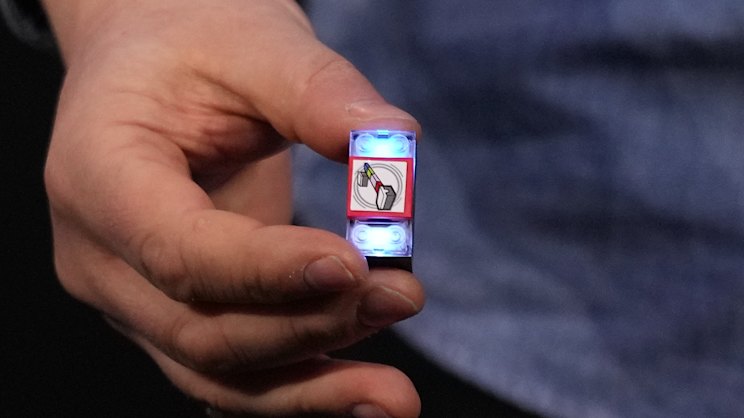
Inside the Smart Brick is a tiny custom-designed chip, along with motion and light sensors, orientation detection, and a small speaker. When placed into a model, the brick can detect how it is being used and respond accordingly. A spaceship swooped through the air may emit engine sounds. A vehicle pushed across the floor could growl or accelerate. A character moved into a specific location might trigger dialogue or ambient effects.
Lego emphasized that these reactions are driven by physical play rather than button presses or menus. Children do not need to look at a screen or follow instructions from an app. Instead, the Smart Brick interprets real-world actions, reinforcing imaginative storytelling and freeform experimentation.
The system also includes flat tiles known as Smart Tags and specially designed Smart Minifigures. These elements help the Smart Brick understand context—whether a build represents a battlefield, a race track, or a peaceful city scene—and adjust its responses accordingly.
Screen-Free Technology in a Digital Age
The announcement reflects Lego’s long-standing tension with digital technology. While the company has experimented with app-connected toys and interactive figures in recent years, executives acknowledged that many parents and educators remain concerned about excessive screen time.
The Smart Brick is intended as a compromise: technologically advanced but physically grounded. Lego believes this approach preserves what has made its bricks enduring for decades while acknowledging that modern children expect toys to be more dynamic and responsive.
“This is not about turning Lego into a video game,” the company said. “It’s about enhancing imagination, not replacing it.”
A Strategic Shift for the Brand
Industry analysts see the Smart Brick as a strategic move to future-proof Lego’s core product. The toy market has become increasingly competitive, with children drawn to digital games, streaming content, and interactive media. By embedding intelligence directly into the brick itself, Lego is attempting to blur the line between traditional toys and interactive entertainment—without abandoning its identity.
Lego described the Smart Brick as compatible with existing building systems, meaning it can be integrated into standard Lego sets. However, the full Smart Play experience will initially be available only in specially designed sets that include the new components.
The first wave of Smart Play products will focus on story-driven themes, where sound and interaction can enhance narrative play. Lego confirmed that licensed franchises will play a key role in showcasing the technology, though it also plans to expand the system into original Lego themes over time.

Mixed Excitement Among Fans
Reaction from Lego fans and collectors has been enthusiastic but cautious. Many welcomed the company’s screen-free approach and praised the effort to keep the building experience tactile. Others raised questions about durability, battery life, pricing, and long-term support for the Smart Play ecosystem.
Some adult fans also expressed concern that technology-driven elements could limit creativity if not carefully designed. Lego responded by stressing that the Smart Brick is optional and that traditional bricks remain at the heart of the system.
“You can still build exactly the way you always have,” the company said. “The Smart Brick adds a layer—it doesn’t take anything away.”
Looking Ahead
Lego plans to release its first Smart Play sets globally later this year, with additional themes and expansions expected in 2027. The company also hinted that future updates could allow Smart Bricks to interact with one another, creating more complex behaviors in large builds.
Whether the Smart Brick becomes a permanent fixture of Lego play or a niche innovation will depend on how well it balances technology with simplicity. Lego’s history includes both wildly successful reinventions and experiments that quietly faded away.
For now, the Smart Brick stands as a bold statement from a company that has built its reputation on consistency and tradition. By reimagining what a single brick can do, Lego is betting that the future of play lies not in replacing imagination with technology, but in letting technology quietly support it.
If the Smart Brick succeeds, Lego may once again prove that even the simplest ideas can evolve—one brick at a time.