


Starlink Plans to Lower Satellite Orbit to Enhance Safety in 2026
Starlink, the satellite internet division of SpaceX, has announced plans to lower the operating altitude of thousands of its satellites in 2026, a move aimed at improving safety and sustainability in increasingly crowded low Earth orbit (LEO).
The company said it will gradually reduce the orbital height of a large portion of its existing fleet from about 550 kilometers above Earth to roughly 480 kilometers. This adjustment is designed to reduce the risk of collisions with other satellites and space debris, a growing concern as the number of spacecraft in LEO rises sharply.
Lowering the orbit will allow satellites that experience failures or reach the end of their operational life to reenter Earth’s atmosphere more quickly. At lower altitudes, atmospheric drag is stronger, causing defunct satellites to burn up naturally in a matter of months rather than remaining in orbit for years. This significantly reduces the likelihood of long-term debris buildup, which could threaten other spacecraft and critical space-based services.

Starlink officials said the decision was influenced by recent industry-wide discussions on space safety and traffic management, as well as internal reviews of satellite performance. The move also reflects growing pressure on major satellite operators to demonstrate responsible behavior as mega-constellations expand.
The change is not expected to disrupt Starlink’s global broadband service. In fact, operating at a lower altitude may slightly improve performance for users by reducing signal latency. However, the company emphasized that safety and sustainability, rather than performance gains, are the primary goals of the initiative.
As governments and private companies plan thousands of additional launches in the coming years, Starlink’s orbit-lowering strategy highlights a broader shift toward proactive debris mitigation. Industry experts view the move as a potential model for how large satellite networks can balance rapid growth with the long-term protection of Earth’s orbital environment.
Trump Blocks Chip Deal, Citing Security and China-Related Concerns
U.S. President Donald Trump has blocked a semiconductor deal, citing national security risks and concerns over potential links to China, marking a renewed hardline stance on foreign involvement in sensitive technology sectors.
In an executive order issued this week, Trump prohibited the acquisition of certain U.S. semiconductor and photonics assets by a company deemed to have indirect Chinese control. The decision followed a national security review that concluded the transaction could expose critical technologies to foreign influence and create vulnerabilities in the U.S. defense and industrial base. The order requires the buyer to divest the assets within a fixed period.
The administration said the deal involved technologies with potential military and strategic applications, making them unsuitable for ownership or control by entities with ties to China. While specific technical risks were not publicly detailed, officials emphasized that the decision was based on intelligence assessments and interagency reviews focused on long-term security implications.

The move reflects broader U.S. efforts to curb China’s access to advanced semiconductor technologies, which are seen as essential to artificial intelligence, telecommunications, and modern weapons systems. Washington has increasingly used regulatory reviews and executive authority to scrutinize cross-border transactions involving chips, data, and critical infrastructure.
Supporters of the decision argue that stronger oversight is necessary to protect intellectual property and prevent strategic technologies from being leveraged against U.S. interests. Critics, however, warn that blocking deals retroactively could unsettle investors and add uncertainty to an already strained global semiconductor supply chain.
The blocked transaction underscores the central role of chips in global geopolitics and the deepening technology rivalry between the United States and China. As competition intensifies, analysts expect continued scrutiny of foreign investments in U.S. tech firms, with national security considerations increasingly outweighing commercial interests.
China AI Chipmaker Biren Soars in Hong Kong Debut as IPO Wave Builds
China’s artificial intelligence chipmaker Biren Technology delivered a strong market debut in Hong Kong on Friday, with its shares surging sharply on the first day of trading, underscoring renewed investor appetite for high-growth technology listings and fueling expectations of a broader IPO wave in the city.
Biren, which designs high-performance graphics processing units and data-center chips for AI workloads, raised roughly $700 million in its initial public offering. The stock opened well above its issue price and continued to climb as heavy buying from both retail and institutional investors pushed valuations higher. The enthusiastic response reflected confidence in the company’s long-term growth prospects and China’s drive to develop domestic alternatives to foreign semiconductor technology.
Demand for the offering was especially strong among retail investors, signaling growing optimism toward mainland tech firms after a period of subdued market sentiment. Analysts said Biren’s debut marked one of the most successful technology listings in Hong Kong in recent years and could encourage other Chinese chipmakers and AI companies to pursue public offerings.
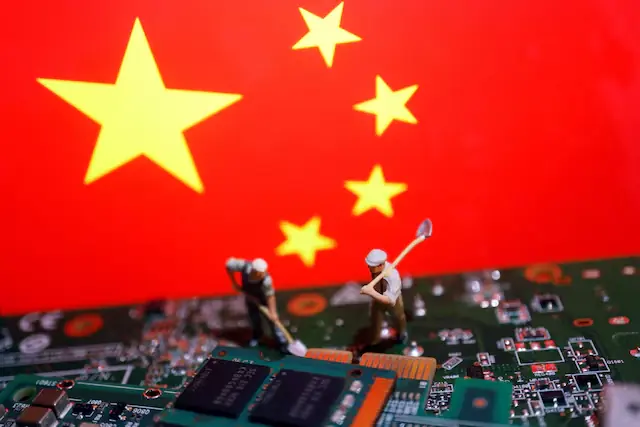
Biren’s rise comes amid intensifying global competition in artificial intelligence and semiconductors, with Chinese firms seeking to reduce reliance on overseas suppliers. The company has positioned itself as a key player in China’s push for technological self-sufficiency, focusing on chips designed to support large-scale AI models, cloud computing, and advanced data-center applications.
Market participants say the listing highlights Hong Kong’s renewed role as a preferred fundraising hub for Chinese technology companies, particularly as geopolitical tensions and regulatory scrutiny complicate overseas listings. Several other AI, semiconductor, and advanced manufacturing firms are preparing IPOs in the city, raising hopes that 2026 could see a sustained rebound in new listings.
Biren’s strong debut has reinforced investor confidence in China’s AI sector and signaled growing momentum in Hong Kong’s capital markets.
India Approves Electronic Component Projects Worth $4.6 Billion
India has approved a new set of electronic component manufacturing projects worth about $4.6 billion, marking a significant step in the government’s effort to strengthen domestic supply chains and reduce reliance on imports in the fast-growing electronics sector.
The projects have been cleared under a government incentive programme aimed at boosting the production of key electronic components rather than only assembling finished products. Approved investments span multiple states and involve a mix of Indian conglomerates and global electronics manufacturers. The projects will focus on producing components such as printed circuit boards, camera modules, mobile phone enclosures, and other intermediate parts essential for smartphones, consumer electronics, and industrial devices.
Officials said the initiative is designed to address a major gap in India’s electronics ecosystem. While the country has become a major assembly hub for smartphones and other devices, it still depends heavily on imported components, particularly from East Asia. By encouraging local component manufacturing, the government aims to create a more integrated, resilient, and competitive electronics industry.

The approved projects are expected to generate thousands of direct jobs and many more indirect opportunities across logistics, tooling, and support services. Over time, authorities expect the investments to lead to significantly higher production output and exports, helping India move up the global electronics value chain.
The move aligns with India’s broader industrial strategy to position the country as a global manufacturing hub, especially as companies look to diversify supply chains away from China. Policymakers believe that building strong domestic capabilities in components will make India a more attractive destination for long-term electronics and semiconductor investment.
Industry participants welcomed the approvals, saying the focus on components is critical for sustaining growth in electronics manufacturing. With global demand for smartphones, electric vehicles, and connected devices rising, the government expects the new projects to play a key role in supporting India’s ambition to dramatically expand electronics production over the coming years.
Baidu’s AI Chip Arm Kunlunxin Files Confidentially for Hong Kong Listing
Baidu has taken a key step toward unlocking the value of its artificial intelligence hardware business, with its AI chip subsidiary Kunlunxin filing confidentially for a Hong Kong stock market listing. The move signals Baidu’s intention to spin off the unit and raise fresh capital as demand for AI computing power accelerates in China.
Kunlunxin focuses on designing AI chips and integrated computing systems used in data centers, cloud platforms, and large-scale artificial intelligence applications. The business plays a central role in Baidu’s broader AI strategy, supporting technologies such as autonomous driving, deep learning, and generative AI. A separate listing would allow Kunlunxin to pursue independent growth while giving investors direct exposure to China’s expanding AI semiconductor sector.
The confidential filing suggests the listing could take place later in 2026, subject to regulatory approvals and market conditions. While financial details have not been disclosed, Baidu is expected to retain a controlling stake in the chipmaker after the offering. Proceeds from the IPO would likely be used to fund research and development, expand production partnerships, and strengthen Kunlunxin’s competitive position against domestic and global rivals.

The filing comes amid a revival of technology listings in Hong Kong, particularly from companies involved in artificial intelligence, semiconductors, and advanced manufacturing. As geopolitical tensions and overseas listing risks persist, Hong Kong has become an increasingly attractive venue for Chinese tech firms seeking access to international capital.
For Baidu, the potential spin-off highlights a broader strategy to sharpen focus on core businesses while monetizing high-growth units. Analysts say a successful Kunlunxin listing could help crystallize the value of Baidu’s years-long investment in chip development and reinforce China’s push to build a self-reliant AI and semiconductor ecosystem.






