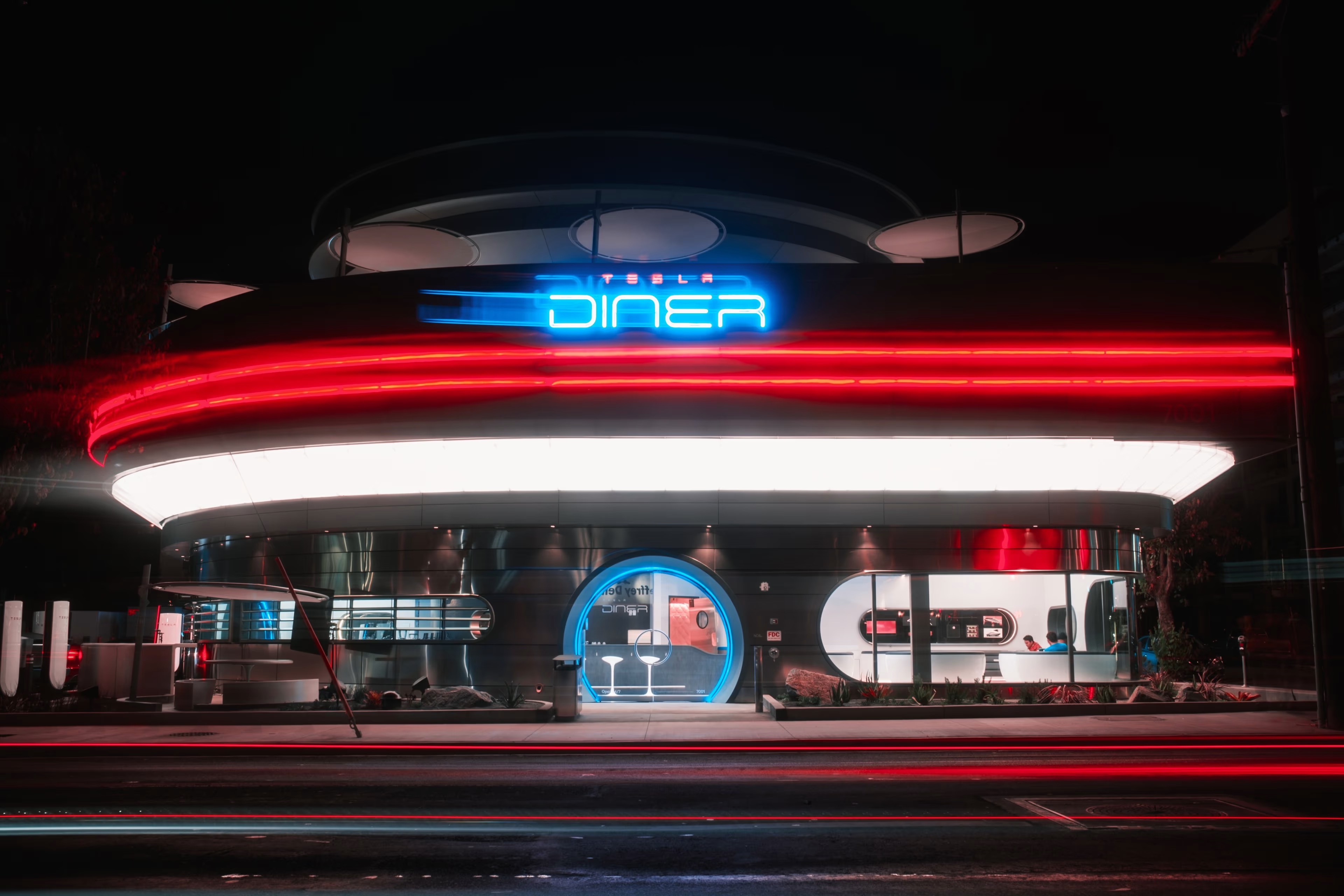
When Tesla unveiled its futuristic diner in Los Angeles last summer, it looked like a scene lifted straight out of a sci-fi movie. Neon lights, massive outdoor screens, retro-inspired design, and rows of Superchargers promised to turn the mundane act of electric vehicle charging into a cultural experience. Social media lit up instantly. Influencers queued for photos, Tesla fans made pilgrimages, and long lines of cars wrapped around the block. For a brief moment, Tesla’s diner was not just a restaurant—it was a statement about the future of mobility, leisure, and lifestyle branding.
Six months later, the scene has changed dramatically. What was once a buzzing hotspot now often appears quiet, with empty tables, open parking bays, and a noticeably subdued atmosphere. The transformation from viral sensation to near-empty pit stop has been swift, raising questions about whether the diner was ever built for longevity or simply for spectacle.
At its launch, the diner was designed to be more than a place to eat. It functioned as a hybrid space—part charging station, part entertainment venue, part brand showroom. Drivers could plug in their cars, watch films on oversized screens, and order comfort food designed to evoke nostalgia while hinting at the future. Tesla positioned the diner as an extension of its brand philosophy: technology should be seamless, exciting, and integrated into everyday life.
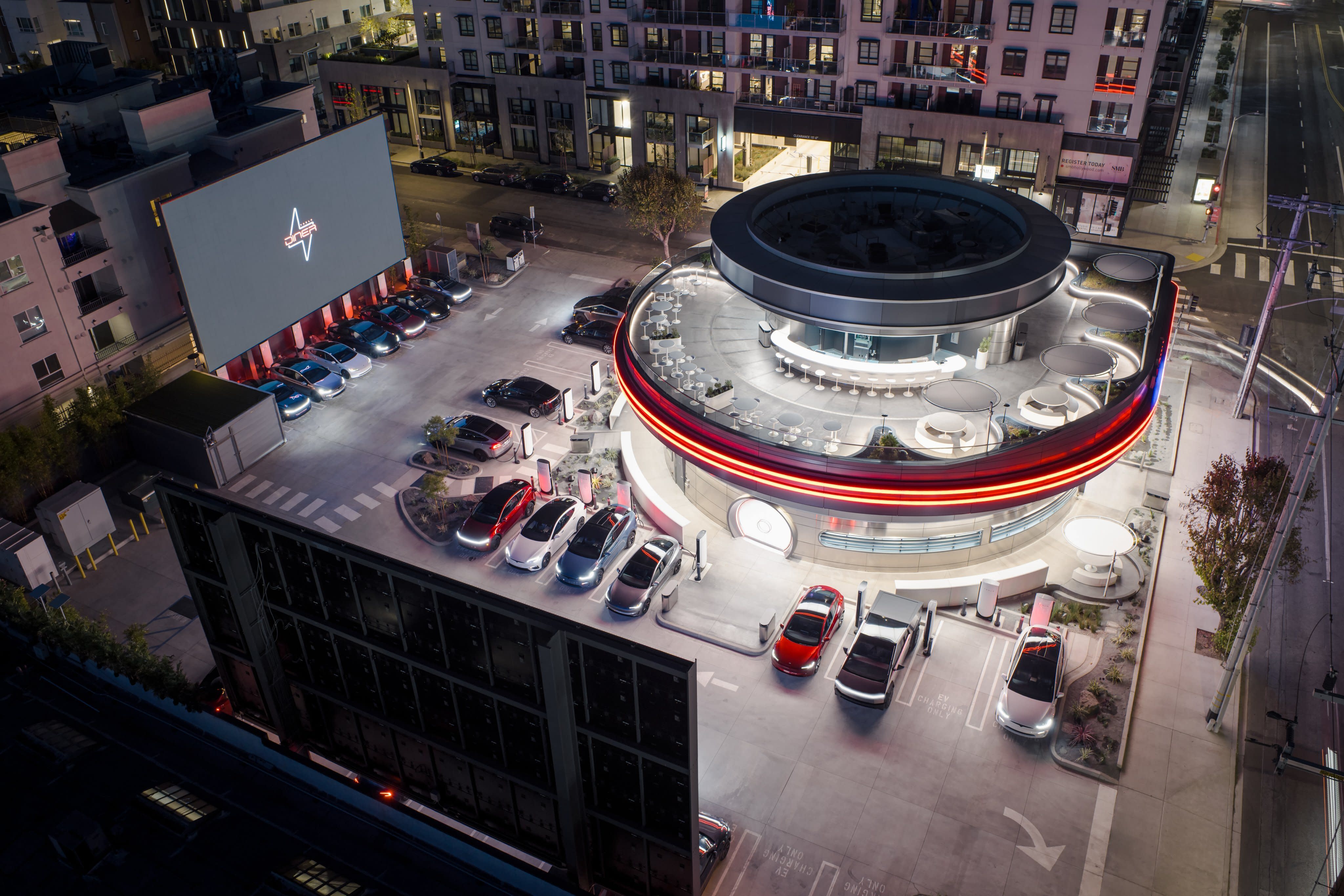
Early visitors were impressed by the visuals. Photos and videos of glowing signage, sleek architecture, and futuristic touches spread rapidly online. For many, visiting the diner was less about hunger and more about participation—being part of a moment that felt culturally significant. The diner became a backdrop for viral clips and a symbol of Tesla’s ability to turn infrastructure into an experience.
But virality, as the diner would soon demonstrate, is fragile.
As the novelty wore off, practical concerns began to surface. Customers started to focus less on aesthetics and more on basics: food quality, service speed, pricing, and overall value. Reviews grew more mixed. Some praised the concept but felt the menu was limited. Others complained about long waits, inconsistent service, or meals that did not justify the cost. What initially felt futuristic began to feel, to some, like an ordinary diner wrapped in extraordinary branding.
Another challenge was repeat appeal. While first-time visitors were eager to see the spectacle, fewer found compelling reasons to return. Unlike traditional diners that thrive on familiarity, comfort, and community, Tesla’s diner leaned heavily on its “wow” factor. Once customers had taken photos and checked the experience off their list, many moved on.
The diner’s struggles also unfolded against a backdrop of broader pressures facing Tesla. The company has been navigating intensifying competition in the electric vehicle market, shifting consumer sentiment, and heightened scrutiny of its leadership. While the diner was never central to Tesla’s core business, it was closely tied to the brand’s image. As public perception of Tesla became more polarized, the diner lost some of its cultural momentum.
Operational changes further dampened enthusiasm. Key figures involved in shaping the diner’s culinary identity departed, and several signature offerings quietly disappeared from the menu. What remained felt less distinctive, reinforcing the perception that the diner was no longer evolving. Without regular updates or new attractions, the space began to feel static—an irony for a brand built on constant innovation.
Today, the diner functions primarily as what it was at its most basic level: a charging station with food available. Drivers still stop in, plug in, and grab a quick bite, but the crowds of curious onlookers are largely gone. The massive screens still glow, but they no longer draw the same attention. The silence, compared with the opening-week frenzy, is striking.
The rise and fall of Tesla’s diner offers a broader lesson about brand-driven experiences. In an era where hype can be generated overnight, sustaining interest requires more than striking visuals and clever concepts. Restaurants, even futuristic ones, live or die by consistency, quality, and connection with their customers. Technology can enhance the experience, but it cannot replace the fundamentals.
For Tesla, the diner experiment may not be a failure so much as a reality check. It showed the company’s ability to capture attention and reimagine everyday spaces, but it also revealed the limits of spectacle. Turning infrastructure into a destination is possible—but keeping it one is far harder.

Whether Tesla chooses to reinvent the diner, quietly scale back the concept, or simply let it operate as a functional charging stop remains to be seen. What is clear is that the diner’s story has already become a case study in modern hype culture: how quickly excitement can peak, and how just as quickly it can fade.
Six months ago, Tesla’s diner felt like the future. Today, it feels like a pause—an empty pit stop reminding passersby that even the boldest ideas need substance to endure.