In a major turning point for the global consumer electronics industry, Panasonic has announced that it will no longer manufacture its own television sets, bringing an end to nearly seven decades of in-house TV production. The decision marks the symbolic conclusion of an era in which Japanese companies once dominated the global television market through innovation, engineering excellence, and manufacturing leadership.
Panasonic was among the last remaining Japanese electronics giants still producing televisions within its own facilities. The company confirmed that while Panasonic-branded televisions will continue to exist, their manufacturing will now be handled by external partners rather than Panasonic’s own factories.
A Historic Name Steps Back
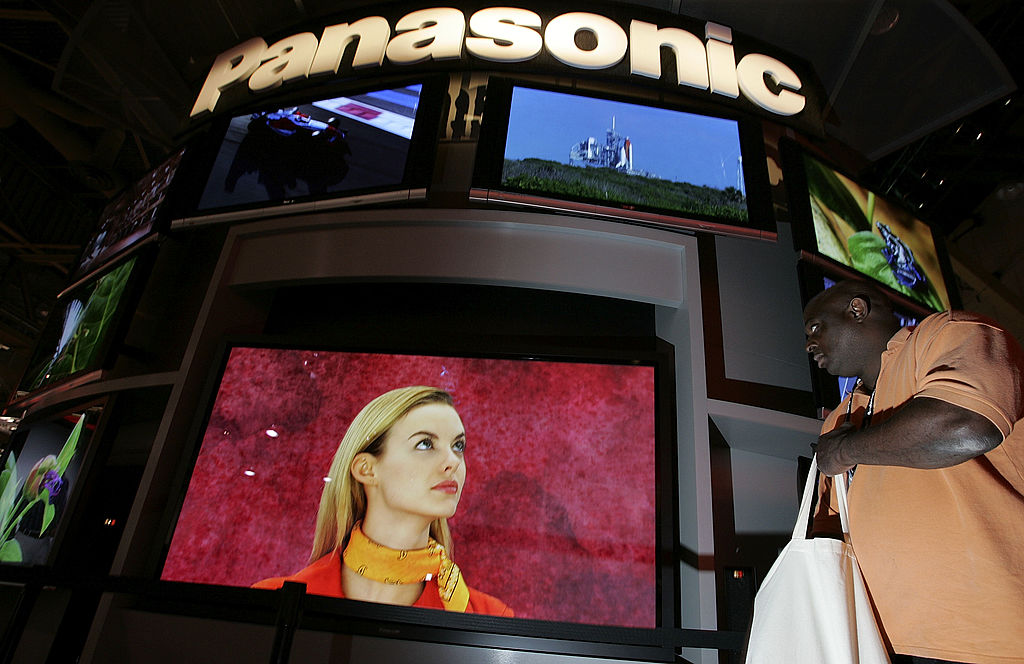
For decades, Panasonic stood at the center of television innovation. From early cathode-ray tube models to high-definition flat panels, the company played a critical role in shaping how audiences consumed visual media at home. Its reputation reached its peak during the late 2000s and early 2010s when Panasonic became globally known for its plasma televisions, widely regarded as offering some of the most accurate color reproduction and cinematic viewing experiences available at the time.

These plasma displays earned Panasonic the unofficial title of the “plasma king.” Home theater enthusiasts, filmmakers, and professional studios often favored Panasonic televisions for their deep blacks and natural motion handling, qualities that rival technologies struggled to match.
However, technological transitions within the industry soon began to reshape market realities. The rapid global adoption of LCD and LED televisions — cheaper to produce and more energy-efficient — gradually pushed plasma technology into decline. Despite Panasonic’s technical superiority in picture quality, market demand shifted toward affordability and slimmer designs.
In 2014, Panasonic ended plasma panel production after sustained financial losses, signaling the beginning of a long restructuring of its television business.
Changing Economics of TV Manufacturing
The latest decision reflects broader economic pressures affecting legacy electronics manufacturers. Television manufacturing has increasingly become a scale-driven business dominated by companies capable of producing massive volumes at lower costs.
Manufacturers based in China and South Korea now control much of the global supply chain, benefiting from integrated component production, government-backed industrial ecosystems, and aggressive pricing strategies. Maintaining independent manufacturing operations has become financially challenging for companies focused on premium engineering rather than mass production.
Industry analysts note that television sets have gradually transformed from high-margin technological showcases into highly competitive consumer commodities. Profit margins have narrowed significantly, forcing companies to reconsider whether manufacturing hardware internally remains sustainable.
By outsourcing production, Panasonic aims to reduce operational costs while preserving its brand identity and technological contributions. The company is expected to continue working on image processing technologies, sound systems, and design standards that distinguish Panasonic televisions in premium markets.
The End of Japanese Manufacturing Dominance
Panasonic’s withdrawal from in-house TV manufacturing also highlights a broader transformation within Japan’s once-powerful consumer electronics sector. During the late twentieth century, Japanese brands defined global television standards, setting benchmarks for reliability and innovation.
Over the past two decades, however, many Japanese firms have either sold their television divisions, licensed their brand names, or exited manufacturing altogether. Rising competition, changing consumer expectations, and the globalization of supply chains steadily reduced Japan’s dominance in display hardware production.
With Panasonic stepping away, very few Japanese companies remain actively involved in large-scale television manufacturing. The shift underscores how the center of gravity in electronics production has moved decisively toward other parts of Asia.
Brand Legacy Will Continue
Despite ending internal production, Panasonic emphasized that consumers will continue to see Panasonic-branded televisions in stores worldwide. The company plans to focus on research, software optimization, audiovisual tuning, and premium user experience rather than factory-based manufacturing.
Future Panasonic televisions are expected to combine outsourced manufacturing efficiency with the company’s longstanding expertise in picture calibration and cinematic display performance. Executives believe this hybrid approach will allow Panasonic to remain competitive in high-end television segments without bearing the financial burden of operating production facilities.
For consumers, the transition may not immediately change how Panasonic TVs look or perform. Yet for industry observers, the announcement represents a profound symbolic moment — the transformation of a historic manufacturer into a technology and branding specialist.
An Emotional Moment for the Industry
The decision carries emotional weight for technology enthusiasts who associate Panasonic with some of the most respected televisions ever produced. Plasma models from the company are still remembered as benchmarks for image fidelity, and many remain in use years after production ceased.
Panasonic’s retreat reflects a broader truth about modern electronics: innovation alone no longer guarantees manufacturing survival. Efficiency, scale, and global supply networks increasingly determine success in consumer hardware markets.
As Panasonic redirects its focus toward growth areas such as energy solutions, automotive technology, and advanced electronics systems, its television division enters a new phase — one defined less by factories and more by intellectual and design leadership.
The company that once defined the golden age of plasma television technology will continue to influence how screens look and sound, even if those screens are no longer built inside Panasonic’s own plants. For many observers, the announcement closes a remarkable chapter in television history while opening another shaped by collaboration and globalization.