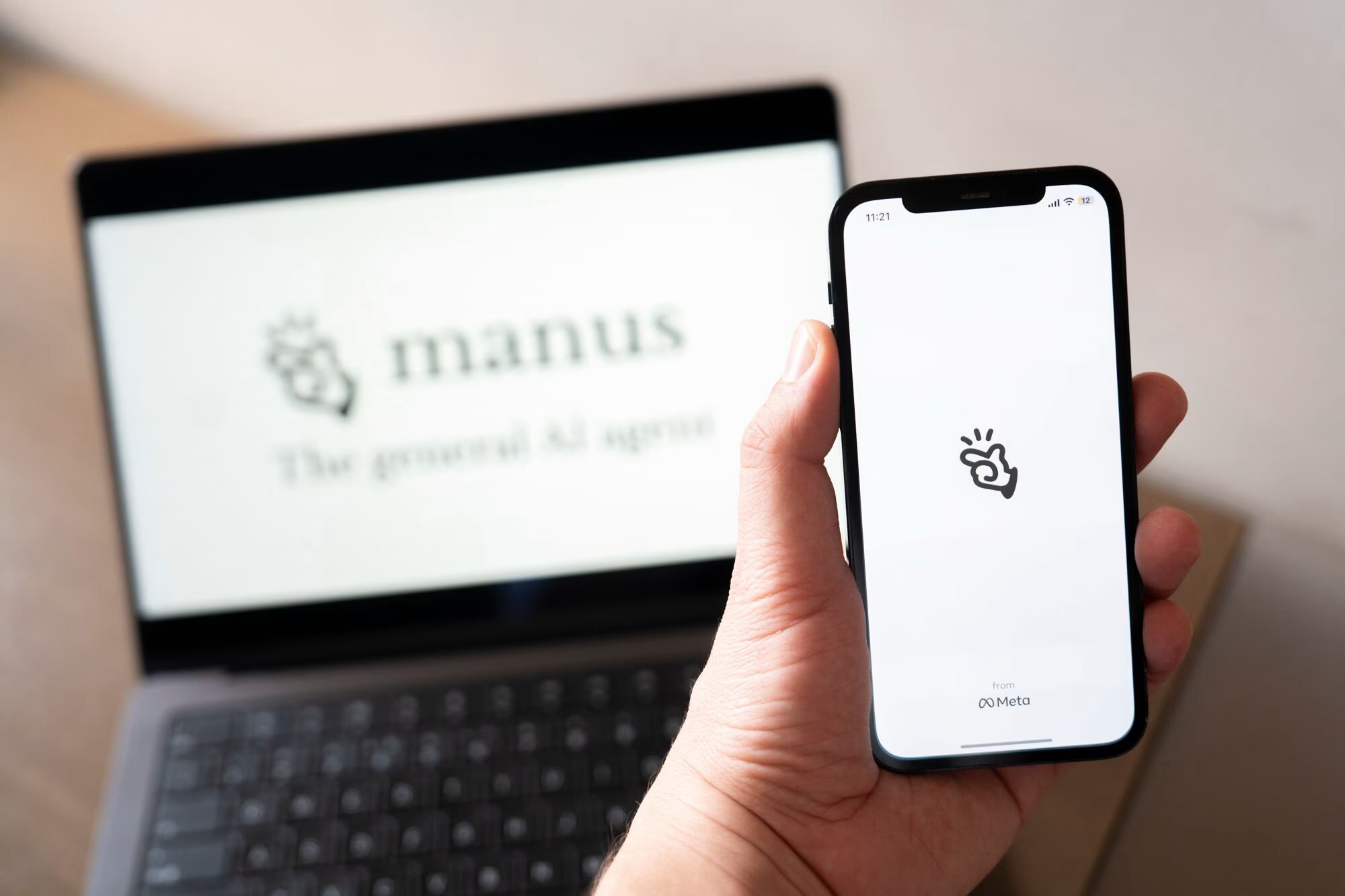
Chinese authorities have barred two senior executives of artificial intelligence startup Manus from leaving the country, as regulators examine whether a planned $2 billion acquisition by Meta complies with the nation’s investment rules. The move highlights Beijing’s growing vigilance over foreign involvement in strategically sensitive sectors such as artificial intelligence.
According to people familiar with the matter, Manus co-founders Xiao Hong, the company’s chief executive, and Ji Yichao have been restricted from international travel while the review is ongoing. The two executives were reportedly summoned earlier this month to a meeting in Beijing with officials from the National Development and Reform Commission (NDRC), China’s powerful state planning body.
The regulatory scrutiny centers on whether Meta’s proposed acquisition of Manus violates China’s rules governing foreign investment, data security, and the transfer of sensitive technologies. While neither Manus nor Meta has issued an official statement, the situation underscores the increasingly complex environment facing cross-border technology deals involving Chinese firms.
Manus, a relatively young but rapidly rising player in the artificial intelligence space, has attracted attention for its cutting-edge work in machine learning and data-driven enterprise solutions. The company’s technology is believed to have applications across multiple industries, including finance, healthcare, and logistics—areas that often involve large volumes of sensitive data. This has likely intensified regulatory concerns over the potential implications of foreign ownership.
China has, in recent years, tightened oversight of outbound data flows and foreign acquisitions of domestic technology firms. Regulations require government approval for deals involving companies that operate in sectors deemed critical to national security or economic stability. Artificial intelligence, given its strategic importance, falls squarely within this category.
The involvement of the NDRC suggests that the review is not merely procedural but part of a broader assessment of the deal’s economic and strategic implications. Authorities may be evaluating whether the acquisition could lead to the transfer of valuable intellectual property or undermine China’s ambitions to achieve technological self-reliance.
The decision to bar Xiao Hong and Ji Yichao from leaving the country reflects a more assertive regulatory approach. While such travel restrictions are not unprecedented, they are typically reserved for cases where officials believe key individuals must remain available for questioning or where there are concerns about the movement of sensitive information beyond national borders.
For Meta, the proposed acquisition represents a significant investment in expanding its artificial intelligence capabilities. The U.S.-based tech giant has been aggressively pursuing advancements in AI, including large language models and immersive technologies tied to its broader digital ecosystem. Acquiring Manus could provide access to specialized talent and proprietary systems, potentially strengthening its competitive position in a rapidly evolving market.
However, the deal also places Meta at the intersection of rising geopolitical tensions and regulatory barriers. Governments around the world are increasingly scrutinizing foreign investments in technology sectors, particularly those involving data, algorithms, and advanced computing capabilities. In China, these concerns are amplified by a policy framework that prioritizes domestic control over critical technologies.
Industry analysts note that the outcome of the review could set an important precedent for future transactions involving Chinese AI firms and foreign buyers. A decision to block or significantly alter the deal would signal stricter enforcement of investment rules, potentially discouraging similar cross-border acquisitions. Conversely, approval—if granted—may come with stringent conditions aimed at safeguarding data and limiting foreign influence.
The situation has also introduced uncertainty for Manus itself. While the company stands to gain substantial financial resources and global exposure from the deal, prolonged regulatory scrutiny could disrupt its operations and delay strategic initiatives. Employees, investors, and partners are likely watching closely as the review unfolds.
More broadly, the episode reflects the shifting dynamics of the global technology landscape. As artificial intelligence becomes a central driver of economic growth and national power, governments are taking a more active role in shaping how and where innovation occurs. This often places multinational corporations and startups alike in a challenging position, navigating competing regulatory regimes and political priorities.
For now, Xiao Hong and Ji Yichao remain in China as authorities continue their assessment. The timeline for the review remains unclear, and it is uncertain whether the Meta-Manus deal will proceed as planned, be restructured, or ultimately be abandoned.
What is clear, however, is that the case underscores the delicate balance between global investment and national control in the age of artificial intelligence—a balance that is becoming increasingly difficult to maintain.