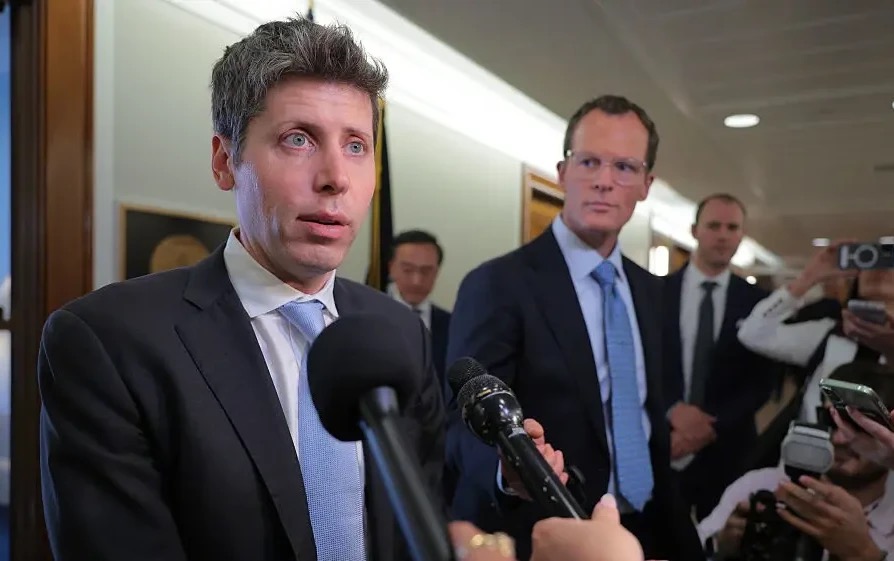
In a thought-provoking session at the World Economic Forum (WEF) 2024, OpenAI CEO Sam Altman delivered a compelling message, emphasizing that despite the rapid advancements in artificial intelligence (AI), machines will never replace the innate human capacity for empathy and care. Altman’s remarks come at a time when discussions about the integration of AI into various aspects of society have been met with both enthusiasm and apprehension.
Altman, a prominent figure in the AI community, addressed a diverse audience of global leaders, innovators, and policymakers at the WEF, underscoring the need to approach AI with a balanced perspective. While acknowledging the transformative potential of AI technologies, Altman stressed that the essence of human connection, compassion, and care cannot be replicated by machines.

“AI is a powerful tool that can augment human capabilities and solve complex problems, but it can never replace the uniquely human qualities of empathy and care for one another,” Altman stated during his address. He highlighted the importance of maintaining a human-centric approach in the development and deployment of AI technologies, ensuring they complement and enhance human well-being rather than replacing fundamental aspects of human interaction.
The OpenAI CEO’s remarks align with the organization’s commitment to responsible AI development, prioritizing ethical considerations and the potential societal impact of AI technologies. Altman urged the industry to focus on ensuring that AI is aligned with human values and serves as a force for positive change.
As discussions at the WEF revolved around the Fourth Industrial Revolution and the role of AI in shaping the future, Altman’s perspective resonated with many attendees who have been grappling with the ethical implications of AI. Concerns about job displacement, privacy, and the potential erosion of human connection have fueled ongoing conversations about responsible AI development.
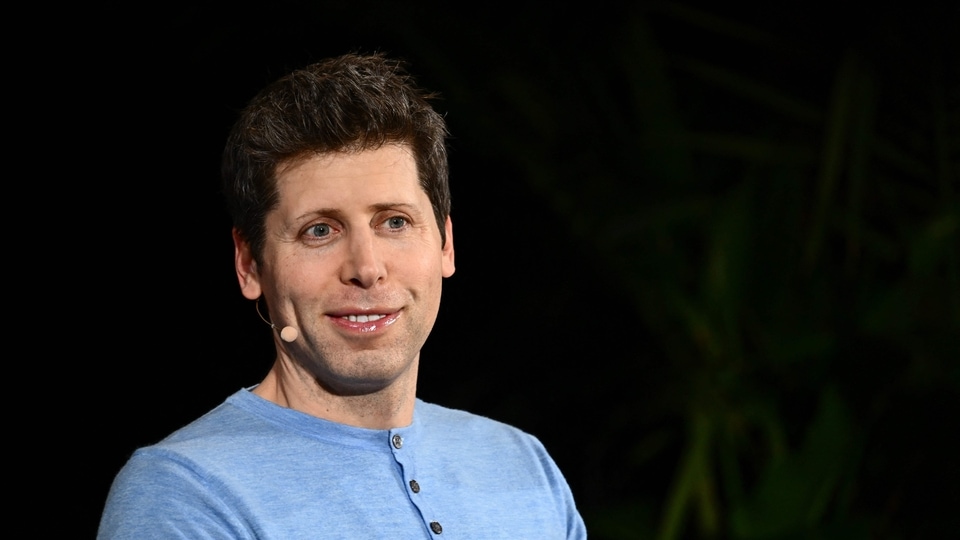
Altman’s optimism about the future coexistence of AI and humanity reflects a nuanced understanding of the technology’s potential. While AI can undoubtedly bring about efficiency, innovation, and progress, Altman’s emphasis on the irreplaceable nature of human care serves as a reminder that the ethical and responsible deployment of AI is paramount.
As the world continues to navigate the integration of AI into various aspects of society, Altman’s insights at the WEF 2024 contribute to the ongoing dialogue about the responsible development of AI technologies, reinforcing the idea that, ultimately, the essence of human care and connection remains a cornerstone of our shared future.