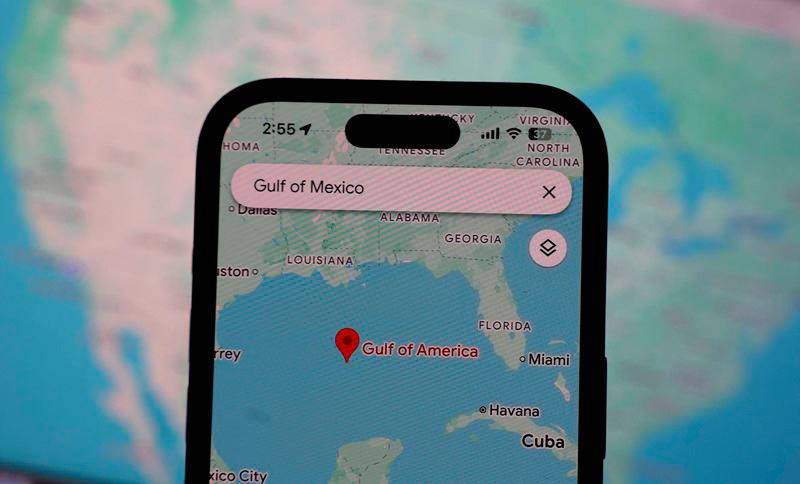
In a dramatic move that has generated international debate, Apple has renamed the Gulf of Mexico to the Gulf of America on its Maps application. The change comes as part of an executive order signed by former President Donald Trump, who directed the U.S. Geographic Names Information System (GNIS) to officially rename the body of water. This decision, issued in early 2025, aligns with the Trump administration’s efforts to assert a more nationalist approach to geographic landmarks in the United States.
The Gulf of Mexico, a body of water bordered by the southern U.S., Mexico, and Cuba, has been known by its current name for centuries, a reflection of both its geographic location and historical significance. However, the executive order issued by Trump argues that the name “Gulf of America” better reflects the region’s importance to the United States and its economic and strategic interests.

Following the formal recognition of the change by GNIS, Apple became one of the first companies to update its digital mapping services. Apple Maps now displays the Gulf of America, a move that will likely prompt similar updates from other tech giants and mapping services, such as Google Maps and Microsoft Bing.
The renaming has not come without controversy. In the United States, the decision has divided public opinion. While some see the change as a patriotic gesture that reaffirms the United States’ dominance in the region, others view it as an unnecessary and divisive move that erases an important cultural and historical name. Critics argue that the Gulf of Mexico has been a part of both American and Mexican history for centuries, and altering its name risks inflaming tensions between the two nations.
Internationally, the renaming has been met with mixed reactions. Mexican officials, including President Claudia Sheinbaum, have rejected the new name, emphasizing that the body of water will always be known as the Gulf of Mexico in Mexico and other countries. Sheinbaum’s remarks have sparked lighthearted comments about the possibility of renaming all of North America to “Mexican America” in response.
The decision has also affected media coverage. The Associated Press, one of the largest news agencies in the world, continues to use the name “Gulf of Mexico” in its reporting, despite the official name change. This led to a notable incident where an AP reporter was reportedly blocked from attending a White House event after refusing to use the newly mandated term. The Associated Press, defending its editorial independence, called the move an infringement on free press rights.

Despite the controversy, Apple’s update reflects the growing influence of political directives on global digital platforms. The company’s decision to implement the name change globally underscores the reach and power of U.S. tech companies, particularly when it comes to shaping how the world perceives geographic landmarks.
As the world adjusts to this new name on digital maps, the Gulf of America controversy is likely to remain a topic of discussion, illustrating the complex relationship between national identity, international diplomacy, and the digital world. Whether the name change will stick in the long term remains uncertain, but it has already become a defining moment in the intersection of politics and technology.