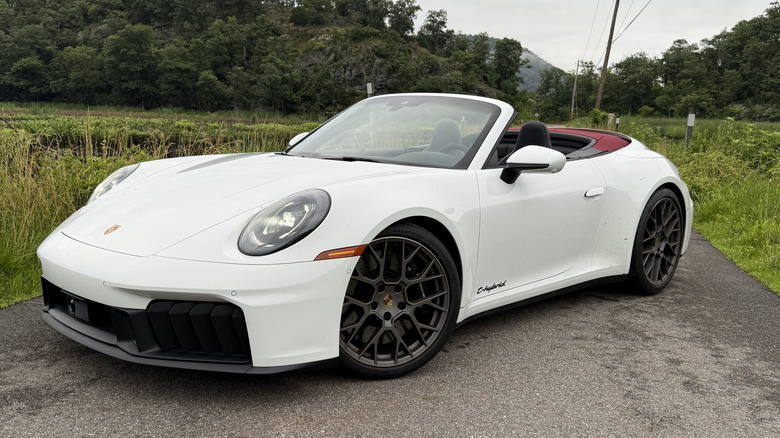
Porsche has raised prices across nearly its entire model lineup for the second time in just four months, adding thousands to the cost of its most iconic cars. The base model 911 Carrera now starts at $134,650, including destination charges—a significant increase from the $129,950 price it held earlier this year.
The roughly 3.6% increase may not seem drastic on paper, but it comes on the heels of a previous price bump announced earlier in the year. Taken together, the two hikes have pushed the starting cost of the 911 Carrera up by over $12,000 within a 12-month span, a change that’s beginning to turn heads in both enthusiast and consumer circles.
What’s Changed?
The base 911 Carrera isn’t the only model affected. Porsche has increased prices across various trim levels and vehicle categories, with percentage jumps ranging from about 2.3% to 3.6%. That includes the Carrera S, Carrera GTS, and likely other models in the 718, Taycan, Macan, and Cayenne families.
In addition to changes in MSRP, Porsche has quietly increased its destination fee—from $2,250 to $2,350—further pushing final prices higher than advertised.
Porsche has stated that the pricing adjustments are due to changing “market conditions.” While the company has not provided a detailed breakdown of that term, analysts point to a combination of rising material costs, currency fluctuations, transportation expenses, and inflation across the global automotive supply chain. The luxury carmaker also faces added pressure from increasing regulatory demands and tariffs in key markets, which can directly influence pricing strategies.
What Do Buyers Get for the Money?
To help justify the latest price hike, Porsche has bundled in some additional standard features on certain models. The base 911 Carrera, for example, now comes with its previously optional Black Leather interior package, a roof rack mounting prep, and access to an expanded color palette—some of which were once costly extras. On the tech front, updates to the infotainment system and additional driver assistance features have also been added across the 992.2 generation.
Still, the additional content may not be enough to satisfy buyers already feeling stretched. With back-to-back price increases, even high-income customers are beginning to question the value proposition—especially when the changes to standard equipment are subtle and not necessarily visible in day-to-day driving.
Community Reaction
The Porsche community has responded with a mix of resignation and frustration. For many, frequent price increases are expected as part of buying a premium performance car. But the speed and scale of these adjustments have raised eyebrows.
“Usually Porsche increases prices once a year, maybe with a mid-cycle refresh,” said one long-time Porsche enthusiast. “But two jumps in four months? That’s a new one.”
Some prospective buyers, especially those waiting for allocations or planning custom orders, now face difficult decisions: buy now and lock in current prices, or wait and risk yet another hike in the near future.

Others worry about the long-term implications. As prices climb, so does the risk that buyers will turn to used inventory or competing brands that offer similar performance for less money. While Porsche maintains a loyal fanbase, consistent price increases may chip away at that loyalty, especially among younger buyers or first-time owners.
What’s Next?
It remains to be seen whether this is the end of Porsche’s 2025 pricing changes or merely a sign of more to come. The auto industry as a whole is grappling with unprecedented cost pressures and economic volatility. If conditions worsen, further adjustments could follow before the 2026 model year is in full swing.
For now, Porsche continues to command strong demand—but with every price increase, the brand walks a fine line between preserving its premium image and pushing beyond what even luxury consumers are willing to pay.