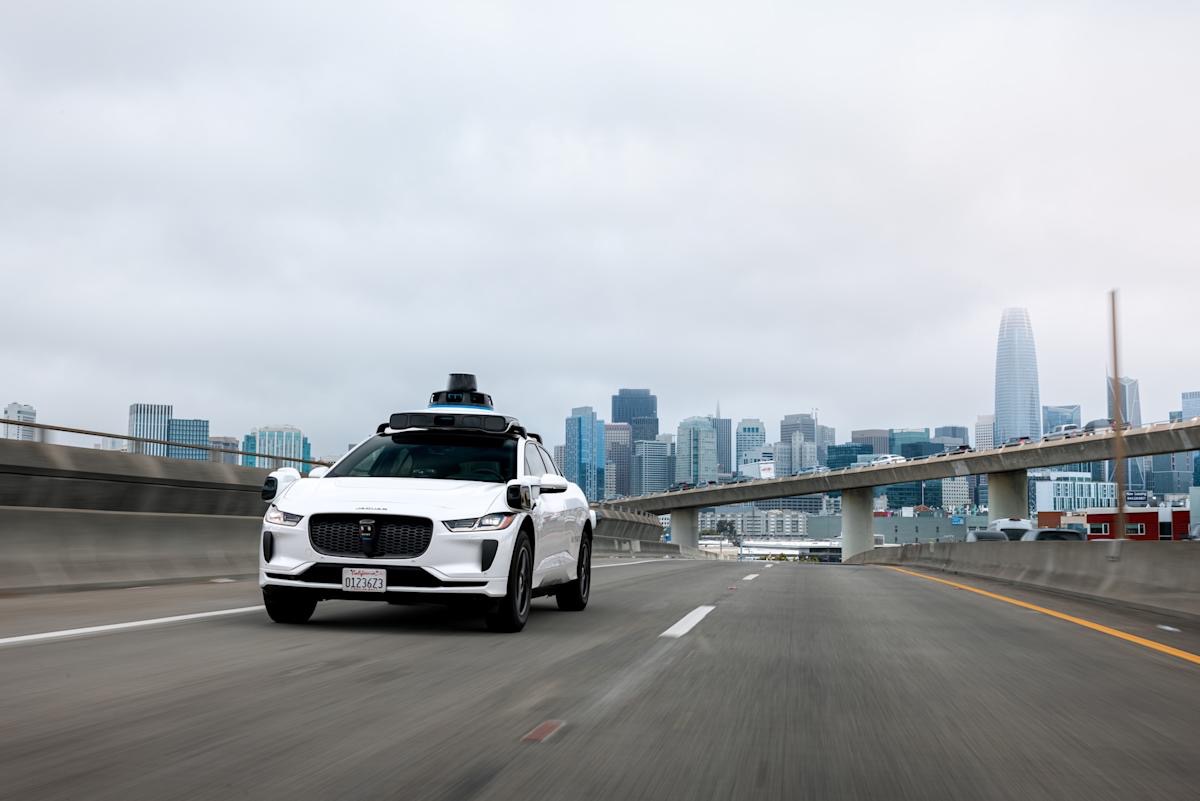
Autonomous driving company Waymo has temporarily suspended freeway ride services and paused portions of its operations in Atlanta as the company works to implement a series of safety improvements aimed at strengthening the performance of its self-driving technology.
The decision marks one of the most significant operational pauses for Waymo in recent months and highlights the growing challenges facing autonomous vehicle companies as they attempt to expand commercial services while maintaining public trust and regulatory confidence. The company described the move as a precautionary measure designed to allow engineers additional time to refine system responses in complex driving conditions, particularly on high-speed freeways.

Waymo officials stated that the suspension followed internal reviews of vehicle behavior during routine operations and testing. Engineers reportedly identified scenarios in which autonomous systems required further optimization when navigating sudden traffic changes, construction zones, emergency vehicle interactions, and unpredictable driver maneuvers. Although no major injuries or severe crashes were reported in connection with the identified concerns, the company said it was taking a proactive approach to ensure the highest possible safety standards before continuing freeway-based ride services.
The suspension affects passengers using the company’s ride-hailing platform in select regions where freeway travel forms a central part of many routes. Riders will continue to have access to limited services on city streets and designated urban corridors, though wait times and route efficiency may be impacted during the temporary restriction.
The pause in Atlanta is particularly notable because the city had been viewed as an important expansion market for Waymo’s long-term commercial strategy. The company had recently increased testing and operational activity in the southeastern United States, positioning Atlanta as a key location for future growth due to its large population, busy transportation network, and rapidly evolving technology sector.
Industry analysts say freeway driving remains one of the most difficult environments for autonomous vehicles to master. Unlike controlled urban settings with slower speeds, freeways demand rapid and highly accurate decision-making under constantly changing conditions. Self-driving systems must process massive amounts of real-time data while responding instantly to lane changes, aggressive driving behavior, sudden braking, road debris, and weather-related visibility issues.
Experts note that even advanced artificial intelligence systems can struggle with rare or unexpected roadway events that human drivers often handle instinctively. While autonomous vehicles have shown significant progress in recent years, freeway operations continue to present technical hurdles that require extensive testing and continuous software refinement.
Waymo emphasized that its latest operational pause reflects a “safety-first philosophy” rather than a reaction to any single incident. The company said its engineering teams are currently working on updated software models intended to improve prediction accuracy, emergency response coordination, and decision-making during high-speed driving situations. Additional testing and simulation exercises are expected before freeway rides are restored.
The announcement also comes at a time when the autonomous vehicle industry is under increasing scrutiny from transportation regulators, lawmakers, and public safety advocates. In recent years, several incidents involving self-driving or partially automated vehicles have intensified debate over how quickly autonomous technology should be introduced into public transportation systems.
Government agencies in multiple states have pushed for stricter reporting requirements and more transparent safety evaluations from companies developing driverless systems. Critics argue that autonomous vehicle operators should demonstrate stronger evidence of reliability before expanding into new cities or allowing broader public access to self-driving services.

Supporters of autonomous technology, however, contend that cautious pauses and software updates are a normal part of technological development. They argue that companies willing to temporarily suspend operations in response to potential concerns are demonstrating responsible corporate behavior and a commitment to long-term safety.
Waymo has often been regarded as one of the leading companies in the autonomous driving industry due to its extensive testing history and comparatively strong safety record. The company has logged millions of autonomous miles across several major U.S. cities and has continued to expand its robotaxi operations despite increasing competition from rival firms.
Still, the latest suspension underscores the reality that self-driving technology remains a work in progress. Public acceptance of autonomous vehicles remains mixed, with many consumers expressing excitement about the convenience and innovation offered by driverless transportation while others remain concerned about safety, reliability, and accountability.
Transportation experts say incidents such as operational pauses or software recalls could influence how quickly autonomous vehicles become integrated into mainstream urban mobility systems. Companies must not only solve technical problems but also maintain public confidence and demonstrate that autonomous systems can safely coexist with human drivers, cyclists, and pedestrians.
Investors and market observers reacted cautiously to the news, viewing the temporary suspension as both a short-term setback and a sign that autonomous vehicle companies are becoming more conservative in their deployment strategies. Some analysts believe the decision could ultimately strengthen Waymo’s reputation if the company successfully resolves the identified issues and resumes operations with enhanced safety performance.
For Atlanta, the pause creates uncertainty regarding the timeline for expanded autonomous transportation services in the region. Local officials and transportation planners had viewed self-driving technology as a potential tool for addressing traffic congestion, improving mobility options, and supporting innovation-focused economic development.
Despite the temporary halt, Waymo indicated that it remains committed to its long-term expansion plans and continues to view autonomous mobility as a transformative part of future transportation systems. The company stated that it will resume freeway rides and broader Atlanta operations only after completing extensive testing and validating that updated systems meet internal safety benchmarks.
The latest development serves as a reminder that while autonomous vehicle technology has advanced rapidly, the path toward fully driverless transportation remains complex. Balancing innovation with public safety continues to be one of the industry’s greatest challenges as companies race to shape the future of mobility.