Jeff Bezos’ aerospace company Blue Origin is reportedly preparing to raise outside capital for the first time in its 25-year history, marking a major shift in the company’s financial strategy. The private space company is said to be seeking funding at a valuation of approximately $130 billion, a move that reflects growing investor confidence in the commercial space industry and Blue Origin’s long-term ambitions.
Since its founding in 2000, Blue Origin has largely been funded by Bezos himself, who has invested billions of dollars into the company through the sale of Amazon shares. Unlike many technology startups and private aerospace firms that have relied on venture capital or institutional investors to finance growth, Blue Origin has operated without external funding, allowing it to pursue long-term projects without the pressure of outside shareholders.
The proposed funding round would represent a historic milestone for the company. Reports suggest that Blue Origin is looking to raise around $10 billion from investors, with investment firm Coatue Management expected to play a leading role. Bezos is also expected to contribute additional capital alongside new investors, demonstrating his continued commitment to the company while opening its doors to outside financial partners for the first time.
The decision to seek external investment comes as Blue Origin enters a new phase of expansion. Over the past several years, the company has significantly broadened its portfolio, moving beyond suborbital space tourism into orbital launches, lunar exploration, rocket engine manufacturing, national security missions, and advanced space infrastructure.

At the center of Blue Origin’s future plans is New Glenn, the company’s heavy-lift orbital launch vehicle designed to compete in the commercial satellite and government launch markets. The reusable rocket is expected to carry satellites, scientific payloads, and future missions to the Moon and beyond. Although the program has experienced delays and technical setbacks, company executives remain confident that New Glenn will become one of the most capable launch systems in operation.
Blue Origin has also secured a growing number of contracts with government agencies, particularly NASA and the U.S. Department of Defense. The company is a key participant in NASA’s Artemis program, which aims to return astronauts to the Moon and establish a long-term human presence on the lunar surface. Its Blue Moon lunar lander is expected to play an important role in future missions supporting both scientific research and cargo transportation.
Beyond launch vehicles and lunar missions, Blue Origin has increasingly focused on building technologies that could support the next generation of commercial space activity. The company has invested in satellite systems, orbital infrastructure, reusable rocket engines, and technologies designed to enable long-duration operations in space. These initiatives align with Bezos’ long-held vision of millions of people living and working in space in the future.
Such ambitious projects require enormous financial resources. Developing launch vehicles, building manufacturing facilities, testing new propulsion systems, and competing for large government contracts demand sustained investment over many years. While Bezos has personally financed much of the company’s growth, outside funding could provide Blue Origin with greater financial flexibility while reducing its dependence on a single source of capital.
The reported valuation of $130 billion would make Blue Origin one of the world’s most valuable privately held aerospace companies. It reflects increasing optimism surrounding the commercial space industry, which has attracted significant investment over the past decade as satellite communications, Earth observation, space exploration, and national security missions continue to expand.
Investor interest in space companies has accelerated as governments and private organizations increase spending on space infrastructure. Demand for satellite launches has grown rapidly with the expansion of broadband internet constellations, climate monitoring systems, defense applications, and scientific research missions. These trends have created substantial opportunities for companies capable of providing reliable launch services and supporting technologies.
Blue Origin faces strong competition in this rapidly evolving industry. Elon Musk’s SpaceX remains the dominant player in commercial launches, operating one of the world’s busiest launch schedules while also developing the Starship spacecraft and the Starlink satellite internet network. Other emerging aerospace companies are also competing for government contracts, satellite deployments, and commercial customers.
Despite the competitive landscape, Blue Origin has continued to strengthen its position through investments in reusable launch technology and strategic partnerships. Its BE-4 rocket engines are already powering launch vehicles developed by other aerospace companies, creating an additional source of revenue beyond its own launch operations.
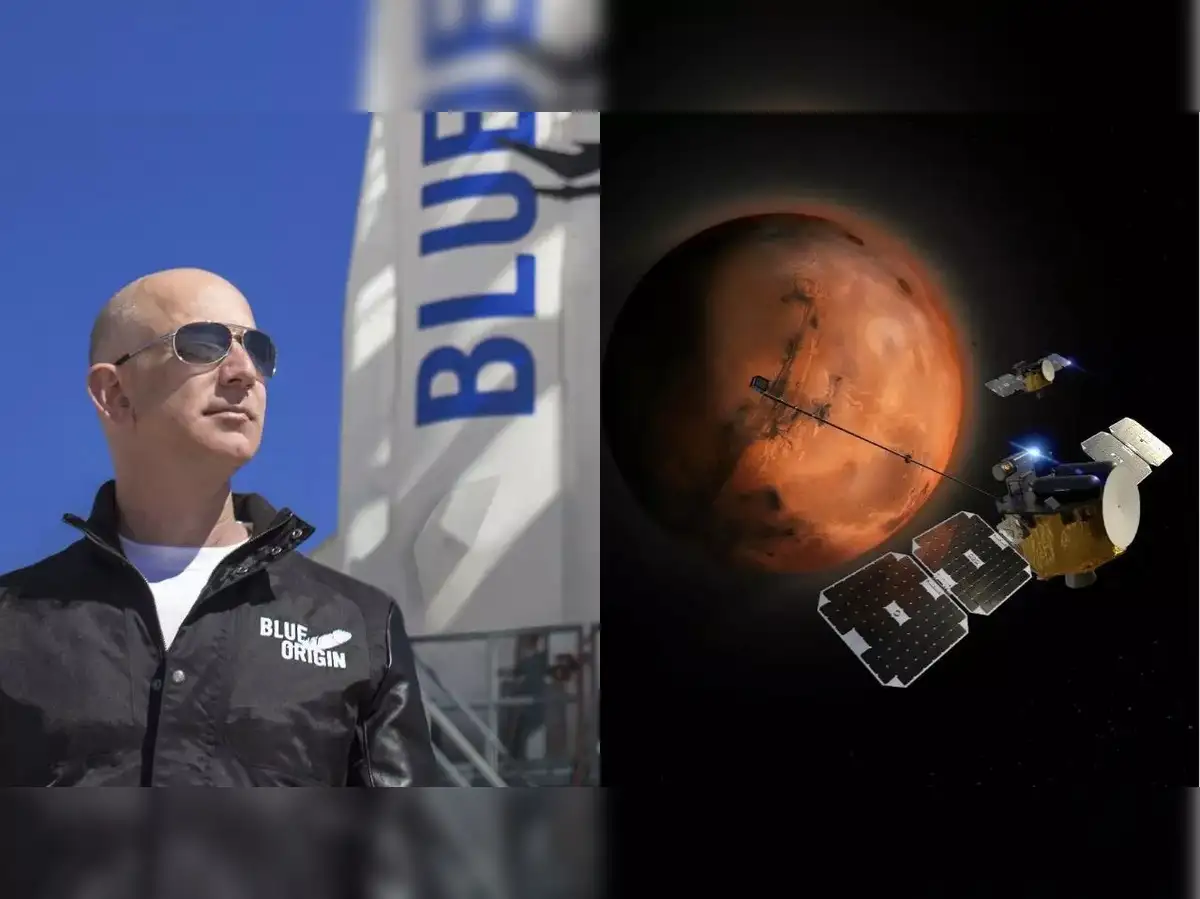
The company has also expanded its manufacturing capabilities, invested in advanced research facilities, and recruited experienced engineers from across the aerospace industry. These efforts reflect a broader strategy to become a diversified space technology company rather than focusing solely on rocket launches.
The timing of the fundraising is also significant. Global investment in artificial intelligence, advanced manufacturing, satellite communications, and defense technologies has created renewed interest in companies operating at the intersection of these industries. Blue Origin’s growing involvement in space infrastructure and next-generation technologies positions it to benefit from these broader investment trends.
For investors, participating in Blue Origin’s first external funding round offers an opportunity to gain exposure to one of the most established private space companies in the world. Unlike many early-stage startups, Blue Origin already possesses decades of engineering experience, government partnerships, manufacturing infrastructure, and an expanding portfolio of aerospace technologies.
For Blue Origin, bringing in outside investors could accelerate product development, expand research initiatives, strengthen manufacturing capacity, and support larger-scale commercial operations. Additional capital may also enable the company to pursue new acquisitions, develop future launch systems, and invest more aggressively in technologies aimed at supporting long-term human activity in space.
Although the reported funding plans have not yet been officially confirmed by the company, the move signals an important evolution in Blue Origin’s business model. After years of relying almost exclusively on Jeff Bezos’ personal investment, the company appears ready to embrace institutional capital as it seeks to compete more aggressively in the rapidly expanding global space economy.
If the funding round is successfully completed, it could mark the beginning of a new chapter for Blue Origin—one defined by faster growth, larger ambitions, and an increasingly prominent role in shaping the future of commercial space exploration.