In a startling revelation that underscores the ongoing geopolitical tensions between Washington and Moscow, U.S. officials have accused Russia of funding a media company that allegedly paid millions of dollars to right-wing influencers for promotional videos. This accusation marks a significant escalation in the scrutiny of foreign influence operations within the United States.
According to a report released by the Department of Justice and the Department of Homeland Security, the media company in question, which has not been named publicly, is said to have received substantial financial support from Russian sources. This company then reportedly disbursed funds to a range of right-wing social media influencers, ostensibly to promote political narratives favorable to Russian interests.
The report details how the media company leveraged its connections with influencers to disseminate content that often questioned the legitimacy of U.S. democratic institutions and promoted divisive rhetoric. Officials allege that this strategic financial support was designed to amplify messages that could destabilize domestic political discourse and undermine public trust in democratic processes.

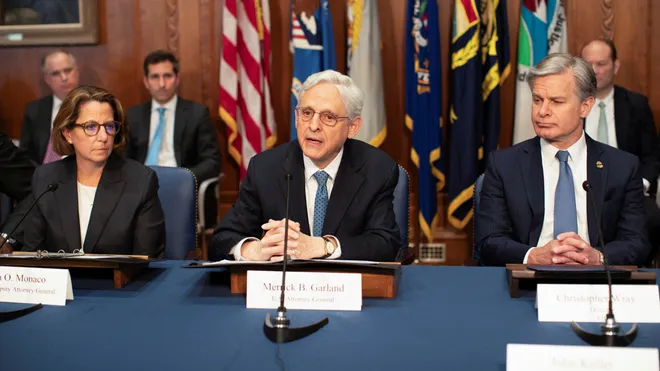
“The scale and sophistication of this operation highlight a troubling pattern of foreign interference,” said FBI Director Christopher Wray in a statement. “Our investigation reveals that this was a deliberate attempt to manipulate public opinion and sow discord within the United States.”
The influencers involved reportedly produced content ranging from political commentary to viral videos, which, according to the report, were meticulously crafted to appeal to specific demographics and further polarize the political landscape. Some of these influencers have previously faced scrutiny for promoting conspiracy theories and misinformation.
In response to the allegations, several of the influencers named in the report have denied any knowledge of the alleged Russian funding, asserting that they were unaware of the origins of the payments they received. “I was simply doing my job, and I had no reason to suspect any foreign interference,” said one prominent influencer who declined to be named.
The media company implicated in the report has denied any wrongdoing, asserting that it operates transparently and in compliance with U.S. laws. “We are committed to ethical practices and have no knowledge of the allegations against us,” said a spokesperson for the company.
The revelations have sparked renewed debate about the role of social media in modern political warfare and the extent to which foreign entities can influence domestic affairs. Lawmakers on Capitol Hill have called for increased scrutiny of social media platforms and more robust measures to counteract foreign influence operations.

“This situation underscores the urgent need for comprehensive reforms to address the vulnerabilities in our information ecosystem,” said Senator Maria Gomez, a leading advocate for election security reforms. “We must take decisive action to protect the integrity of our democratic processes from foreign interference.”
The U.S. government has pledged to continue its investigation into the matter, with further actions and potential sanctions against involved parties likely to follow. The case also highlights the broader geopolitical struggle between the U.S. and Russia, as both nations navigate a complex landscape of cyber warfare and information manipulation.
As the investigation unfolds, the implications for both domestic politics and international relations remain significant. For now, the focus remains on understanding the full extent of the foreign influence campaign and safeguarding the integrity of democratic institutions in the face of evolving threats.