In a stunning upset that captivated the global tech community, a human programmer has triumphed over an advanced artificial intelligence model in the final round of the 2025 World Coding Championship. Rafael Kim, a 27-year-old developer from South Korea, outlasted and outwitted the cutting-edge AI system GPT-4oX in a tense, three-hour showdown that tested not only technical ability, but also endurance, adaptability, and creative problem-solving.
The championship, held annually in Geneva, attracts the best programmers and coding minds from around the world. This year, however, marked a historic first: the inclusion of a state-of-the-art AI model as a direct competitor in the finals. GPT-4oX, a model trained specifically for real-time code generation, debugging, and optimization, had sailed through earlier rounds with near-perfect performance, defeating top-ranked human competitors with alarming ease.
Rafael Kim, meanwhile, had taken a very different path to the final. Known for his calm focus and unconventional approach to problem-solving, he struggled with fatigue after back-to-back rounds and long nights of preparation. Observers noted he appeared visibly exhausted before the final match, rubbing his eyes, stretching between problems, and even pausing several times during the competition to re-focus.
But when the timer started, Kim’s fatigue seemed to melt away. The final round consisted of five ultra-challenging problems: two algorithmic puzzles requiring optimal efficiency, one systems design challenge, one debugging scenario involving legacy code, and a final wildcard problem that introduced deliberately vague constraints to test creativity under pressure.
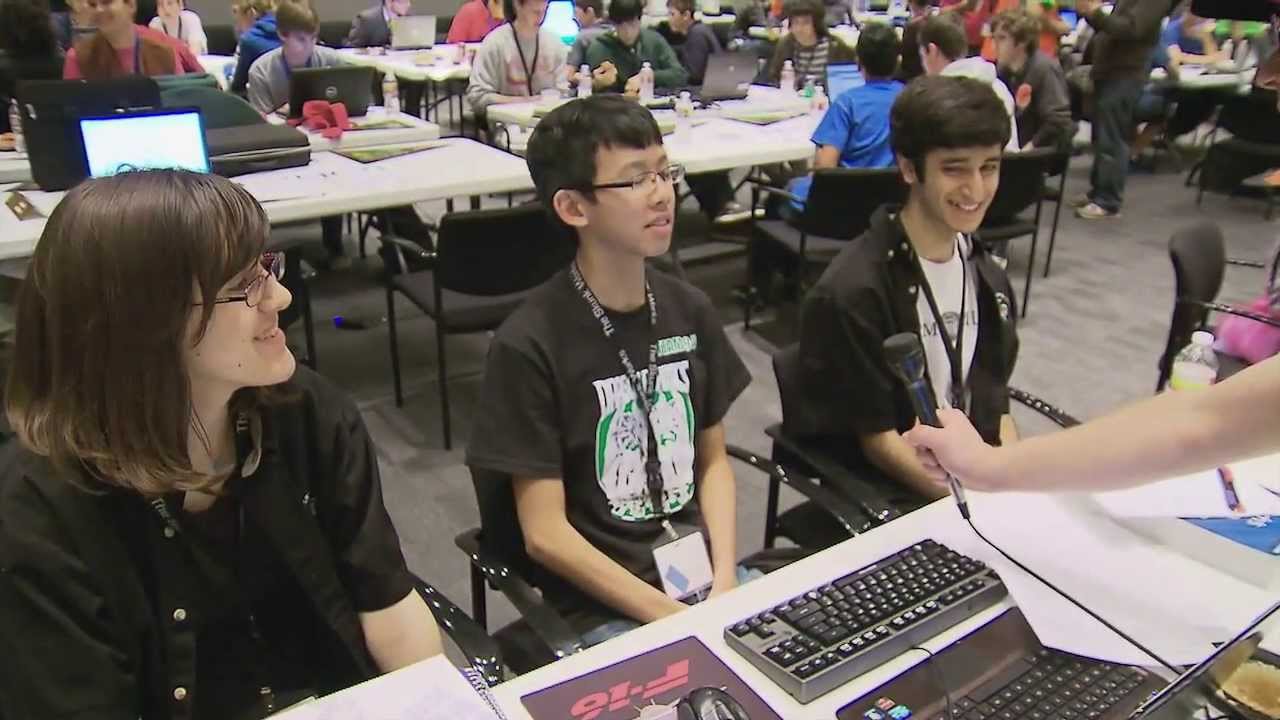
GPT-4oX, as expected, produced flawless code quickly. It completed the first two algorithm problems in a matter of minutes, identifying optimal solutions with clockwork precision. Kim, slower by comparison, worked through the problems methodically, pausing often to test edge cases and restructure parts of his logic. Though he finished the algorithm problems behind the AI, he submitted working solutions that passed all test cases.
It was during the systems design and wildcard problems where Kim began to gain ground. While the AI relied on textbook-perfect architectural patterns, Kim recognized subtleties in the problem that allowed him to design more efficient, unconventional structures. His solution to the wildcard question—intentionally left ambiguous—was particularly bold. Where the AI produced a safe, general-purpose solution, Kim took a risk, assuming a specific interpretation that, as it turned out, aligned with the judges’ intent.
Those bold decisions paid off. As the judges revealed the scores, Kim had edged out the AI by a slim but decisive margin. The audience erupted in applause, many rising to their feet as Kim leaned back in his chair, exhausted but victorious.
“It felt like I was sprinting through quicksand,” Kim said moments after the win. “But somewhere in the middle, I stopped thinking about the AI and just focused on the problems. That made the difference.”
The implications of Kim’s victory are already sparking conversations across the tech world. Many saw this year’s championship as a potential tipping point—an event that might demonstrate the inevitability of machines surpassing human coders at complex software development. Instead, Kim’s win offered a powerful reminder: artificial intelligence is an incredible tool, but it still lacks the nuance and intuition that come with human experience.
Unlike GPT-4oX, Kim was able to handle ambiguity, make risky judgment calls, and adapt strategies on the fly—skills that proved essential in a competition where precision alone wasn’t enough.
In the words of one of the championship judges, “AI is powerful, but it still operates within the bounds of what it’s been trained on. Rafael broke those bounds.”
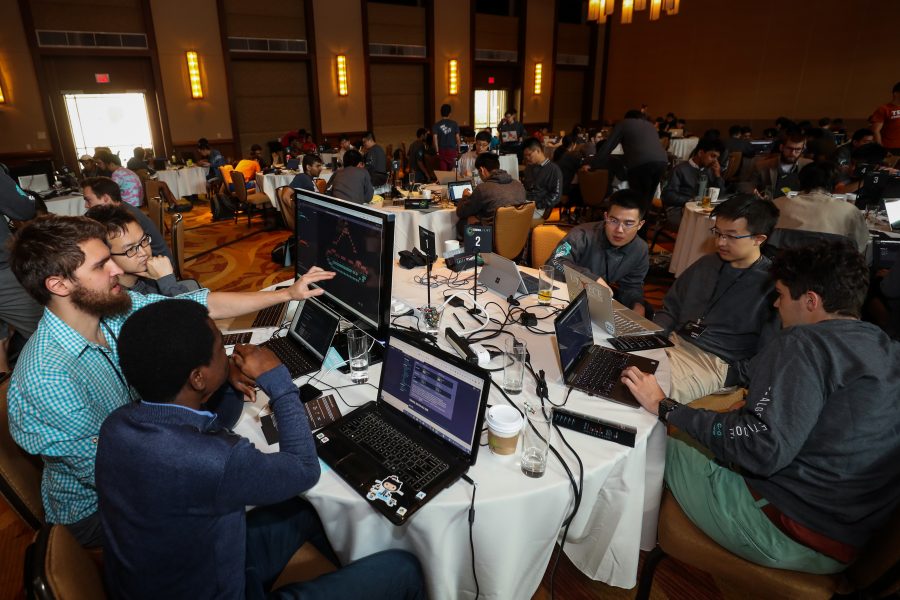
For Kim, the victory wasn’t about defeating a machine—it was about proving that humans still have a place at the top of the tech world.
“I’m not against AI,” he said. “It’s a tool. A powerful one. But tools don’t invent themselves. Tools don’t create ideas. People do.”
He added, with a tired grin, “Besides, even machines can’t beat three days without sleep.”
The reaction online was immediate and explosive. Within minutes, hashtags like #HumanVictory, #CodeChampion, and #KimVsAI began trending on social media. Memes, tributes, and celebratory fan art flooded platforms as coders around the world cheered the unexpected result.
Despite the celebrations, both the organizers and AI developers made it clear this is far from the end. The AI’s team noted areas where the model struggled, particularly with open-ended reasoning and creative problem-solving. They promised improvements before the next major competition, hinting at a rematch already in the works.
As for Kim, his immediate plans are refreshingly simple.
“I’m going to take a nap,” he laughed. “Then maybe check my inbox.”
In a time when artificial intelligence continues to reshape the way we work and think, Kim’s performance stands as a reminder of what humans still do best: think laterally, push boundaries, and sometimes, just keep going when it’s hard to move forward. He may have been the underdog—but this week in Geneva, human tenacity won the day.