Google Cloud is in the early stages of developing its own proprietary blockchain platform, designed to power institutional payments and next-generation financial applications. The project, currently operating in a private testnet environment, reflects Google Cloud’s most significant move yet into decentralized financial infrastructure.
The platform—internally known as the Google Cloud Universal Ledger—represents an ambitious attempt to position the company not merely as a provider of cloud services, but as a foundational technology player in the evolving world of programmable finance.
Building a Financial Internet Backbone
The Universal Ledger is being built as a Layer-1 blockchain protocol—meaning it forms the base layer for other applications, services, and digital assets to operate on top of. Unlike open, public chains like Ethereum or Solana, Google Cloud’s blockchain is permissioned and designed specifically for enterprise-scale applications, with a focus on regulated financial environments.
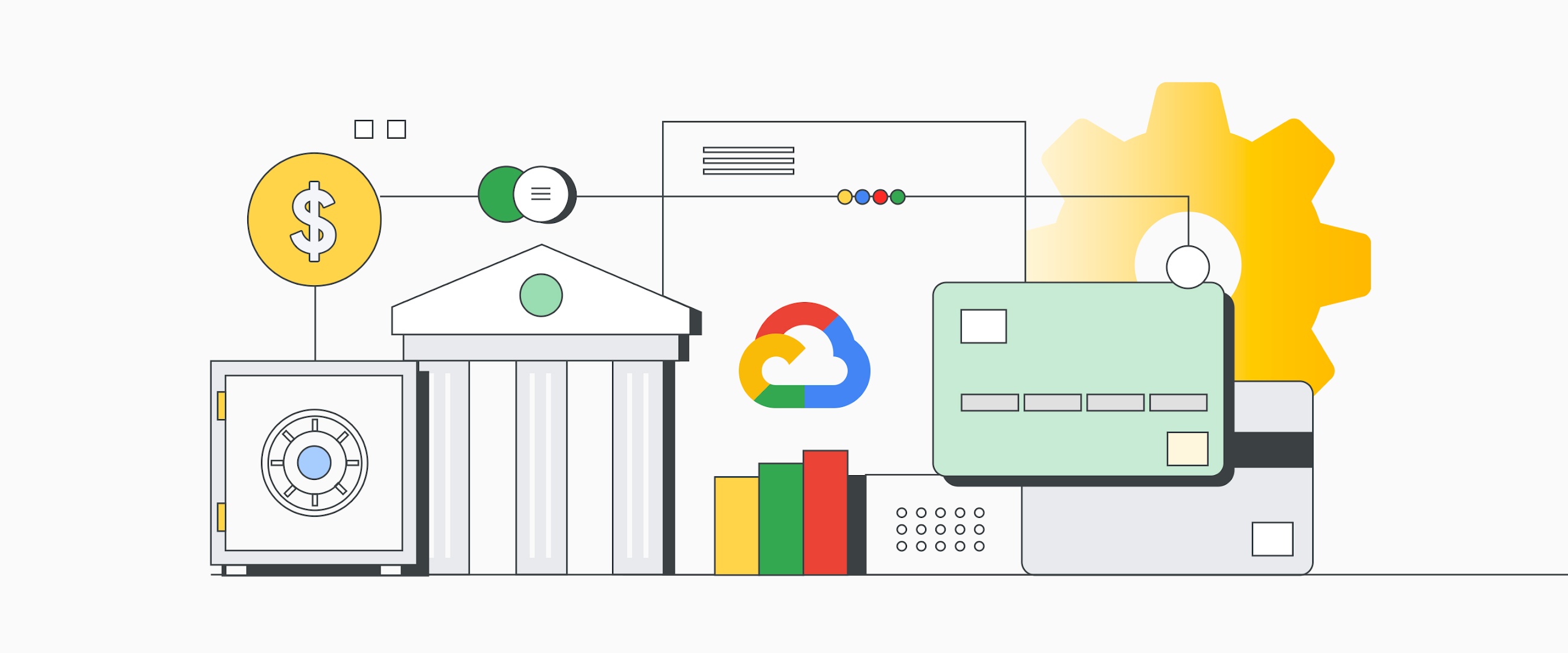
The goal is to create a system that is fast, compliant, and enterprise-ready—capable of settling high-volume payments, managing tokenized assets, and automating complex workflows like margin management, collateral processing, and global remittances. If successful, it could become a key building block in how value moves digitally between institutions in the coming years.
What distinguishes Google’s approach is its focus on neutrality. Rather than tying the blockchain to a specific stablecoin, payments company, or platform, Google Cloud aims to offer a general-purpose ledger that any institution—whether bank, asset manager, or fintech startup—can build on without being locked into a proprietary ecosystem.
Python-Powered Smart Contracts
A notable feature of the platform is its support for Python-based smart contracts. This choice is both technical and strategic. By enabling smart contracts in one of the most widely used programming languages in the world, Google is lowering the barrier for developers—especially those from traditional finance—to build complex applications without learning new, domain-specific languages.
Python-based logic allows developers to create rules for payments, settlement, digital identity, or compliance functions using familiar tools. This has the potential to greatly accelerate development and experimentation while keeping applications readable, testable, and maintainable by existing enterprise teams.
Institutional Testing Already Underway
Though details remain under wraps, Google Cloud has already invited select financial partners to test the blockchain in a private environment. These early pilots are focused on institutional use cases: real-time payments, cross-border asset transfers, and digitized workflows that are typically handled through layers of manual reconciliation and intermediaries.
Participants are reportedly experimenting with scenarios such as 24/7 settlement of digital assets, integration with treasury systems, and secure issuance of tokenized financial instruments. While the pilot phase is not open to the public, feedback from early testers is expected to inform the platform’s architecture ahead of broader rollout.
Not Just a Product—An Infrastructure Play
Google Cloud’s blockchain strategy appears to be part of a larger effort to provide foundational infrastructure for the next evolution of finance. Rather than competing directly with financial institutions, Google is positioning itself as the neutral provider of digital “rails” upon which others can innovate.
The company’s scale, global network, and track record with enterprise data infrastructure make it a natural candidate for such a role. Its ambition is not to disrupt banks or payment providers—but to offer them the tools to modernize their backend systems, digitize value flows, and move toward real-time financial services.
In this way, the Universal Ledger could become a financial equivalent to cloud computing itself: a shared platform that enables speed, automation, and resilience while abstracting away the technical complexity.
How It Differs From Public Chains
While the blockchain space is saturated with public, decentralized chains, Google’s ledger is fundamentally different in architecture and purpose. It is not designed for retail-facing crypto apps or permissionless finance. Instead, it is meant for regulated environments, where identity, compliance, and oversight are non-negotiable.
Access is restricted to verified participants. Nodes are operated within Google’s secure infrastructure, and the consensus mechanism is optimized for speed and determinism, not decentralization. Transactions are private, fast, and traceable—attributes that financial institutions require for regulatory reporting and operational transparency.
Moreover, the platform avoids volatility risks associated with native cryptocurrencies. Payments and asset transfers are pegged to fiat currencies or tokenized assets, making it better suited for real-world commerce and financial services.
Regulatory and Trust Considerations
Despite its advantages, the project faces key challenges. One of the biggest is trust. Financial institutions may be hesitant to rely on infrastructure managed by a technology company—even one as established as Google. Concerns about data privacy, operational control, and long-term governance will need to be addressed as the platform moves toward production.
To overcome this, Google Cloud is expected to offer tools for institutional control, such as custom governance frameworks, on-premise deployment options, and integration with local compliance systems. Additionally, transparency in how the protocol is governed and upgraded will be critical to winning trust from conservative industries like banking and insurance.
The Bigger Picture
The development of Google Cloud’s blockchain is part of a growing trend: the fusion of cloud infrastructure and financial systems. As money becomes increasingly programmable and financial services move closer to real-time automation, the demand for scalable, trusted infrastructure is growing rapidly.
With this move, Google Cloud joins a handful of major tech firms working on core protocols for digital finance. But unlike others, it is focused on building a platform that underpins—not competes with—existing institutions.
If the Universal Ledger proves secure, scalable, and interoperable, it could become a key pillar of financial technology in the years ahead, powering everything from bank-to-bank payments to central bank digital currencies and tokenized capital markets.
What Comes Next
The private testnet is expected to expand over the coming months, with additional institutional participants joining pilot programs. A public roadmap for the Universal Ledger has not yet been released, but full-scale service availability is tentatively aimed for 2026.
Between now and then, the blockchain will be battle-tested in real-world scenarios, fine-tuned for regulatory compliance, and shaped by the needs of the financial institutions it seeks to serve.
While still early in development, Google Cloud’s entry into blockchain protocol design signals a new phase in the evolution of enterprise technology—one where payments and cloud infrastructure converge, and where programmable money may soon be as seamless and universal as cloud storage or global computing power.