Cloudflare’s Slowing Growth Jolts Investors Counting on AI Boom
Cloudflare’s latest earnings outlook has shaken investor confidence, highlighting growing concerns that the artificial intelligence boom may not deliver immediate financial gains for every tech company tied to the sector. Shares of the cloud networking and cybersecurity firm fell sharply after management projected slower revenue growth for the coming quarter, despite continued enthusiasm around AI infrastructure and enterprise demand.
The company has been widely viewed as a beneficiary of the AI race because its network services help power data delivery, cybersecurity, and internet performance for businesses building AI-driven applications. Over the past year, investors poured money into companies seen as essential to the expanding AI ecosystem, pushing Cloudflare’s valuation significantly higher.

However, the company’s newest forecast suggested that growth may be moderating at a time when Wall Street expected acceleration. Although Cloudflare reported quarterly revenue and earnings above analyst expectations, executives warned that investments in AI infrastructure and computing capacity are weighing on margins. Rising operating costs and heavy spending on technology expansion have raised questions about how quickly the company can turn AI demand into stronger profits.
Cloudflare also announced workforce reductions as part of a broader restructuring strategy focused on automation and AI integration. The company said it is redesigning operations to become more efficient in what it described as an increasingly AI-driven business environment.
Analysts remain divided on the company’s outlook. Some believe Cloudflare is positioning itself for long-term growth as AI adoption expands globally. Others argue that investor expectations had become too aggressive, especially given the high valuations attached to AI-related firms.
The reaction to Cloudflare’s results reflects a broader shift in the tech market, where investors are becoming more selective and demanding clearer evidence that AI investments can generate sustained revenue growth and profitability rather than future potential alone.
Sony, Nintendo Struggle With Rising Memory Costs as AI Boom Tightens Global Chip Supply
Sony and Nintendo are facing growing pressure from surging memory chip prices as the artificial intelligence boom intensifies competition for semiconductor supply worldwide. The rapid expansion of AI data centers and generative AI systems has driven massive demand for advanced memory components, leaving consumer electronics companies grappling with higher costs and tighter availability.
Major memory manufacturers are increasingly prioritizing high-margin AI customers, particularly companies building AI servers and cloud infrastructure. This shift has reduced supply for industries such as gaming, where consoles rely heavily on advanced memory chips to support graphics performance and processing speed. Analysts say the imbalance is pushing prices upward at a pace many consumer technology companies did not anticipate.

Nintendo has already warned that rising component costs, including memory chips, will significantly increase operating expenses during the current financial year. The company has responded by raising prices for its upcoming gaming hardware in several markets. Sony has also adjusted pricing for the PlayStation 5 in multiple regions as it deals with higher production and logistics costs.
The growing strain on supply chains reflects how AI is reshaping the broader semiconductor market. Technologies once primarily associated with gaming devices, personal computers, and smartphones are now increasingly being redirected toward AI infrastructure projects. As demand for AI computing power accelerates, hardware makers outside the AI sector are finding it harder to secure components at stable prices.
Industry observers believe the pressure could continue into next year if memory manufacturers remain focused on AI-related production. This may force gaming companies to rely more heavily on digital services, subscriptions, and software sales to maintain profitability rather than depending mainly on console hardware.
Despite the challenges, both Sony and Nintendo continue to see strong long-term demand for gaming. However, rising hardware prices could test consumer spending, especially as players around the world already face higher costs for games, accessories, and online services.
Rave Files Antitrust Lawsuit Against Apple Over Removal of Video-Sharing App
Canadian video-sharing platform Rave has filed an antitrust lawsuit against Apple, accusing the technology giant of unfairly removing its app from the App Store in order to protect Apple’s own competing services.
The lawsuit claims Apple abused its dominant position in the mobile app marketplace by blocking Rave from reaching millions of iPhone users. Rave alleges that Apple removed the app under the justification of policy violations, but argues the real reason was to limit competition against Apple’s SharePlay feature, which allows users to watch content together remotely.
Rave became popular during the pandemic for its synchronized streaming experience, enabling users to watch videos, movies, and online content with friends while chatting in real time. The platform worked across multiple operating systems and gained a large global user base seeking virtual social entertainment experiences.

According to the complaint, the app’s removal caused major financial damage, disrupted user communities, and weakened the company’s ability to compete in the growing digital entertainment market. Rave argues that Apple’s control over iPhone app distribution gives it enormous power over developers and allows the company to favor its own products and services.
Apple has rejected the allegations and said the app was removed because it violated App Store guidelines related to safety, moderation, and platform policies. The company insists that its review process applies equally to all developers and is designed to protect users rather than suppress competitors.
The legal battle adds to increasing global scrutiny of Apple’s App Store practices. Regulators and developers in multiple countries have accused the company of maintaining excessive control over app distribution, payments, and access to iPhone users.
The case could become another major test of how far large technology platforms can go in managing their digital ecosystems while competing directly with independent app developers operating within them.
Amazon Cloud Outage at North Virginia Data Center Mostly Resolved
Amazon Web Services has largely restored operations following a significant outage at one of its Northern Virginia data centers that disrupted online services for several companies and platforms dependent on Amazon’s cloud infrastructure.
The outage was caused by overheating issues that triggered a power-related failure within the facility, affecting systems hosted in AWS’s heavily used US-East region. The disruption impacted a range of online businesses, including financial platforms, gaming services, and digital applications that rely on Amazon’s cloud network for computing and storage.
Amazon said engineers worked through the night to stabilize systems and restore affected services. While most operations resumed, some customers continued to report delays and intermittent performance issues as recovery efforts progressed. The company noted that restoring cloud systems safely requires careful sequencing to avoid further technical complications.

The incident has renewed attention on the increasing pressure facing global data centers as demand for cloud computing and artificial intelligence infrastructure accelerates. AI workloads consume far more electricity and generate substantially higher heat levels than traditional computing systems, forcing technology companies to invest heavily in advanced cooling and energy management technologies.
Industry experts say modern data centers are operating under growing strain as businesses rapidly expand AI-driven applications, streaming platforms, and real-time digital services. The outage demonstrates how even localized failures can create widespread disruptions because so many companies depend on a small number of major cloud providers.
Several affected businesses activated backup systems and redirected workloads to alternative regions to reduce downtime. However, the disruption still caused temporary interruptions for users trying to access apps, conduct transactions, or use online platforms.
Amazon Web Services remains one of the world’s largest cloud computing providers, supporting critical infrastructure across industries including finance, entertainment, healthcare, retail, and technology. The incident highlights the growing importance of resilient cloud systems as digital operations become increasingly central to both businesses and everyday life worldwide.
Thailand’s SiamAI Denies Exporting Restricted U.S. AI Servers to China
Thailand-based technology company SiamAI has denied accusations that it exported advanced American AI servers to China in violation of U.S. trade restrictions, as scrutiny intensifies over global semiconductor supply chains and artificial intelligence hardware transfers.
The company said it has complied with all international trade laws and export regulations, rejecting claims that it acted as an intermediary for moving restricted AI systems into the Chinese market. SiamAI stated that it has not participated in any unauthorized shipments involving advanced AI servers or high-performance computing equipment subject to U.S. export controls.
The allegations emerged amid broader concerns from U.S. authorities about possible attempts to bypass restrictions on advanced semiconductor technology exports to China. Washington has tightened controls in recent years to limit China’s access to powerful AI chips and servers that could support military development or accelerate strategic technological capabilities.
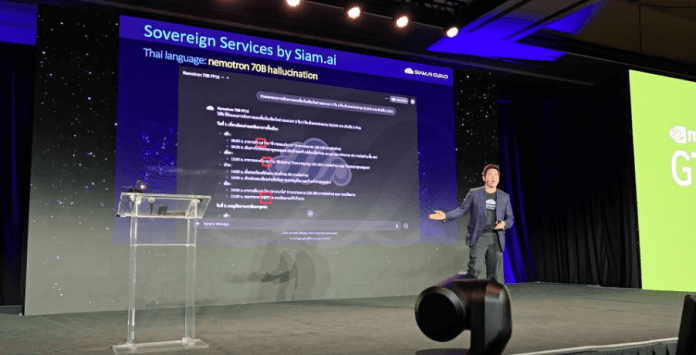
As demand for AI computing power surges worldwide, Southeast Asia has become an increasingly important region in global technology supply chains. Countries such as Thailand, Singapore, and Malaysia have attracted growing investment in data centers, cloud infrastructure, and semiconductor-related businesses. Analysts say this expansion has also increased concerns about indirect routes through which restricted technologies could potentially move across borders.
SiamAI emphasized that its business focuses on supporting Thailand’s domestic AI and cloud computing development rather than international re-export operations. The company also said it supports transparent and lawful technology trade practices.
The situation highlights rising geopolitical tensions surrounding artificial intelligence and semiconductor industries. Governments around the world are paying closer attention to the movement of advanced chips, servers, and computing systems as AI becomes more critical to economic growth, defense, and technological competitiveness.
Industry experts say global AI supply chains are becoming increasingly complex, making enforcement of export restrictions more difficult as companies and governments race to secure access to high-performance computing infrastructure.