
Monday, December 8, 2025
  • Login
Techstory Australia
  • Home
  • News
  • AI
  • Social Media
  • Technology
  • Markets
No Result
View All Result
  • Home
  • News
  • AI
  • Social Media
  • Technology
  • Markets
No Result
View All Result
Techstory Australia
No Result
View All Result
Home Business

Apple’s ‘Skinny’ iPhone Falls Flat With Disappointing Early Sales

When Apple unveiled the slimline model earlier this year, its marketing emphasized elegance, minimalism, and engineering prowess.

Sara Jones by Sara Jones
November 23, 2025
in Business, Markets, Technology
0
Apple’s ‘Skinny’ iPhone Falls Flat With Disappointing Early Sales

PHOTO CREDITS : Financial Times

74
SHARES
1.2k
VIEWS
Share on FacebookShare on Twitter

Apple’s latest design experiment — an ultra-thin, ultra-light “skinny” iPhone — was expected to reshape the smartphone landscape. Instead, it’s shaping up to be one of the company’s rare misfires. Early sales data from retailers, carrier partners, and supply-chain trackers suggests the device is underperforming significantly, prompting concerns inside Apple and raising questions about whether consumers really want thinner phones at all.

You might also like

Australia Pushes Social Media Platforms to Block Under-16s From Using VPNs to Evade Upcoming Ban

U.S. Consumers Turn to Buy-Now, Pay-Later Services for More Than $1 Billion During Black Friday–Cyber Monday, Highlighting Rising Financial Strain

Nvidia CEO Warns U.S. May Fall Behind China in AI Infrastructure Race

When Apple unveiled the slimline model earlier this year, its marketing emphasized elegance, minimalism, and engineering prowess. At just a few millimeters thick, the phone became the thinnest iPhone the company had ever produced, a feat achieved through redesigned internal components, a condensed battery system, and new materials. But what Apple framed as visionary design may have been too much of a trade-off for buyers who prioritize power, durability, and longevity over thinness.

Retailers report that interest in the model peaked during launch week but dropped sharply as early reviews filtered in. While many praised the device’s aesthetics, concerns about battery life, heat management, and camera performance quickly overshadowed its visual appeal. Consumers comparing the “skinny” iPhone to Apple’s standard and Pro models found the compromises too significant, especially given that the slim version carries a similar — and in some cases higher — price tag.

One of the biggest complaints centers on battery capacity. To achieve the incredibly thin profile, Apple adopted a smaller, layered battery system that simply can’t keep pace with heavier-use expectations. Many early buyers noted that the phone struggled to last a full day, even under normal usage. For a flagship device in 2025, where people rely on their phones for remote work, high-resolution video calling, and screen-intensive apps, the limited battery endurance felt like a step backwards.

Apple's 'skinny' iPhone falls flat with disappointing early sales

Camera capability is another weakness. Apple reduced the camera module to fit the thin chassis, resulting in a single-lens system that lacks the versatility buyers have come to expect. With competing models offering multiple cameras, enhanced optical zoom, and AI-powered stabilization, the slim iPhone’s pared-down hardware feels out of place in the premium market. The company promoted computational photography to compensate, but reviewers consistently found the device’s low-light and motion performance lagging behind other iPhones.

Industry analysts say Apple may have misread the moment. While thinness was a prized feature a decade ago, consumer preferences have shifted. Today’s buyers are more concerned with battery life, durability, and advanced camera arrays than shaving off a few millimeters of thickness. Many tech observers note that the rise of rugged smartphones, larger battery models, and foldables points to a market trending toward functionality, not minimalism.

Manufacturing data from Apple’s suppliers also points to a downward trend. Component orders tied specifically to the slim model have reportedly been reduced, suggesting Apple is cutting back production to avoid overstock. Some insiders believe the company may scale down the device’s presence in its lineup next year or even discontinue it entirely if sales continue to lag. While Apple rarely comments on production adjustments, such declines are generally seen as a sign of weak demand.

Part of the issue may be the device’s positioning. Instead of marketing it as a more affordable or mid-range option, Apple placed the skinny iPhone firmly in the premium tier, alongside its more powerful models. This left consumers comparing it directly to devices packed with superior hardware. The thin iPhone may have looked futuristic, but its performance — especially in gaming, video processing, and multitasking — fell short of expectations for a premium Apple product.

Carriers report that customers who initially asked about the slim model often ended up purchasing the standard flagship or Pro version instead. Employees noted that once buyers handled the skinny iPhone and realized the compromises, many opted for a more balanced device. Price incentives, including early discounts and trade-in bonuses, appeared to have little effect on reversing the trend.

Despite the slow start, the model does have a following. Some users praise it as the most comfortable phone they’ve ever held, especially for long periods. Others love the minimalist aesthetic or simply prefer a device that feels almost weightless. But these niche preferences aren’t enough to sustain a mainstream product line.

The disappointing sales raise important strategic questions for Apple. For years, the company has balanced innovation with practicality, slowly refining its designs without stepping too far outside what consumers expect. But the slim iPhone may represent a case where Apple’s emphasis on design overtook its understanding of user needs. It also highlights a larger challenge: how to innovate in a mature smartphone market where users increasingly demand power, longevity, and durability over stylistic experimentation.
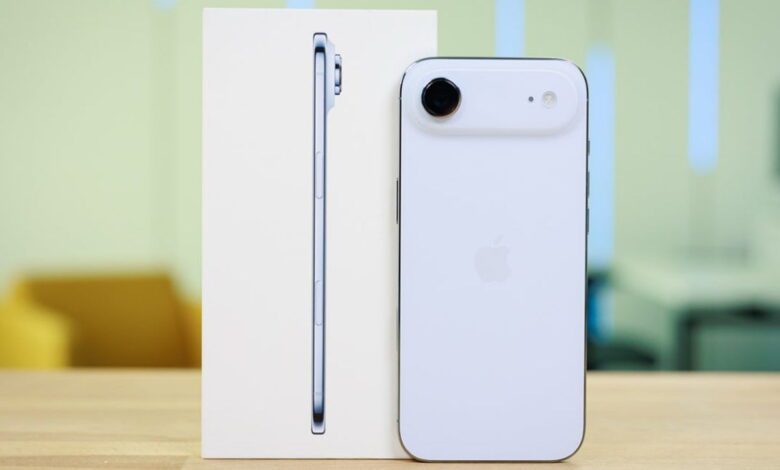
Apple Tries Again: iPhone Air 2 Coming in 2027 with Groundbreaking New Chip

Looking ahead, industry watchers will be paying close attention to how Apple responds. Will the company double down on the slim concept, improving its flaws for next year’s model? Or will it pivot, treating this device as a one-off experiment that failed to find broad appeal? Some analysts believe Apple may shift focus toward foldables, battery-first designs, or new form factors entirely.

For now, the “skinny” iPhone stands as a reminder that even tech giants with near-legendary product instincts can misjudge what consumers want. And while Apple is no stranger to overcoming weak product launches, it may take more than ultra-thin engineering to win back the buyers who passed on its sleekest — yet least practical — iPhone to date.

Tags: appleapple newsapple updatesApple’s latest design experiment — an ultra-thinApple’s ‘Skinny’ iPhone Falls Flat With Disappointing Early Salesit’s shaping up to be one of the company’s rare misfires.tech newstechstoryultra-light “skinny” iPhone — was expected to reshape the smartphone landscape. Instead
Share30Tweet19
Sara Jones

Sara Jones

Recommended For You

Australia Pushes Social Media Platforms to Block Under-16s From Using VPNs to Evade Upcoming Ban

by Sara Jones
December 7, 2025
0
New Zealand Moves Toward Social Media Ban for Under-16s, Considers Mandatory Age Verification

As Australia prepares to implement its sweeping social media restrictions for minors, the federal government is escalating pressure on major tech platforms to close what it views as...

Read more

U.S. Consumers Turn to Buy-Now, Pay-Later Services for More Than $1 Billion During Black Friday–Cyber Monday, Highlighting Rising Financial Strain

by Sara Jones
December 7, 2025
0
U.S. Consumers Turn to Buy-Now, Pay-Later Services for More Than $1 Billion During Black Friday–Cyber Monday, Highlighting Rising Financial Strain

U.S. consumers leaned heavily on buy-now, pay-later (BNPL) services during this year’s Black Friday and Cyber Monday shopping surge, putting more than $1 billion in purchases on deferred-payment...

Read more

Nvidia CEO Warns U.S. May Fall Behind China in AI Infrastructure Race

by Sara Jones
December 7, 2025
0
NVIDIA Announces Upcoming Quarterly Cash Dividend for Shareholders

Nvidia CEO Jensen Huang has issued a stark warning about the widening gap in infrastructure development between the United States and China, arguing that the pace at which...

Read more

Weekly Technology News

by Sara Jones
December 6, 2025
0
Weekly Tech news – Australia

Apple and Google Issue New Global Cyber Threat Alerts Apple and Google have issued a fresh round of cyber threat notifications to users around the world, warning of...

Read more

Owner Satisfaction Ratings: Best and Worst Car Brands Revealed

by Sara Jones
December 5, 2025
0
Owner Satisfaction Ratings: Best and Worst Car Brands Revealed

Consumer expectations in the automotive world have never been higher. With rapid advances in electric vehicles, increasingly complex infotainment systems, and heightened focus on long-term reliability, car owners...

Read more
Next Post
Google Tells Employees It Must Double AI Capacity Every Six Months to Meet Explosive Demand

Google Tells Employees It Must Double AI Capacity Every Six Months to Meet Explosive Demand

Leave a Reply Cancel reply

Your email address will not be published. Required fields are marked *

Related News

Google Celebrates 25th Birthday: A Quarter-Century of Transforming the Way We Search and Live

Google Celebrates 25th Birthday: A Quarter-Century of Transforming the Way We Search and Live

September 9, 2023
European SpaceX Rival Secures $160 Million for Reusable Capsule Development

European SpaceX Rival Secures $160 Million for Reusable Capsule Development

November 18, 2024
Consumer Watchdog Group Accuses Starbucks of Rigging App Payments for Nearly $900 Million Gain

Consumer Watchdog Group Accuses Starbucks of Rigging App Payments for Nearly $900 Million Gain

January 4, 2024

Browse by Category

  • AI
  • Archives
  • Business
  • Crypto
  • Finance
  • Investing
  • Markets
  • News
  • Social Media
  • Technology

Techstory.com.au

Tech, Crypto and Financial Market News from Australia and New Zealand

CATEGORIES

  • AI
  • Archives
  • Business
  • Crypto
  • Finance
  • Investing
  • Markets
  • News
  • Social Media
  • Technology

BROWSE BY TAG

amazon apple apple news apple updates Artificial intelligence Artificial Intelligence news Artificial Intelligence updates australia Australia news Australia updates china China news China updates Donald Trump Donald Trump news Donald Trump updates Elon musk elon musk news Elon Musk updates google google news Google updates meta meta news meta updates Microsoft microsoft news microsoft updates OpenAI OpenAI news OpenAI updates Social media tech news technology Technology news technology updates techstory tech story Tesla tesla news tesla updates TIKTOK TikTok news TikTok updates twitter

© 2023 Techstory Media. Editorial and Advertising Contact : hello@techstory.com.au

No Result
View All Result
  • Home
  • News
  • Technology
  • Markets
  • Business
  • AI
  • Investing
  • Social Media
  • Finance
  • Crypto

© 2023 Techstory Media. Editorial and Advertising Contact : hello@techstory.com.au

Welcome Back!

Login to your account below

Forgotten Password?

Retrieve your password

Please enter your username or email address to reset your password.

Log In
Are you sure want to unlock this post?
Unlock left : 0
Are you sure want to cancel subscription?