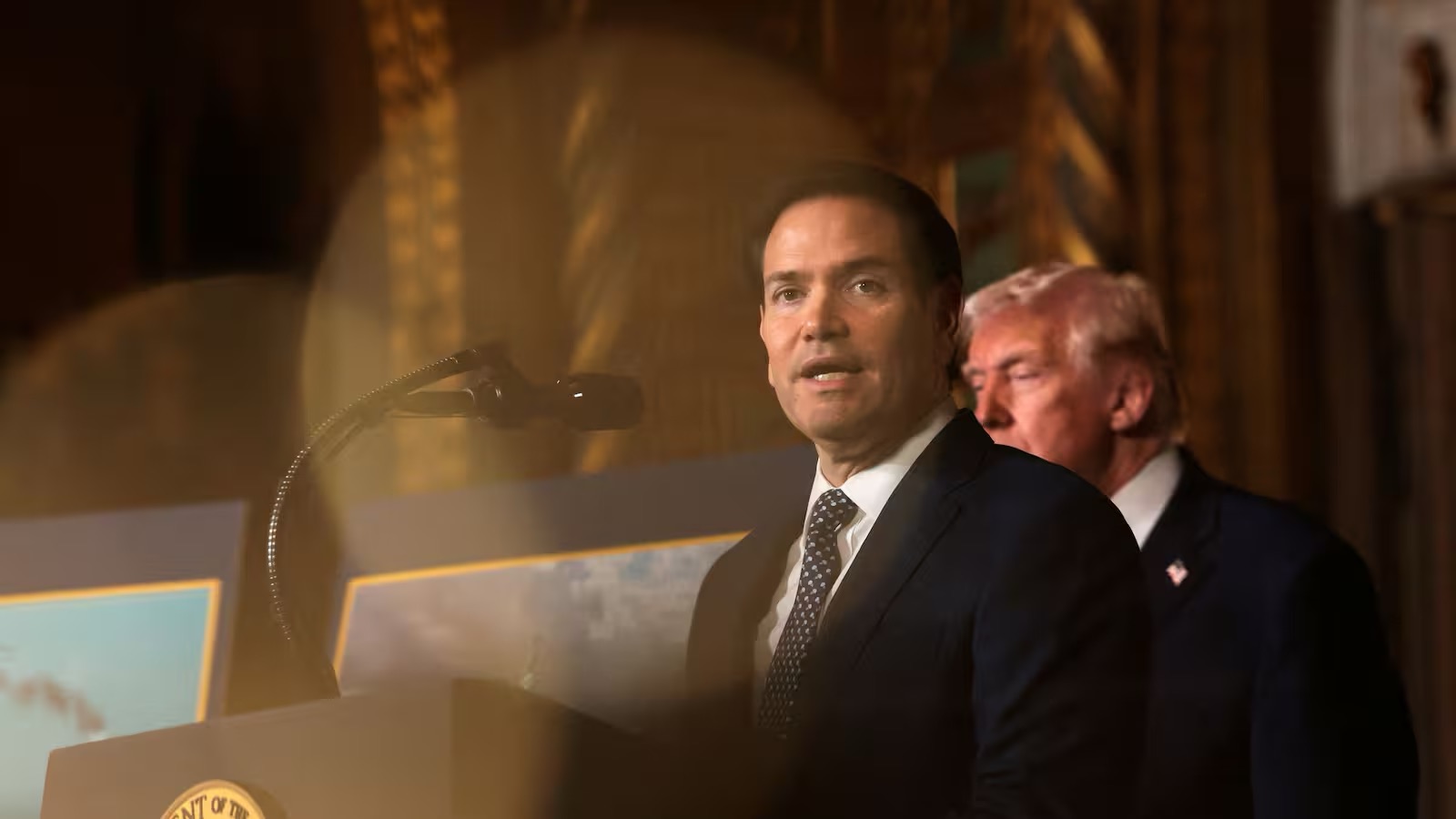
European leaders have sharply criticised the United States after Washington announced visa restrictions targeting foreign officials accused of participating in “censorship” and the suppression of free speech, escalating a transatlantic dispute over the limits of online regulation, digital sovereignty, and democratic values.
The move, unveiled by senior US officials this week, allows the denial of entry to individuals deemed responsible for restricting the speech of American citizens or companies abroad. While the policy does not name specific countries or officials, European governments have interpreted it as a direct warning aimed at the European Union’s regulatory framework governing digital platforms, content moderation, and misinformation.
Several European capitals responded with unusually blunt language, arguing that the US action misrepresents European laws and risks undermining cooperation between long-standing allies.

France’s foreign ministry said the visa bans reflected a “distorted understanding of European democratic safeguards,” adding that regulating online platforms was not censorship but a necessary measure to protect citizens from hate speech, disinformation, and foreign interference. Germany echoed the sentiment, with a government spokesperson stating that “the rule of law, not political pressure, guides content regulation in Europe.”
At the centre of the dispute is the growing divergence between Washington and Brussels on how to balance freedom of expression with the need to regulate powerful technology companies. The EU’s Digital Services Act (DSA) and Digital Markets Act (DMA) impose strict obligations on platforms to remove illegal content, curb disinformation, and ensure transparency in moderation practices. US officials, however, have increasingly framed these rules as potential threats to free speech, particularly when they affect American-based technology firms.
European Commission officials pushed back strongly, insisting that EU laws are content-neutral and apply equally to all companies operating within the bloc. “No one is being censored for their opinions,” a Commission spokesperson said. “What we regulate is illegal content and systemic risks, in line with democratically adopted laws.”
The visa ban announcement comes amid heightened political rhetoric in the US, where freedom of speech and opposition to content moderation have become prominent campaign issues. Senior US figures have accused foreign governments of pressuring social media companies to silence dissenting views, including content originating from the United States.
In Brussels, officials privately expressed concern that the visa policy could be used selectively and symbolically, rather than as a legal instrument, to intimidate regulators and policymakers. “This is a worrying precedent,” said one EU diplomat. “Disagreements over regulation should be resolved through dialogue, not punitive measures.”
The controversy has also reignited debate within Europe about digital sovereignty and reliance on US-based platforms. Lawmakers in the European Parliament argued that the visa bans highlight the fragility of transatlantic consensus on technology governance. Several MEPs called for the EU to accelerate efforts to develop home-grown digital infrastructure and reduce dependence on foreign tech giants.
Civil society groups on both sides of the Atlantic have offered mixed reactions. Free speech advocates welcomed the US stance, arguing that European regulations risk overreach and could chill legitimate expression. Others warned that framing regulatory enforcement as censorship oversimplifies a complex issue and ignores the harms posed by unchecked online content, including hate speech, harassment, and election interference.
“This debate is being weaponised politically,” said a digital rights researcher based in Berlin. “The real question is how democracies can protect free expression while also protecting people from real-world harm. Visa bans don’t solve that.”

Diplomatic analysts say the row could complicate broader US–EU cooperation at a time when unity is seen as critical on issues ranging from global security to economic stability. While neither side has signalled an intention to escalate further, the public nature of the disagreement suggests growing strain in what has traditionally been one of the world’s most influential alliances.
Despite the backlash, US officials have shown little sign of retreating from the policy, framing it as a defence of fundamental freedoms. European leaders, meanwhile, insist that the bloc will not soften its regulatory approach under external pressure.
As the debate over censorship, regulation, and free speech continues to intensify, the visa bans have become a flashpoint symbolising deeper philosophical differences between the US and Europe over how democracy should function in the digital age. Whether those differences can be bridged through dialogue—or harden into lasting division—remains an open question.