


AI Propels 2026 Growth Plans for Small Firms in ANZ
Small businesses across Australia and New Zealand (ANZ) are entering 2026 with renewed optimism, driven largely by the rapid adoption of artificial intelligence (AI). Once seen as a tool reserved for large corporations, AI is now becoming central to the growth strategies of small firms looking to improve efficiency, expand markets, and remain competitive in an uncertain economic environment.
For many small and medium-sized enterprises (SMEs), AI is helping to address long-standing challenges such as labour shortages, rising operational costs, and time-intensive manual processes. Business owners are increasingly using AI-powered tools for customer support, marketing, financial forecasting, and workflow automation. Tasks that once required dedicated teams — such as data analysis, content creation, and customer engagement — are now being handled with greater speed and accuracy through AI platforms.
The shift is also reshaping how small firms plan for growth. Rather than focusing solely on headcount expansion, many are prioritising technology investment to scale operations sustainably. AI-driven insights are enabling better decision-making, allowing firms to identify new revenue opportunities, personalise services, and respond quickly to changing consumer demands.

Digital marketing has emerged as a key area of AI adoption. Small businesses are leveraging generative AI to craft targeted campaigns, manage social media presence, and refine brand messaging, helping them compete with larger players at a fraction of the cost. In parallel, AI-enabled analytics tools are offering deeper visibility into customer behaviour and business performance.
Looking ahead to 2026, industry observers note that AI will be a defining factor in determining which small firms thrive. Those that successfully integrate AI into core operations are expected to see stronger productivity, improved resilience, and sustained growth. As AI tools become more accessible and affordable, they are set to play a transformative role in shaping the future of small businesses across the ANZ region.
Powertec to Distribute Fuzion Off-Grid Systems Across ANZ
Powertec Telecommunications has announced a new distribution partnership with Fuzion Technologies, under which it will supply Fuzion’s off-grid power systems across Australia, New Zealand and the wider ANZ region. The move strengthens Powertec’s offering in renewable and remote power solutions as demand grows for reliable energy in areas beyond traditional grid access.
Under the agreement, Powertec will distribute Fuzion’s range of compact, integrated off-grid systems designed to support telecommunications, surveillance, IoT and networking infrastructure. The solutions combine solar generation, energy storage and power management into a single unit, enabling fast deployment in remote, rural and temporary locations where consistent power supply remains a challenge.
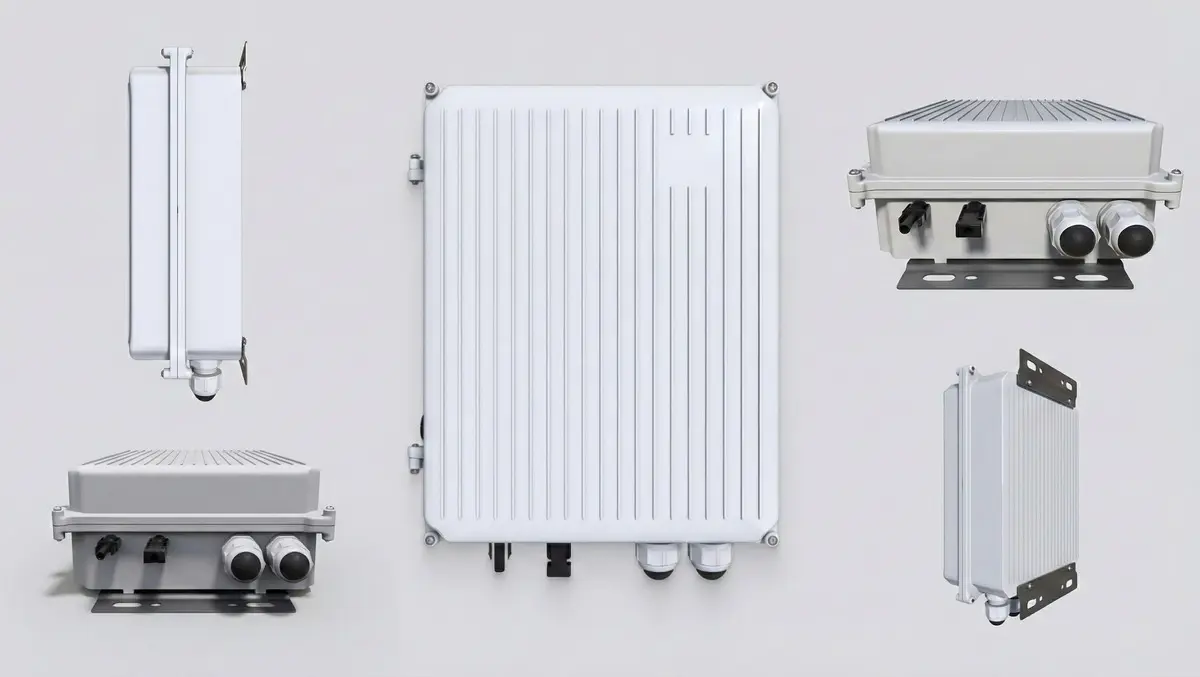
Industry observers note that off-grid power solutions are becoming increasingly critical as governments, enterprises and service providers expand connectivity into regional and hard-to-reach areas. Applications range from wireless broadband and cellular backhaul to smart city infrastructure, environmental monitoring and security systems. Fuzion’s systems are designed to operate autonomously, reducing maintenance requirements while delivering dependable performance in harsh environments.
Powertec said the partnership aligns with its focus on enabling end-to-end connectivity solutions, particularly for customers operating outside metropolitan centres. With an established distribution network and strong relationships with systems integrators and resellers, the company is well placed to scale adoption of off-grid technologies across multiple sectors, including mining, utilities, agriculture and public safety.
Fuzion Technologies, meanwhile, views the ANZ region as a key growth market for sustainable power solutions. The company believes Powertec’s technical expertise and regional reach will accelerate market penetration and support a broader shift toward resilient, renewable energy infrastructure.
The Fuzion off-grid systems are expected to be available immediately through Powertec and its authorised reseller network. The partnership reflects a broader industry trend toward integrating renewable power with connectivity, helping organisations deploy critical infrastructure in locations where conventional power options are limited or unavailable.
Rimini Street Unveils AI Layer to Modernise ERP Systems
Rimini Street has announced the launch of a new artificial intelligence (AI) layer aimed at modernising enterprise resource planning (ERP) systems and helping organisations extend the value of their existing technology investments. The move reflects growing demand from enterprises seeking innovation without the cost and disruption of large-scale ERP replacements.
The AI layer is designed to sit on top of established ERP platforms, enabling businesses to introduce advanced capabilities such as automation, predictive analytics and intelligent decision support. By analysing operational and financial data in real time, the solution helps organisations identify inefficiencies, anticipate risks and improve overall performance.

According to Rimini Street, the AI layer allows companies to modernise at their own pace. Rather than forcing a migration to new ERP versions, the approach focuses on enhancing what businesses already use. This is particularly relevant for organisations running stable but ageing systems that remain mission-critical yet lack modern intelligence and flexibility.
Key features include intelligent monitoring to detect anomalies, AI-driven forecasting to support planning and budgeting, and automated workflows that reduce manual intervention. The platform also introduces conversational interfaces, allowing users to interact with ERP data using natural language queries, making insights more accessible across departments.
Rimini Street executives said the AI layer addresses a common challenge faced by enterprises: balancing innovation with operational continuity. By integrating AI directly with existing systems, organisations can improve productivity, reduce operating costs and gain faster insights without compromising reliability.
The launch comes as businesses across industries increasingly explore practical applications of AI to boost efficiency and competitiveness. Analysts note that solutions which modernise legacy systems—rather than replace them—are gaining traction, especially amid economic uncertainty and tighter IT budgets.
With this new offering, Rimini Street positions itself as a key player in AI-driven ERP modernisation, providing enterprises with a flexible path to digital transformation while preserving long-term ERP investments.
LG Unveils CLOiD Home Robot to Drive Zero Labour Vision
LG has unveiled its new CLOiD home robot, reinforcing the company’s long-term Zero Labour vision aimed at minimising human effort in everyday household tasks through intelligent automation. The announcement marks a significant step in LG’s expansion into consumer robotics, positioning AI-powered assistants as central to the future of smart living.
Designed for modern homes, the CLOiD robot uses advanced artificial intelligence, spatial sensors and autonomous navigation to move seamlessly across indoor environments. LG says the robot is capable of assisting with a range of daily activities, from monitoring household routines and managing smart devices to supporting basic home maintenance tasks. By learning user preferences and behavioural patterns over time, CLOiD adapts its functions to deliver increasingly personalised assistance.

A standout feature of the CLOiD robot is its deep integration with LG’s smart home ecosystem. Connected to LG appliances and IoT platforms, the robot acts as a mobile control hub, enabling users to manage appliances, receive alerts and optimise household operations through voice or app-based commands. This interconnected approach allows CLOiD to coordinate tasks such as checking appliance status, managing energy usage and providing real-time updates.
LG executives say the CLOiD robot is designed not just for convenience, but to address broader societal challenges such as time scarcity, ageing populations and the growing demand for assisted living solutions. By reducing the need for manual intervention in routine tasks, the robot aims to enhance quality of life and free users to focus on more meaningful activities.
The launch reflects LG’s broader strategy to embed artificial intelligence across its product portfolio, moving beyond standalone devices toward adaptive, service-oriented technologies. Industry observers note that the CLOiD robot underscores intensifying competition in the home robotics space, as global technology firms race to define the next generation of intelligent living environments.
LG has indicated that further refinements and expanded capabilities are planned ahead of commercial rollout, positioning CLOiD as a cornerstone of its vision for labour-light, AI-enabled homes.
Samsung Unveils 6K 3D and 1,040Hz Odyssey Monitors
Samsung has expanded its Odyssey gaming and performance monitor lineup with the unveiling of two groundbreaking displays: a 6K 3D monitor and an ultra-fast 1,040Hz Odyssey monitor, underscoring the company’s push to redefine visual immersion and speed in next-generation displays.
The new 6K 3D monitor introduces a glasses-free three-dimensional viewing experience, delivering exceptional depth and realism without additional hardware. With its ultra-high 6K resolution, the display offers sharp detail and enhanced spatial perception, making it suitable not only for immersive gaming but also for professional applications such as 3D modelling, design visualisation and advanced content creation. Samsung’s proprietary display technology dynamically adjusts visuals to create realistic depth while maintaining image clarity and colour accuracy.
Alongside it, Samsung revealed an Odyssey monitor boasting an unprecedented 1,040Hz refresh rate, setting a new benchmark for motion performance. Designed for competitive gamers and high-speed visual applications, the monitor delivers extremely smooth motion and ultra-low latency, reducing motion blur and providing near-instant on-screen responsiveness. This level of performance is expected to appeal to esports professionals and enthusiasts who prioritise speed and precision.
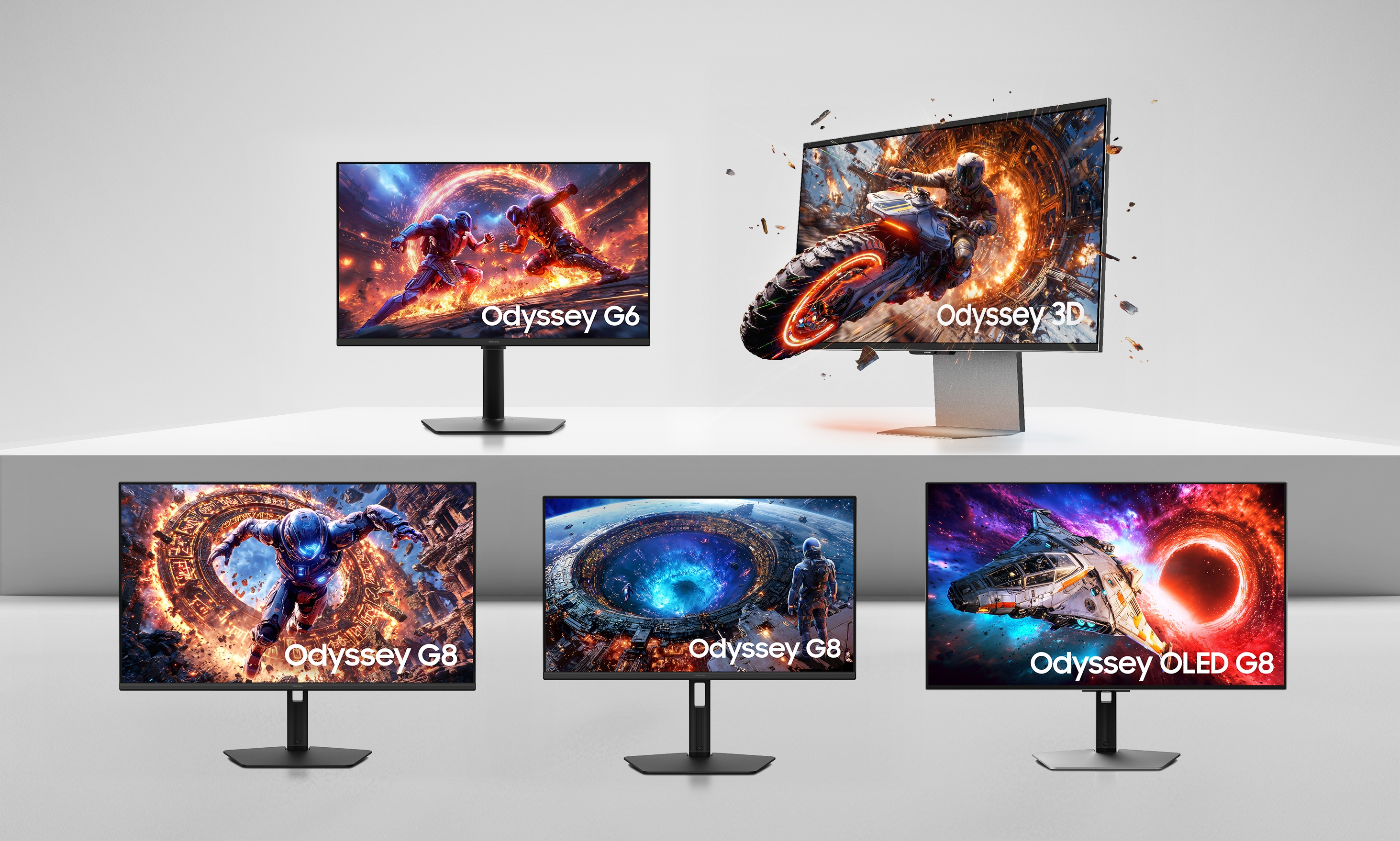
Both monitors feature advanced panel technology, high contrast ratios and wide colour coverage, ensuring visual quality matches performance. Samsung has also focused on ergonomic design, incorporating adjustable stands and eye-comfort features to support extended usage. Modern connectivity options and adaptive sync technologies further ensure compatibility with high-end graphics systems.
Samsung executives said the new Odyssey models reflect the company’s vision of merging immersion and performance into a single display ecosystem. By pushing resolution, refresh rates and 3D capabilities beyond current standards, Samsung aims to shape the future of gaming and professional displays.
With global availability expected in key markets, the new Odyssey monitors are likely to generate strong interest among gamers, creators and technology enthusiasts, reinforcing Samsung’s leadership in display innovation.






