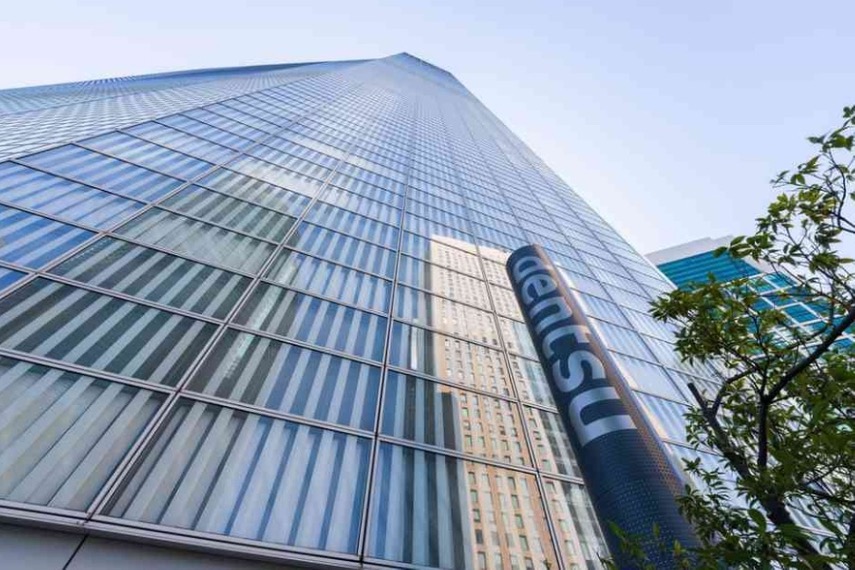
Dentsu Group Inc., Japan’s largest advertising and communications conglomerate, has announced plans to sell its iconic Ginza building in central Tokyo, a move expected to generate a gain of more than ₹1,700 crore in the fiscal year ending March 2026. The decision marks a significant moment for the company, blending financial strategy with the symbolic departure from a historic asset that has long been part of its corporate identity.
The sale was approved by Dentsu’s board in late December, with the transaction scheduled to close in January 2026. While details regarding the buyer and the final sale price have not been disclosed, the company has confirmed that the purchaser is not a related party and has no capital or personnel ties to Dentsu. The expected gain from the sale is projected to be recorded as an extraordinary profit in FY26.
A Landmark Property in Tokyo’s Prestigious Ginza District
The building, located in the heart of the Ginza district—one of Tokyo’s most renowned commercial and cultural hubs—has deep historical significance. Constructed in 1933, the structure has been associated with Japan’s advertising industry for decades and has housed several institutions linked to Dentsu’s legacy. Over the years, it came to represent the company’s longstanding presence in the country’s media and communications landscape.
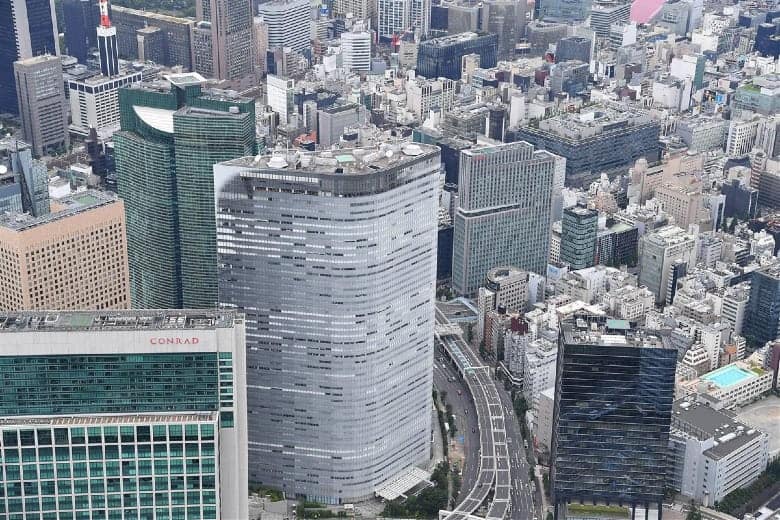
Despite its iconic status, the building is no longer in active operational use. Rising maintenance expenses, ageing infrastructure, and fixed asset taxes have increasingly weighed on the company’s balance sheet. Dentsu acknowledged that the cost of preserving and maintaining the historic property has grown steadily, prompting a reassessment of its strategic value.
Strategic Shift and Capital Optimisation
The decision to sell the Ginza building aligns with Dentsu’s broader efforts to optimise capital allocation and streamline its asset portfolio. Like many legacy firms, the company is navigating a period of transformation as traditional advertising revenues face pressure and digital, data-driven services become central to future growth.
By divesting non-core real estate assets, Dentsu aims to improve asset efficiency and free up capital for reinvestment in growth areas such as digital marketing, technology-enabled communications, and global business integration. The company has signalled that strengthening its financial foundation remains a priority amid ongoing changes in the global advertising and media industry.
The anticipated gain of approximately ₹1,700 crore is expected to provide a temporary boost to earnings, potentially improving financial flexibility at a time when many advertising firms are grappling with cost pressures and evolving client demands. Dentsu has stated that the impact of the transaction will be reflected in its consolidated financial outlook for FY26, which will be released alongside its full-year FY25 results.
Balancing Heritage and Business Realities
The sale of the Ginza building carries symbolic weight beyond its financial implications. For decades, the property stood as a physical marker of Dentsu’s history and influence within Japan’s advertising sector. Its sale underscores a broader shift among established Japanese corporations, many of which are reassessing long-held assets in favour of leaner, more flexible operating models.
While some observers view the move as the end of an era, others see it as a pragmatic response to modern business realities. Maintaining historic buildings in prime urban locations can be costly, particularly when they no longer serve a direct operational purpose. In this context, Dentsu’s decision reflects a growing willingness among corporate leaders to prioritise long-term competitiveness over sentiment.
Market Context and Industry Implications
The divestment comes at a time when Japan’s commercial real estate market continues to attract strong interest, especially in premium districts such as Ginza. High demand from domestic and international investors has supported valuations, creating favourable conditions for asset sales. Dentsu’s timing suggests it is seeking to capitalise on these market dynamics while interest remains robust.
Within the advertising industry, the move highlights the pressures facing traditional agencies as clients increasingly demand measurable results, integrated digital solutions, and data-driven strategies. Dentsu, which operates globally following its international expansion, has been working to reposition itself as a modern communications group rather than a conventional advertising firm.
The capital unlocked through the Ginza sale may support this transition, either by strengthening the balance sheet or funding strategic initiatives. While the company has not specified how the proceeds will be used, analysts expect a focus on investments that support long-term growth rather than short-term gains.
Looking Ahead
As Dentsu prepares to close the sale in early 2026, attention will turn to how the company deploys the financial benefits of the transaction and how it continues to reshape its operations in a rapidly changing industry. The sale of the Ginza building represents more than a real estate deal—it signals a deliberate shift toward a future-oriented strategy.
In shedding a historic asset, Dentsu is drawing a clear line between its past and its ambitions for the years ahead. While the Ginza building will remain part of the company’s legacy, its sale reflects a broader narrative of transformation, adaptation, and the pursuit of sustainable growth in an increasingly digital world.