
Iranian authorities have intensified efforts to identify and shut down users of Starlink satellite internet as part of a broader crackdown aimed at preventing protest footage from reaching global audiences. As nationwide demonstrations continue to challenge the country’s leadership, control over digital communication has emerged as a critical front in the state’s response.
Over recent weeks, Iran has imposed sweeping internet restrictions, disrupting mobile data networks, broadband connections, and popular social media platforms. These blackouts, often imposed during periods of unrest, are designed to limit coordination among protesters and restrict the flow of information beyond the country’s borders. In this environment, Starlink — a satellite-based internet service operated by SpaceX — has become a vital alternative for activists and ordinary citizens seeking to share videos, images, and firsthand accounts of protests.
Starlink terminals, smuggled into Iran through informal networks, allow users to bypass state-controlled infrastructure and connect directly to satellites orbiting the Earth. For many protesters, this technology has offered a rare window to the outside world, enabling them to upload footage of street demonstrations, clashes with security forces, and arrests that state media does not broadcast.
Iranian officials, however, view Starlink as a direct threat to national security and narrative control. Authorities have declared the use of unauthorized satellite internet illegal and have begun actively searching for Starlink equipment across major cities. Security forces have reportedly conducted rooftop inspections, neighborhood sweeps, and targeted raids to confiscate satellite dishes and terminals suspected of being used to transmit protest material.
In some areas, residents say they have been warned that possession or use of satellite internet equipment could result in severe penalties. The government has framed Starlink usage as a form of foreign interference, accusing external actors of fueling unrest through digital platforms and satellite connectivity. This rhetoric has been used to justify harsher surveillance measures and expanded enforcement powers.
Beyond physical seizures, Iran has also invested in electronic countermeasures to disrupt satellite connections. Users report intermittent service outages, signal interference, and difficulties maintaining stable connections, suggesting the deployment of jamming technologies. While satellite internet is harder to block than terrestrial networks, experts note that sustained interference can significantly degrade performance and discourage use.
Despite these efforts, Starlink continues to play a crucial role in circulating protest content internationally. Many users operate covertly, setting up terminals only briefly to upload material before dismantling them to avoid detection. Videos are often sent to trusted contacts abroad, who then distribute them on social media platforms, amplifying their reach and drawing international attention to events inside Iran.
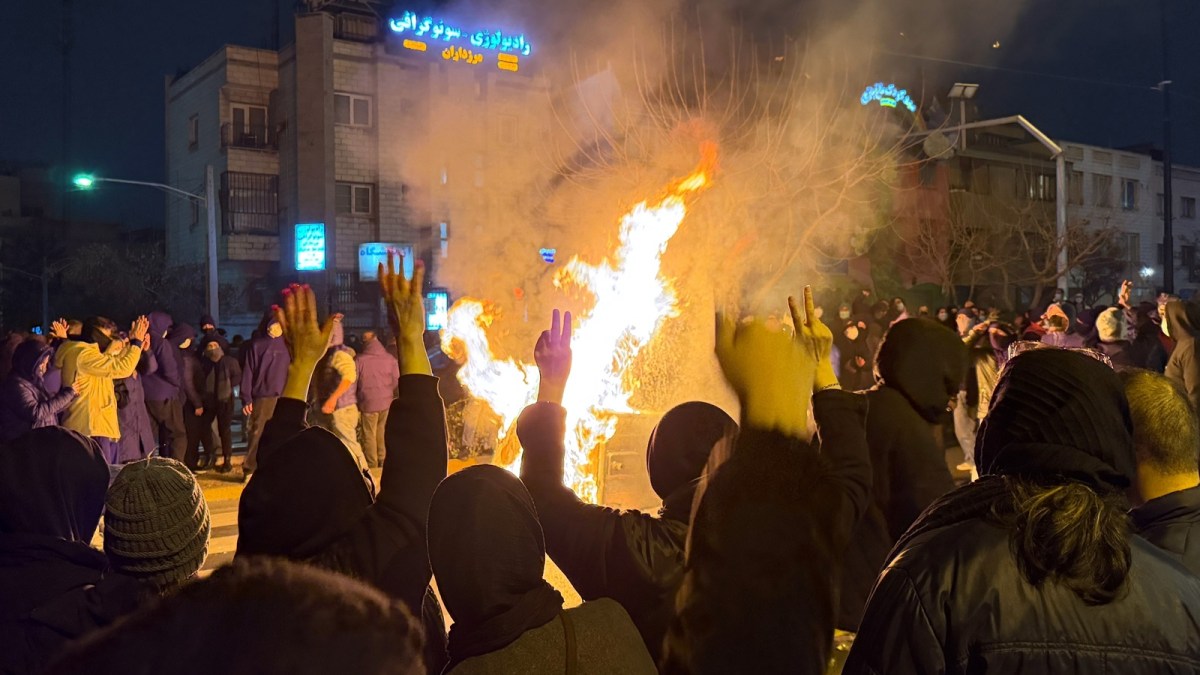
The government’s determination to suppress these digital channels reflects a broader strategy to contain the political fallout of the protests. Iranian state media has largely portrayed the unrest as limited in scale or instigated by hostile foreign powers. Viral videos shared via satellite connections have challenged this narrative, showing large crowds, widespread demonstrations, and heavy-handed security responses.
Human rights advocates argue that satellite internet has become essential for documenting alleged abuses, particularly during periods when journalists face restrictions or expulsion. Without such technology, they warn, the outside world would have limited visibility into the situation on the ground, leaving protesters isolated and vulnerable.
The battle over Starlink also highlights the growing role of private technology companies in geopolitical conflicts. Satellite internet, originally designed to provide connectivity in remote or underserved regions, is increasingly being used as a tool of digital resistance in authoritarian environments. This has raised questions about the responsibilities of tech firms, the limits of state sovereignty over information, and the future of internet governance.
For Iranian authorities, the challenge lies in balancing enforcement with feasibility. Completely eliminating satellite internet access remains difficult, especially as devices become smaller, more portable, and easier to conceal. At the same time, the risk faced by users continues to rise as surveillance intensifies and penalties become more severe.

As protests persist, control over information remains central to the struggle between the state and its critics. While security forces seek to silence dissent by cutting connections and hunting down satellite users, protesters continue to adapt, finding new ways to communicate and document their movement. The outcome of this digital standoff may shape not only the trajectory of the current unrest, but also the future of information control in Iran.
In the modern protest landscape, images and videos can be as powerful as marches and slogans. For Iran’s demonstrators, Starlink has become more than a technology — it is a lifeline to global visibility. For the government, stopping that lifeline has become an urgent priority in its effort to contain unrest and maintain control.