


A significant wave of job losses struck the Canadian auto sector Friday as General Motors Canada moved ahead with layoffs tied to the elimination of a production shift at its Oshawa Assembly Plant. The reduction is expected to put up to 1,200 workers out of work, including direct plant employees and individuals across the broader supplier network, marking one of the largest recent employment setbacks for the region’s manufacturing base.
The layoffs took effect following the final overnight production run under the plant’s third shift schedule. Workers completed their last shift early Friday morning, closing out a chapter that had represented a key part of Oshawa’s revived automotive production footprint. Going forward, the facility will continue operations on a two-shift model, significantly reducing overall staffing needs.
Union representatives said hundreds of assembly line workers are directly affected, with additional layoffs extending to contractors, parts suppliers, logistics staff, and on-site service providers. Because modern auto manufacturing operates through tightly connected supply chains, employment impacts are expected to ripple beyond the plant floor into surrounding businesses that depend on assembly operations.
The Oshawa plant has long been a pillar of Canada’s automotive sector and a major employer in the Durham Region. Its recent revival had been widely celebrated after earlier shutdown threats earlier in the decade. The current workforce had ramped up production of full-size pickup trucks, and the third shift was introduced to meet output targets during a period of strong demand. The removal of that shift signals a recalibration of production volumes and cost structures.
GM Canada said the decision reflects changing market conditions and production planning adjustments rather than a full withdrawal from Oshawa operations. Company officials emphasized that the plant remains active and that investments made in recent years will continue to support ongoing manufacturing there. Management also stated that it has worked with union leadership to provide transition support measures for affected workers, including severance options, retirement packages for eligible employees, and benefit extensions where applicable.
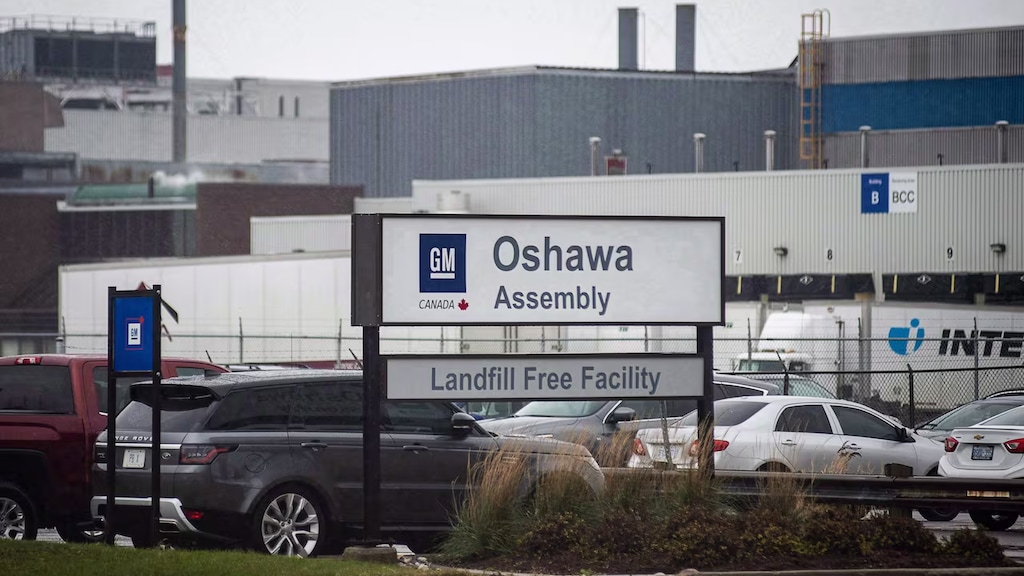
Nevertheless, the announcement has generated anxiety and frustration among workers and community leaders. Many employees learned only recently that their roles were at risk, and some reported that Friday’s shift would be their last scheduled day on the job. For newer hires and lower-seniority workers, reassignment opportunities are limited, leaving layoffs as the most likely outcome.
Union leaders described the moment as deeply difficult for families who rely on stable industrial employment. They noted that auto assembly jobs typically support households, mortgages, and local spending, meaning the consequences will be felt well beyond individual workers. Representatives pledged to continue discussions with the company regarding redeployment possibilities and future hiring should production volumes increase again.
Local officials expressed concern about the broader economic effect on Oshawa and nearby communities. The city’s identity has been closely tied to vehicle manufacturing for generations, and even temporary reductions in plant activity can weigh heavily on small businesses, housing stability, and municipal revenues. Restaurants, retail stores, and service providers around the plant area often see immediate declines in traffic when shifts are cut.
Economic analysts say the move reflects a wider transformation underway across the North American auto industry. Automakers are adjusting production footprints as they balance vehicle demand, electrification investments, technology spending, and cost pressures. Plants are increasingly expected to operate with flexibility, scaling output up or down more quickly than in previous decades. Shift reductions, while disruptive, have become one of the primary levers companies use to manage fluctuations.
Industry observers also point to intensifying global competition and capital allocation toward electric and software-driven vehicle platforms. As automakers invest billions into next-generation technologies, legacy production lines can face tighter margins and closer scrutiny. Even profitable facilities are not immune to restructuring if output levels change.
Workers leaving the Oshawa plant now face a challenging labor market transition. While skilled trades and manufacturing experience remain valuable, comparable wage opportunities are not always immediately available nearby. Employment agencies in the region expect a surge of applicants seeking industrial, technical, and warehouse roles in the coming weeks.
Community organizations and workforce development groups have begun mobilizing support efforts, including job placement services, retraining guidance, and financial counseling. Provincial and federal representatives are also under pressure to outline strategies aimed at stabilizing auto sector employment and strengthening domestic manufacturing resilience.

Despite the layoffs, GM Canada maintains that Oshawa continues to play a role in its production network. Company statements highlight prior capital commitments and say the plant remains strategically important. Whether future product allocations or new vehicle programs could restore lost shifts remains uncertain.
For now, however, Friday marks a turning point for hundreds of workers clocking out for the final time under the eliminated shift. The immediate focus for many is on severance arrangements, benefit coverage, and the search for new employment. For the Oshawa community, the event serves as another reminder of how quickly fortunes can change in an industry undergoing rapid transformation.






