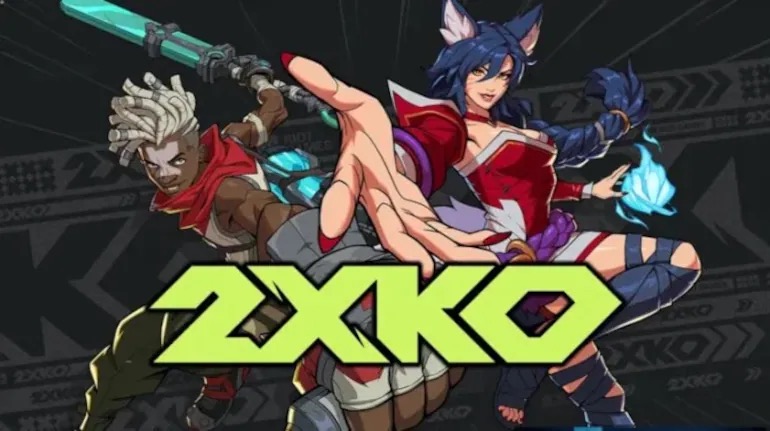
Riot Games has laid off roughly half of the development team behind its newly launched fighting game 2XKO, marking a swift and unexpected restructuring only weeks after the title entered the market. The move affects dozens of developers and comes amid what the company described as lower-than-expected player momentum and engagement following release.
The decision represents one of the fastest post-launch staffing reductions for a major studio title in recent years and has sparked widespread discussion across the gaming industry about live-service expectations, genre competition, and shifting publisher priorities.
2XKO is a tag-based, free-to-play fighting game set in the universe of Riot’s flagship franchise League of Legends. Originally revealed years earlier under a different project name, the game was positioned as Riot’s major entry into the competitive fighting game space — a genre historically dominated by long-running series with deeply established communities. Anticipation had built steadily through previews, test builds, and tournament showcases, with Riot emphasizing accessibility, team-based mechanics, and esports potential.
However, according to internal communications summarized by staff and community partners, player growth after launch did not meet internal targets. While the game reportedly attracted a dedicated core audience, overall engagement levels were said to have plateaued sooner than projected. Company leadership concluded that maintaining the original team size was not sustainable under current performance trends.
In a statement shared with the player community, the game’s leadership said the restructuring was aimed at aligning development resources with realistic long-term support plans. Executives emphasized that 2XKO is not being canceled and will continue to receive updates, balance patches, and organized competitive events. The studio described the change as a shift from expansion mode to focused live support.
:sharpen(0.5,0.5,true)/tpg%2Fsources%2F8a384006-f024-4ede-bc0d-4ef8b6c7822e.jpeg)
Employees impacted by the layoffs are expected to receive severance packages and job placement assistance, including opportunities to apply for other roles within Riot where available. Still, the cuts have been difficult for many involved, particularly given the project’s long development cycle and the timing so soon after launch. Several departing developers posted farewell messages online, highlighting years of work on gameplay systems, character design, and netcode infrastructure.
Industry analysts say the situation reflects the increasingly data-driven nature of modern game publishing. Live-service titles are often evaluated quickly based on retention metrics, daily active users, and monetization performance. If early trends fall short of forecasts, publishers may move rapidly to reduce costs and re-scope support plans. This approach, while financially pragmatic, can clash with the slower growth patterns that some competitive games historically follow.
Fighting games in particular often build audiences gradually through word of mouth, tournament scenes, and content updates. Unlike blockbuster shooters or open-world titles, they may not peak immediately at launch. Some commentators argue that judging a fighting game’s long-term viability within weeks may be premature. Others counter that development costs and team sizes at major studios leave little room for extended underperformance.
Community reaction has been mixed. Many players expressed disappointment and concern for affected developers, while also worrying about how a reduced team might impact the game’s content roadmap. Questions have emerged about the pace of new character releases, feature additions, and competitive support. At the same time, a portion of the player base says a smaller, more focused team could improve responsiveness and balance tuning if priorities are clearly defined.
Riot Games has undergone broader restructuring efforts over the past few years as it rebalances its portfolio. While its core titles — including League of Legends and Valorant — remain highly successful, several side initiatives and experimental projects have been scaled back or reorganized. Company leadership has repeatedly stated that future investments will concentrate on projects with strong and sustained player traction.
The launch of 2XKO was seen internally as both a creative and strategic expansion — an attempt to translate Riot’s character-driven universe into a new competitive genre. The game introduced duo-based combat mechanics designed to encourage teamwork and spectator excitement, along with simplified input options aimed at welcoming newcomers. Early previews were generally positive about the gameplay foundation, though some critics noted limited launch content and a steep mastery curve at higher levels of play.

Esports organizers and tournament communities are now watching closely to see how the restructuring affects planned competitive circuits. Riot has indicated that scheduled events and partnerships will continue, suggesting that organized play remains part of the long-term strategy. Whether prize pools, production scale, or frequency change remains to be seen.
From a business perspective, the episode highlights the high-risk nature of big-budget multiplayer launches outside a studio’s established genre strengths. Even companies with massive player ecosystems cannot guarantee immediate breakout success in new categories. Market saturation, player time limits, and strong incumbents all create barriers to rapid growth.
For affected developers, the layoffs are another reminder of volatility within the global games industry, which has seen repeated hiring surges followed by contractions across multiple studios. For players, the key question is whether 2XKOcan stabilize, grow its competitive scene, and justify continued investment with a leaner team.
Riot maintains that development is continuing — but under a tighter, more targeted model. The coming months will determine whether that approach can turn an ambitious genre entry into a sustainable long-term title.