


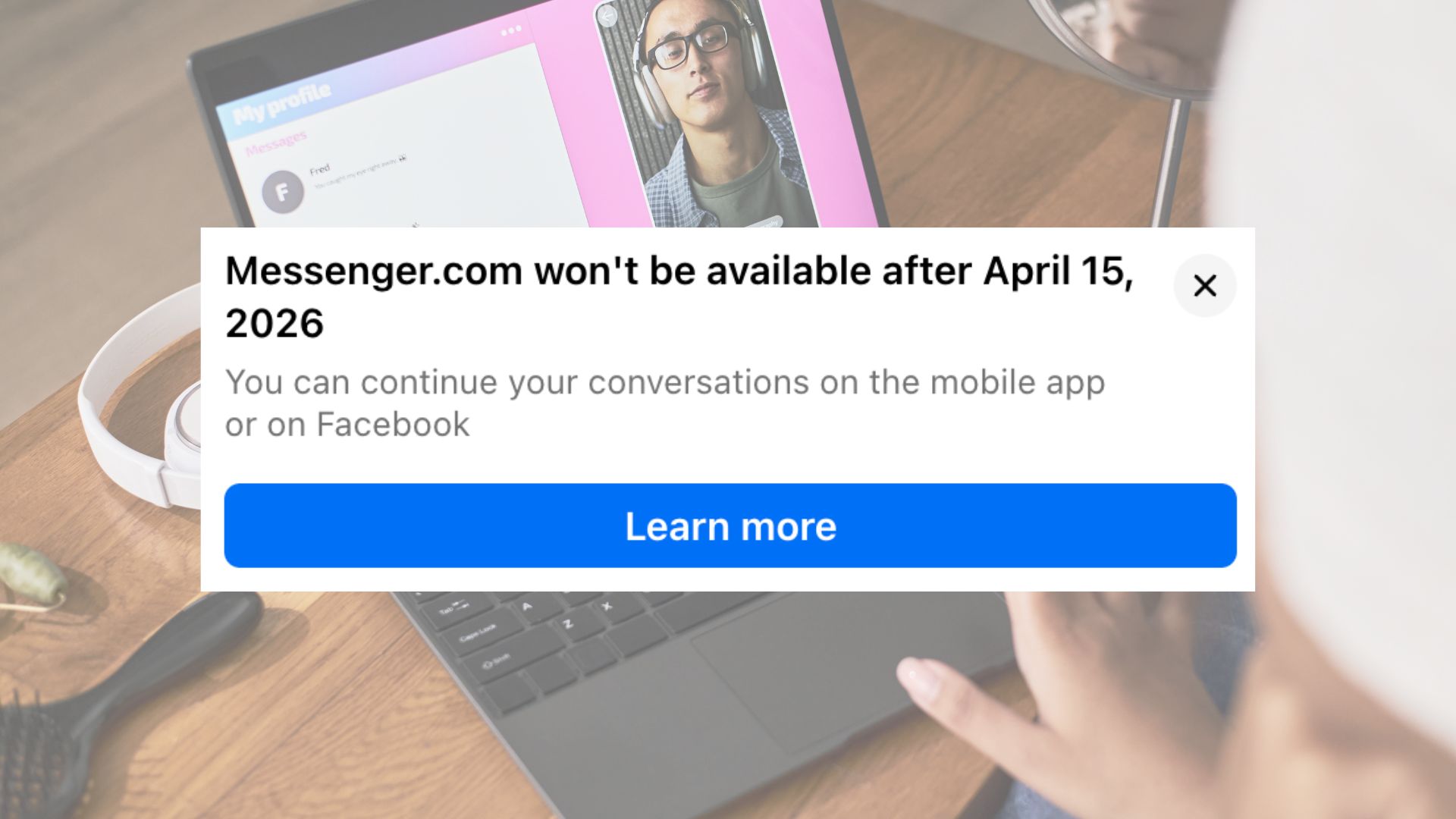
In a major restructuring of its communication platforms, Meta Platforms has announced that its standalone Messenger website, messenger.com, will officially shut down in April 2026. The decision marks the end of independent web access for Facebook Messenger, as users will instead be redirected to Facebook’s integrated messaging interface hosted within Facebook.
The move follows Meta’s earlier discontinuation of dedicated Messenger desktop applications for Windows and macOS, signaling a broader company strategy aimed at consolidating services, reducing operational complexity, and bringing users back into its primary ecosystem.
Messenger.com to Be Phased Out
Messenger.com was originally launched to offer users a simplified messaging experience separate from Facebook’s main social media environment. It allowed people to send messages, make voice and video calls, and manage conversations without navigating news feeds, advertisements, or notifications tied to the larger platform.

For many users — particularly professionals, students, and those seeking minimal distractions — the standalone website became an essential communication tool. However, Meta has now confirmed that access to messenger.com will cease in April 2026. Anyone attempting to visit the site afterward will automatically be redirected to facebook.com/messages, where Messenger functions will continue within Facebook itself.
While messaging capabilities will remain available, the independent identity of Messenger on the web will effectively disappear.
Desktop Applications Already Discontinued
The shutdown of the Messenger website comes after Meta quietly phased out standalone Messenger desktop applications. These apps had provided users with native desktop functionality, enabling notifications, calling features, and multitasking without relying on browser tabs.
With both desktop apps and messenger.com being retired, Meta is eliminating nearly all non-mobile standalone access points for Messenger. Users accessing the service on computers will now depend entirely on Facebook’s main website through a browser-based experience.
The Messenger mobile application, however, will remain unchanged. Available on Android and iOS devices, it continues to operate as a separate app and remains one of Meta’s most widely used services globally.
Strategic Shift Toward Platform Integration
Industry observers view the decision as part of Meta’s ongoing effort to streamline operations and strengthen integration across its digital platforms. Maintaining separate web infrastructures and desktop applications requires continuous development, security updates, and technical maintenance. Consolidation allows the company to reduce costs while focusing engineering resources on fewer platforms.
By directing Messenger users back into Facebook, Meta also increases engagement across its ecosystem. Messaging activity now occurs alongside other Facebook features such as groups, marketplace listings, events, and content feeds, potentially encouraging users to spend more time within the platform.
The shift reflects Meta’s evolving philosophy that communication tools should function as integrated components rather than standalone services.
Cost Efficiency and Organizational Priorities
The restructuring arrives at a time when Meta has been reassessing spending priorities while investing heavily in emerging technologies such as artificial intelligence systems, immersive digital environments, and next-generation computing platforms. Simplifying legacy services helps offset operational expenses tied to maintaining older or overlapping infrastructure.
Technology analysts suggest that Messenger’s independent web presence may have become less necessary as user behavior increasingly shifted toward mobile devices. Smartphones now dominate messaging usage worldwide, reducing reliance on desktop-based communication platforms.
From a corporate perspective, consolidating Messenger into Facebook represents both a cost-saving measure and a strategic alignment with current usage trends.
Mixed Reactions From Users
User response to the announcement has been divided. Some welcome the change, viewing it as a logical simplification that removes redundant services. Others, however, have expressed disappointment at losing a focused messaging environment free from social media distractions.
Messenger.com had gained popularity among users who preferred chatting without interacting with Facebook’s algorithm-driven content feed. For them, the closure represents not just a technical adjustment but a shift in how online communication is experienced.
Privacy-conscious users have also raised concerns about increased integration between messaging activity and broader social engagement data within Facebook’s ecosystem.
Part of a Larger Industry Pattern
Meta’s decision mirrors a wider industry trend in which technology companies consolidate services to build unified platforms rather than maintaining multiple independent products. As competition intensifies and operational costs rise, companies increasingly favor centralized ecosystems that combine communication, entertainment, commerce, and social interaction.
For Meta, messaging remains central to its global strategy, but the company appears less interested in supporting Messenger as an independent web destination. Instead, communication is being repositioned as one feature within a larger interconnected digital environment.
Transition Ahead
As April 2026 approaches, users who rely on messenger.com or former desktop applications will need to adapt to accessing messages through Facebook’s main website or continue using the mobile app. Meta has indicated that conversation histories, contacts, and features will remain intact during the transition, minimizing disruption to ongoing communication.
The shutdown of messenger.com marks the end of an era for Messenger’s standalone presence online. Once promoted as a way to separate communication from social media, the service is now being fully reintegrated into Facebook — underscoring Meta’s long-term push toward consolidation, efficiency, and ecosystem-driven engagement in an increasingly competitive digital landscape.






