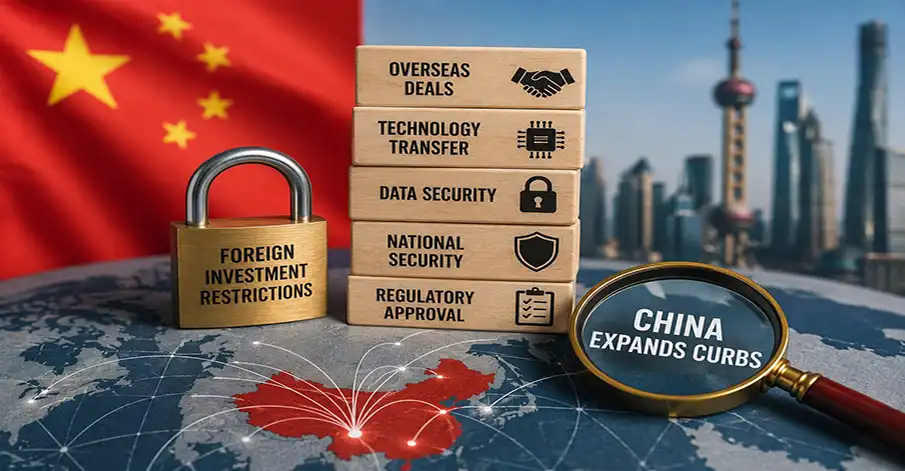
China has announced a significant expansion of restrictions on foreign business deals and technology transfers, signaling a tougher stance on the movement of strategic technologies beyond its borders. The policy shift comes after growing concerns over the handling of advanced artificial intelligence technologies and follows heightened scrutiny surrounding the relationship between Chinese AI startup Manus and foreign technology companies, including Meta.
The move underscores Beijing’s determination to strengthen control over emerging technologies that it considers vital to national security, economic competitiveness, and technological self-reliance. Analysts say the latest measures represent one of the most comprehensive efforts by China in recent years to regulate foreign access to domestic innovations in fields such as artificial intelligence, semiconductors, quantum computing, robotics, and advanced manufacturing.
According to officials familiar with the new framework, Chinese companies operating in sensitive sectors will face stricter oversight when entering partnerships with foreign firms, licensing proprietary technologies, seeking overseas investment, or transferring technical expertise outside the country. Authorities are also expected to increase scrutiny of mergers, acquisitions, and joint ventures involving international entities.
The changes come amid an increasingly competitive global race for technological leadership. Governments around the world have introduced measures to protect critical technologies, citing concerns about national security and economic resilience. China’s latest actions reflect its belief that advanced technologies are strategic assets that require greater protection from foreign influence and acquisition.
The Manus episode appears to have played a key role in accelerating regulatory action. The AI startup attracted widespread attention due to reports involving collaborations and potential technology-sharing arrangements with overseas organizations. Although details surrounding the matter remain limited, the case sparked discussions among policymakers about whether existing regulations were sufficient to prevent sensitive technologies from leaving the country through indirect channels.
In response, Chinese regulators conducted reviews of existing technology-transfer rules and foreign investment policies. The result is a broader regulatory framework that places additional obligations on companies involved in cross-border transactions. Businesses may now be required to disclose more information about foreign investors, partnership agreements, and the nature of technologies being shared or developed jointly.
Artificial intelligence has become a particular focus of regulatory attention. China has invested heavily in AI development and views the technology as a cornerstone of future economic growth and national competitiveness. Under the expanded restrictions, companies developing advanced AI models may face tighter controls on sharing algorithms, training methods, datasets, and other technical information with foreign organizations.
Experts believe the government is especially concerned about preventing strategic innovations from contributing to the technological advancement of rival nations. By tightening oversight, Beijing hopes to ensure that domestically developed breakthroughs remain under Chinese control and continue to support national industrial goals.
The new measures are also expected to affect foreign investors seeking opportunities in China’s technology sector. Venture capital firms, multinational corporations, and international investment groups may encounter longer review processes and stricter approval requirements. Authorities are likely to examine ownership structures, funding sources, and potential national security implications before authorizing major transactions.
While the restrictions are designed to protect strategic interests, they may also create new challenges for businesses. Many Chinese technology firms have relied on international partnerships to access global markets, attract investment, and collaborate on research and development projects. Increased regulatory barriers could complicate these relationships and slow the pace of cross-border cooperation.
Foreign companies operating research centers in China may likewise face greater compliance obligations. Firms involved in joint development projects or technology licensing arrangements will need to ensure that their activities align with the revised regulations. Legal experts expect demand for compliance and regulatory consulting services to increase as businesses adapt to the changing environment.
Supporters of the new framework argue that stronger oversight is necessary in an era when technology has become closely linked to national security. They point to growing international restrictions on technology exports and investments as evidence that countries are increasingly prioritizing strategic control over critical innovations.

Critics, however, warn that excessive restrictions could hinder innovation by limiting collaboration between researchers, companies, and institutions across borders. International cooperation has historically played a major role in advancing scientific and technological progress, particularly in rapidly evolving fields such as artificial intelligence. Some industry observers fear that stricter controls could reduce opportunities for knowledge exchange and slow the development of new technologies.
The policy changes also reflect China’s broader push for technological self-sufficiency. In recent years, Beijing has launched numerous initiatives aimed at reducing dependence on foreign technologies and strengthening domestic capabilities. Massive investments have been directed toward semiconductor production, advanced manufacturing, renewable energy, and AI research.
Officials have repeatedly emphasized the importance of building a resilient innovation ecosystem capable of withstanding geopolitical tensions and external pressures. The latest restrictions fit squarely within that strategy, reinforcing the government’s commitment to maintaining control over key technologies.
As implementation begins, companies across multiple industries are expected to review their international operations and reassess their partnerships. Regulators are likely to issue additional guidance in the coming months to clarify how the rules will be applied and which sectors will face the highest levels of scrutiny.
The expansion of restrictions marks another chapter in the growing global competition over technology and innovation. With nations increasingly treating advanced technologies as strategic resources, the movement of knowledge, capital, and expertise across borders is becoming more tightly regulated. For China, the latest measures demonstrate a clear intention to safeguard its technological achievements and strengthen its position in the evolving global innovation landscape.