Ramp Raises $750 Million at $44 Billion Valuation as Harvard Classmates Build Finance Giant
Financial technology company Ramp has raised $750 million in a new funding round, achieving a valuation of $44 billion and cementing its position as one of the most valuable private fintech firms in the United States.
Founded by Harvard classmates Eric Glyman and Karim Atiyeh, Ramp began as a corporate card provider focused on helping businesses manage spending more efficiently. Over time, the company expanded its offerings to include expense management, accounts payable automation, procurement tools, travel management, and AI-powered financial services.
The latest funding round reflects strong investor confidence in Ramp’s rapid growth and expanding role in corporate finance. The company has gained popularity among businesses of all sizes by offering software that not only tracks spending but also identifies unnecessary expenses and automates routine financial tasks.
Unlike traditional corporate card providers that often benefit from increased customer spending, Ramp has built its brand around helping companies save money and improve operational efficiency. This approach has resonated with finance teams seeking greater visibility and control over corporate expenditures.

The new capital is expected to support product development, artificial intelligence initiatives, and potential expansion into additional financial services. Ramp has increasingly integrated AI tools into its platform to automate expense reporting, accounting workflows, and financial analysis, reducing administrative burdens for businesses.
The funding comes at a time when investor interest in high-growth fintech companies is rebounding after a period of caution across the technology sector. Ramp’s ability to combine financial services with software automation has helped it stand out in a competitive market.
With a valuation of $44 billion and fresh capital to fuel expansion, Ramp is entering a new phase of growth. The company’s rise from a startup founded by two college classmates to a major force in corporate finance highlights the growing demand for technology-driven solutions that simplify business operations and improve financial efficiency.
UK AI Startup Recursive Reaches $4.65 Billion Valuation After $650 Million Funding Round
UK-based artificial intelligence startup Recursive has raised $650 million in a major funding round, boosting its valuation to $4.65 billion and strengthening its position as one of Europe’s fastest-growing AI companies.
The investment round attracted high-profile backers, including Nvidia and GV, the venture capital arm of Alphabet. The participation of such prominent investors reflects growing confidence in Recursive’s technology and its potential to become a significant player in the rapidly expanding artificial intelligence market.
Founded to develop advanced AI solutions for businesses, Recursive has focused on creating tools that help organizations automate workflows, analyze data, and improve operational efficiency. The company’s technology is being adopted across a range of industries, including finance, healthcare, manufacturing, and logistics, where demand for AI-powered solutions continues to rise.
The fresh capital will be used to expand the company’s research and development efforts, increase computing capacity, and accelerate international expansion. Recursive also plans to recruit additional engineers, AI researchers, and product specialists to support its growth ambitions.

The funding comes at a time when competition among AI companies is intensifying worldwide. Businesses are investing heavily in artificial intelligence to improve productivity and gain a competitive edge, creating significant opportunities for firms that can deliver reliable and scalable AI products.
Nvidia’s involvement is particularly noteworthy given its leadership in the market for AI chips and computing infrastructure. The partnership is expected to provide Recursive with greater access to advanced technology and resources needed to train and deploy sophisticated AI models.
With a valuation of $4.65 billion, Recursive has emerged as one of the United Kingdom’s most valuable AI startups. The latest funding round not only provides the company with substantial financial resources but also highlights the growing importance of Europe in the global race to develop and commercialize artificial intelligence technologies.
Bezos Commits Nearly $100 Million to Startup Aiming to Solve AI’s Energy Challenge
Jeff Bezos has reportedly committed close to $100 million to a startup focused on reverse-engineering the human brain, highlighting growing investor interest in next-generation computing technologies that could transform the future of artificial intelligence.
The company is working on brain-inspired computing systems designed to replicate the remarkable efficiency of the human brain. While modern AI models require enormous amounts of computing power and electricity, the human brain performs highly complex tasks using only a small amount of energy. Researchers believe that understanding and replicating these biological processes could lead to a new generation of AI systems that are significantly more efficient.
The investment comes as concerns mount over the increasing energy demands of artificial intelligence. As companies race to develop larger and more powerful AI models, the cost of training and operating these systems has risen sharply. Data centers supporting AI applications are consuming growing amounts of electricity, prompting both industry leaders and policymakers to explore more sustainable solutions.

The startup aims to study how neurons process information, adapt to new situations, and store memories. By applying these principles to computing hardware and software, it hopes to create AI systems capable of delivering advanced performance while using far less energy than current technologies.
Bezos’ investment underscores a broader trend in the technology sector, where investors are increasingly funding research into alternative computing architectures. Many experts believe that future breakthroughs in artificial intelligence may depend not only on larger models but also on entirely new approaches to computation.
The funding is expected to support research, talent recruitment, and the development of experimental technologies. Although the commercialization of brain-inspired computing may still be years away, supporters argue that it could help address one of AI’s most significant challenges: balancing rapid advances in capability with the need for greater energy efficiency and long-term sustainability.
As AI adoption accelerates worldwide, innovations inspired by the human brain could play a crucial role in shaping the next era of computing.
New Zealand Founder’s Once-Rejected Idea Becomes $10.5 Billion Company After $500 Million Raise
A decade after struggling to convince investors of his vision, New Zealand entrepreneur Paul Copplestone has transformed his startup into one of the fastest-growing companies in the technology sector. Supabase, the open-source database platform he founded, has raised $500 million in a new funding round, reaching a valuation of $10.5 billion.
The milestone represents a remarkable turnaround for a company whose core concept initially failed to gain traction. Copplestone first explored the idea of creating a developer-friendly database platform in 2014 but found little interest from investors. Rather than abandoning the vision, he continued refining the concept and eventually launched Supabase as an open-source alternative to traditional backend infrastructure services.
Today, Supabase has become a key part of the software development ecosystem, providing developers with tools to build and scale applications more efficiently. Its platform offers database management, authentication, storage, and other backend services, allowing companies to focus on product development instead of infrastructure management.
The company’s rapid growth has been fueled by the rise of artificial intelligence. As AI-powered coding assistants become increasingly common, demand for reliable and scalable backend systems has surged. Supabase has emerged as a major beneficiary of this trend, with AI-generated applications creating a growing share of activity on its platform.
One of the company’s most notable customers is Claude Code, an AI coding tool that relies heavily on Supabase’s infrastructure. The relationship highlights the growing connection between AI development and cloud-based backend services.
The fresh funding will be used to expand product development, strengthen infrastructure, and support international growth. Supabase also plans to invest further in tools designed for AI-native applications and developers.
With a valuation of $10.5 billion and strong momentum behind its business, Supabase’s journey from a rejected startup idea to a leading technology platform underscores the growing importance of developer infrastructure in the age of artificial intelligence.
DeepMind and Boston Dynamics Veterans Raise $400 Million to Build the Brain for Future Robots
A robotics startup founded by former researchers and engineers from DeepMind and Boston Dynamics has secured $400 million in fresh funding, marking one of the largest investments in the rapidly growing field of robotic artificial intelligence.
The company is developing advanced AI software designed to act as a universal “brain” for robots. Rather than manufacturing robots itself, the startup focuses on creating intelligent systems that can be integrated into different types of machines, enabling them to understand environments, make decisions, and perform tasks autonomously.
The funding reflects increasing investor confidence in embodied AI, a field that combines artificial intelligence with physical machines. While generative AI has transformed digital tools and online services, many experts believe the next frontier for AI lies in enabling robots to operate effectively in the real world.
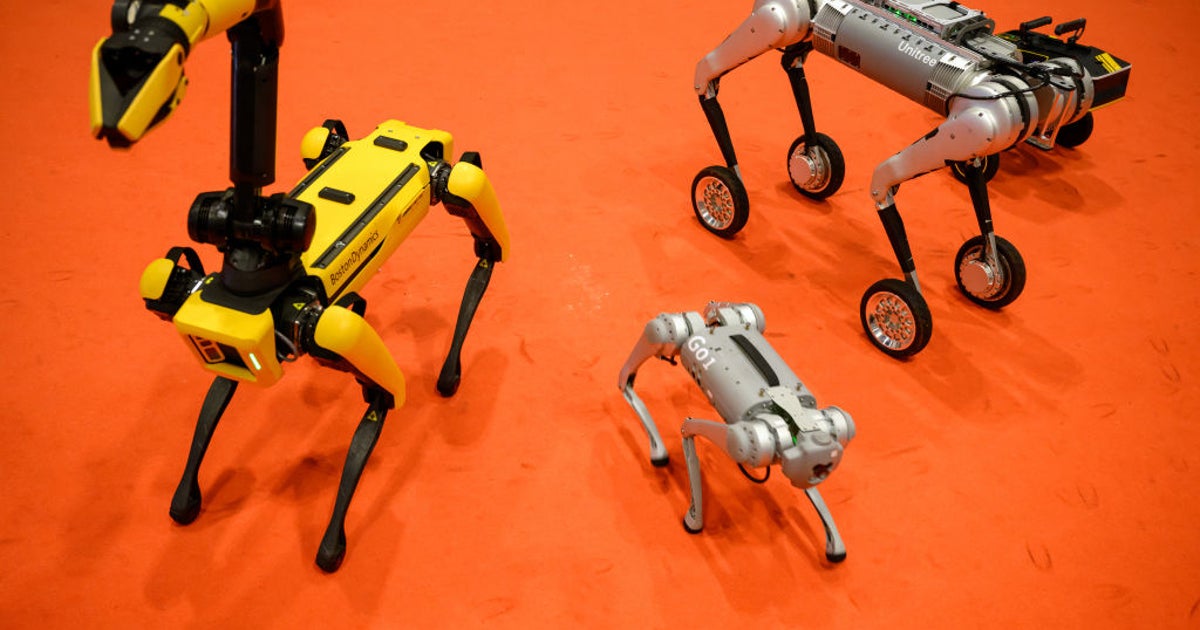
Drawing on expertise gained at DeepMind and Boston Dynamics, the founding team is working to develop software that allows robots to learn from experience, adapt to changing conditions, and carry out a wide range of activities. The goal is to create a common intelligence platform that can be used across industries instead of designing separate software systems for each robotic application.
Potential uses for the technology include warehouse automation, manufacturing, healthcare support, logistics, retail operations, and even household assistance. Businesses are increasingly looking for flexible robotic systems capable of handling diverse tasks without extensive programming.
The newly raised capital will be used to expand research and development, recruit top engineering talent, and accelerate the deployment of AI models for robotics. The company also plans to strengthen partnerships with hardware manufacturers and industrial customers.
As advances in artificial intelligence continue to reshape industries, investors are betting that intelligent robots will become a major part of the global economy. With substantial funding and a highly experienced team, the startup is positioning itself to play a leading role in building the software foundation for the next generation of autonomous machines.