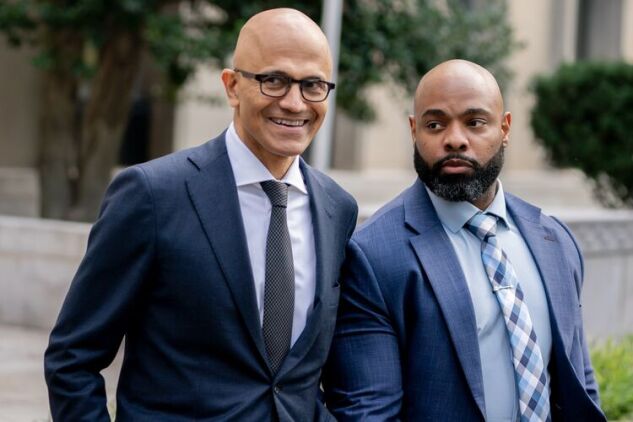
In a shocking turn of events during the ongoing Google antitrust trial, Microsoft’s CEO, Satya Nadella, dropped a bombshell revelation that has sent shockwaves through the tech industry. Nadella testified that Microsoft was prepared to hide its search engine, Bing, on Apple devices in favor of promoting Google’s search engine as the default option, painting a picture of corporate cooperation that has left many stunned.
Nadella’s testimony came as part of a broader examination of Google’s alleged anti-competitive practices, which include accusations of monopolistic behavior and exclusionary agreements with device manufacturers. The trial, which has been closely watched by regulators and industry observers alike, could have far-reaching implications for the tech giants involved.

The ‘King-Maker’ Role of Apple
Apple, known for its premium hardware and user-friendly software, has long been seen as a king-maker in the tech industry. The Cupertino-based company’s products, including the iPhone and iPad, have a massive global user base, and the default apps and services pre-installed on these devices wield considerable influence.
One such service is the default search engine, which is set to Safari, Apple’s web browser. For years, Google has been the beneficiary of this prime placement, with Safari users conducting billions of searches on Google each day. This cozy arrangement has led to accusations of an anti-competitive duopoly between the two tech giants.
Microsoft’s Shocking Revelation
During his testimony, Nadella revealed that Microsoft had considered an agreement with Apple to make Bing the default search engine on iOS devices, replacing Google. This move was seen as an attempt by Microsoft to gain a competitive edge in the search engine market, where Bing has struggled to gain traction against Google’s dominant position.
Nadella explained that this potential agreement with Apple was part of Microsoft’s broader strategy to increase the visibility and usage of Bing. However, the deal never materialized, and Google’s search engine remained the default option on Apple devices.
The revelation of Microsoft’s willingness to collaborate with Apple in this manner has raised eyebrows within the tech industry, as it hints at a level of cooperation between major competitors that is rarely disclosed to the public.
Implications for the Antitrust Trial
The Google antitrust trial, which has been ongoing for several months, focuses on whether Google engaged in anti-competitive behavior to maintain its dominance in the search engine market. The revelation that Microsoft was willing to strike a deal with Apple, a move that could have disrupted Google’s search engine dominance, adds an unexpected layer to the proceedings.
Regulators and legal experts are closely watching the trial, as its outcome could set important precedents for how tech giants operate in the future. The potential consequences for Google, if found guilty of anti-competitive practices, could include hefty fines and demands to change its business practices.
Industry Reactions
In response to Nadella’s testimony, industry analysts and experts have expressed a mix of surprise and skepticism. Some believe that Microsoft’s willingness to collaborate with Apple highlights the fierce competition in the search engine market, while others argue that it shows the complexities and blurred lines between tech giants.
This revelation may also lead to renewed scrutiny of the relationships between major tech companies and their willingness to cooperate or compete when it suits their interests.
Conclusion
Satya Nadella’s bombshell revelation during the Google antitrust trial has added a new dimension to the ongoing legal battle. Microsoft’s willingness to hide Bing in favor of Google’s search engine on Apple devices underscores the intricate relationships and competitive dynamics at play in the tech industry. As the trial continues, the world will be watching closely to see how it may reshape the landscape of the tech giants and their dealings with one another.