In a significant milestone for autonomous driving technology in Europe, Tesla has received regulatory approval in the Netherlands to deploy its “Full Self-Driving (Supervised)” software on public roads. The decision makes the Netherlands the first European country to authorize the system, marking a major step forward in Tesla’s efforts to expand its advanced driver-assistance capabilities beyond the United States.
The approval was granted by the Netherlands Vehicle Authority after an extensive evaluation process that included months of testing, safety assessments, and compliance checks with European road regulations. The agency concluded that Tesla’s supervised system meets the necessary safety requirements for limited use, provided that strict operational conditions are followed.
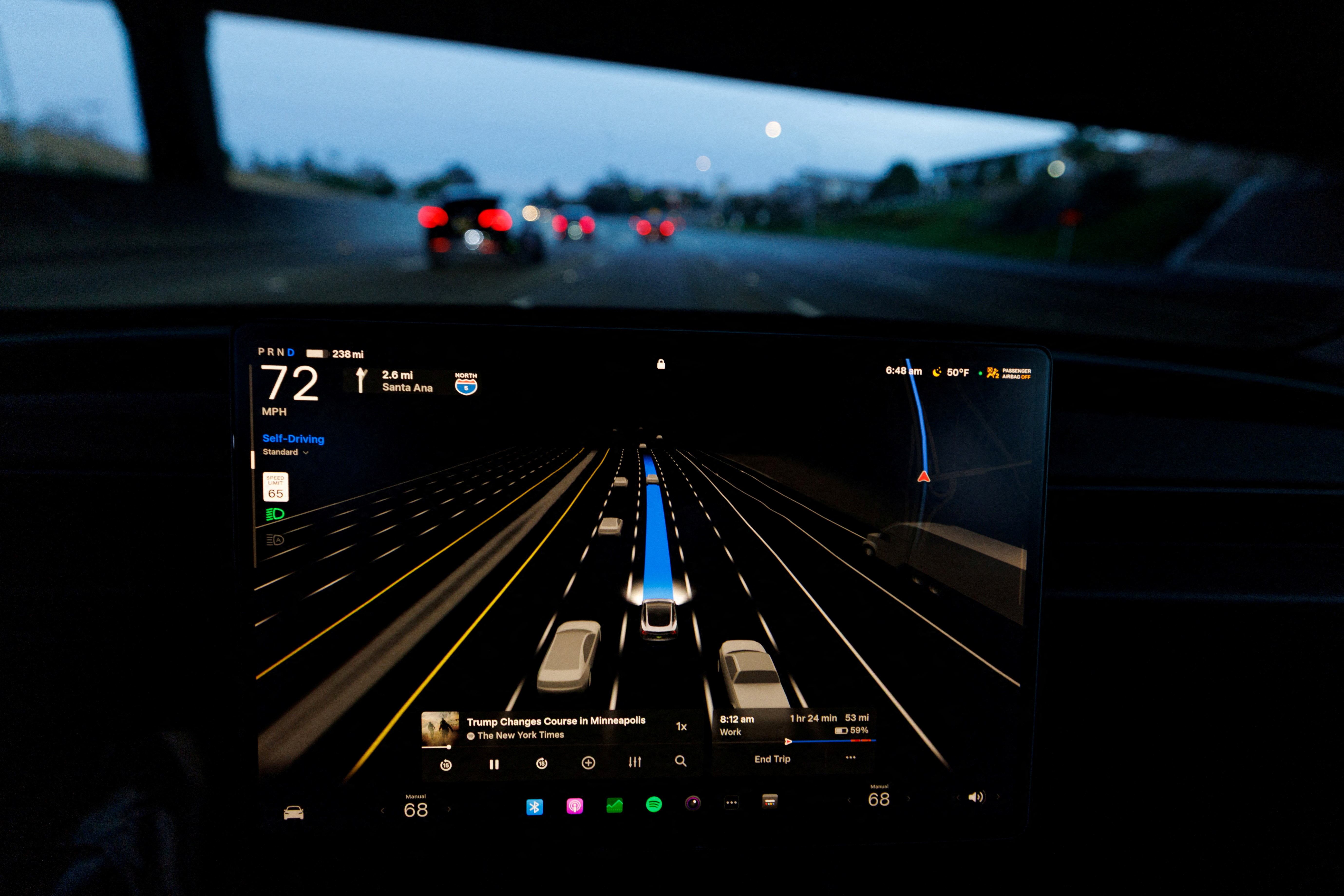
Despite its name, Tesla’s Full Self-Driving (FSD) technology remains a Level 2 driver-assistance system, meaning that it does not enable fully autonomous driving. Instead, it is designed to assist with tasks such as steering, accelerating, braking, and navigating through traffic. Drivers must remain fully engaged at all times, keep their hands on the wheel, and be prepared to take over control instantly if required. Authorities emphasized that responsibility for the vehicle’s operation continues to rest with the driver, not the software.
Under the terms of the approval, Tesla can roll out the supervised FSD feature to a limited group of users in the Netherlands. Participants are required to complete a detailed onboarding process, including instructional modules that explain the system’s capabilities, limitations, and safety protocols. The rollout will be closely monitored, with regulators requiring Tesla to share performance data and report any incidents or irregularities.
The Netherlands’ decision is widely seen as a potential turning point for the adoption of semi-autonomous driving technologies across Europe. The country has long been regarded as a leader in transport innovation, with a regulatory environment that encourages controlled experimentation while maintaining high safety standards. By granting approval to Tesla’s system, Dutch authorities are effectively opening the door for broader discussions at the European Union level regarding the future of automated driving.
If the system proves reliable under real-world conditions, other EU member states may follow suit. However, any expansion across the bloc would require coordination with European regulatory bodies and alignment with existing vehicle safety frameworks, which are often more stringent than those in other regions. This means that while the Dutch approval is a breakthrough, widespread adoption across Europe is likely to be gradual.
For Tesla, the development represents a strategic win at a time when competition in the electric vehicle market is intensifying. The company has increasingly positioned its software capabilities as a key differentiator, investing heavily in artificial intelligence and data-driven systems to enhance driving automation. Gaining a foothold in Europe for its FSD technology could strengthen Tesla’s market position and provide valuable real-world data to further refine its algorithms.
Industry analysts note that Europe presents both an opportunity and a challenge for Tesla. On one hand, the region offers a large and affluent customer base with growing interest in advanced vehicle technologies. On the other hand, European regulators have historically taken a cautious approach to automation, prioritizing safety and accountability. This cautious stance has slowed the rollout of features like FSD compared to markets such as the United States.
Safety remains a central concern in the debate over self-driving technology. While proponents argue that advanced driver-assistance systems can reduce accidents caused by human error, critics warn that overreliance on such systems may create new risks. Instances where drivers misunderstand the limitations of automation have raised questions about how these technologies are marketed and used.
To address these concerns, Tesla has incorporated multiple safeguards into its supervised system. These include driver-monitoring mechanisms, alerts that prompt users to stay attentive, and restrictions that limit the system’s operation in certain conditions. The company has also stated that it will continue to update the software over time, improving its performance through machine learning and data collected from real-world driving scenarios.
The approval in the Netherlands also highlights the broader shift taking place in the global automotive industry, where the line between traditional vehicles and software-driven platforms is increasingly blurred. Automakers are no longer competing solely on hardware design but are also racing to develop sophisticated software ecosystems that enhance safety, convenience, and user experience.

As Tesla begins its supervised FSD rollout in the Netherlands, regulators, industry players, and consumers alike will be watching closely. The outcome of this initiative could influence not only the future of Tesla’s technology in Europe but also the regulatory approach to autonomous driving across the continent.
While fully autonomous vehicles remain a long-term goal, the Dutch approval signals that incremental progress is being made. For now, Tesla’s supervised system represents a cautious yet meaningful step toward a future where intelligent software plays an ever-greater role in how people move.