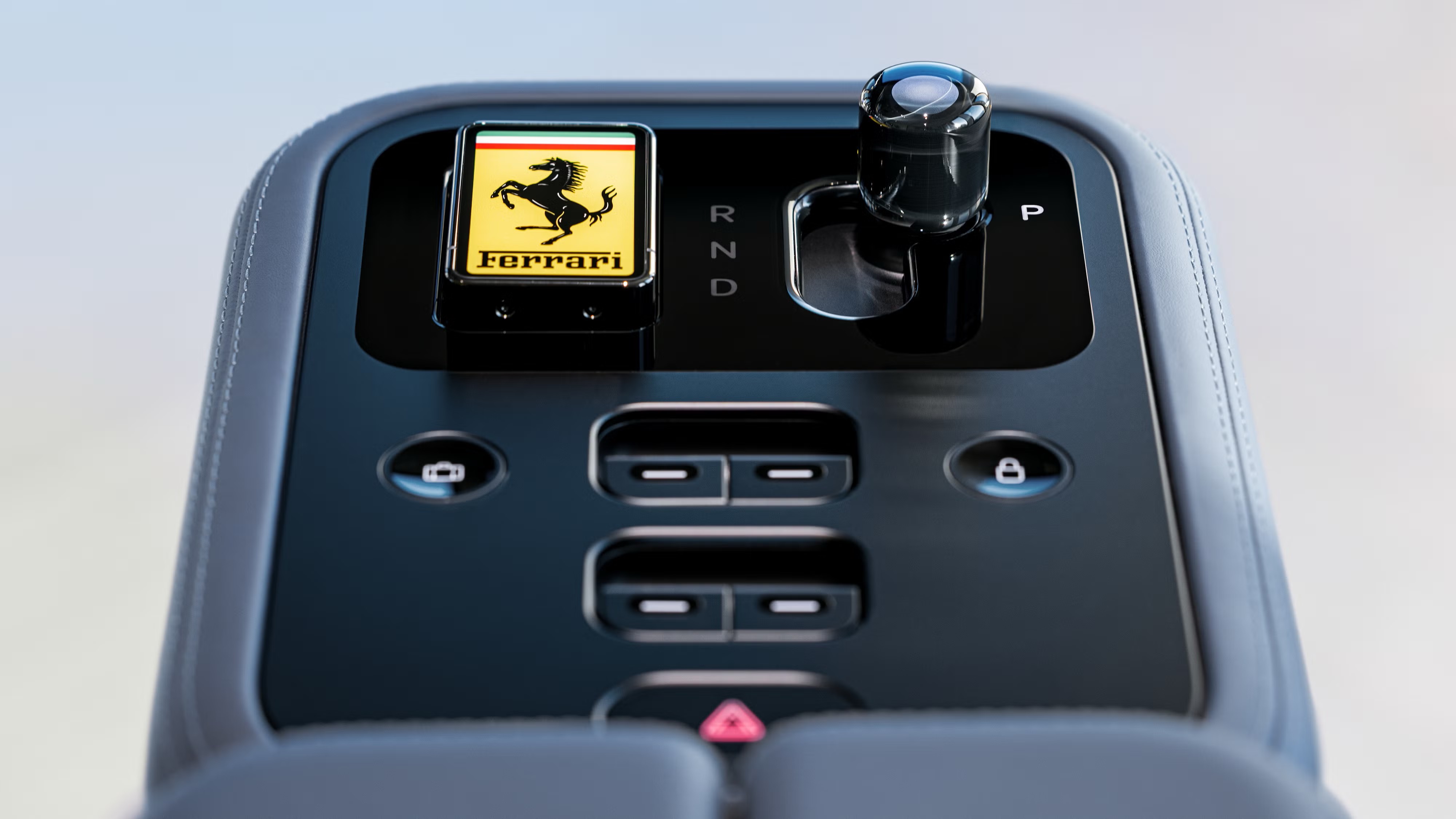
Ferrari’s long-awaited entry into the fully electric vehicle market is already generating intense speculation, and much of the attention is centered on one striking detail: price. According to recent reports, Ferrari’s upcoming Luce EV could start at nearly $650,000, a figure that would instantly place it among the most expensive production electric vehicles in the world. If accurate, the price would also make the Luce dramatically more expensive than many of Ferrari’s current models, signaling that the company intends to position its first EV not as a mass-market transition product, but as an ultra-exclusive halo car.
The reported starting price would be nearly double that of Ferrari’s 296 GTB, the hybrid sports car that has become one of the company’s most celebrated modern offerings. It would also significantly exceed the cost of the Purosangue SUV. Such pricing suggests Ferrari sees its electric future through the same lens that has defined its gasoline-powered past: rarity, prestige, craftsmanship, and high performance.
Ferrari has spent years carefully preparing for the shift toward electrification. While many global automakers rushed into battery-powered models, Ferrari moved more cautiously. The company first introduced hybrid technology in select performance models, allowing it to combine electric assistance with traditional internal combustion engines while preserving the emotional appeal associated with the Ferrari name. Now, with the Luce, Ferrari appears ready to take the next major step.

Industry observers say the high reported price may reflect more than just branding. Developing a fully electric Ferrari requires substantial investment in battery systems, software, lightweight materials, and performance engineering. Unlike larger automakers that can spread costs across millions of vehicles, Ferrari operates at relatively low volumes. That means each vehicle carries a greater share of development costs. At the same time, Ferrari customers expect cutting-edge technology, hand-built quality, and customization options that go far beyond mainstream luxury brands.
The Luce is expected to be more than a standard sports coupe. Reports suggest it may feature a unique body style combining grand touring comfort with crossover practicality, offering four seats and more interior space than Ferrari’s traditional two-seat supercars. This would allow Ferrari to broaden the appeal of the model while still targeting wealthy enthusiasts who want exclusivity and everyday usability.
Performance is likely to be central to the Luce’s identity. Ferrari cannot afford for its first EV to be viewed merely as environmentally compliant transportation. It must still deliver the speed, handling, and emotional excitement associated with the Prancing Horse badge. Analysts expect the vehicle to feature advanced electric motors capable of extraordinary acceleration, potentially rivaling or surpassing many of today’s combustion-powered supercars. Instant torque, all-wheel-drive capability, and highly sophisticated chassis tuning could make the Luce one of the fastest Ferraris ever built.
Yet Ferrari’s biggest challenge may not be engineering, but emotion. For decades, Ferrari has sold not just cars, but an experience built around sound, drama, and mechanical theater. The roar of a V8 or V12 engine is deeply woven into the brand’s mythology. Electric vehicles, by nature, operate in near silence. Ferrari will need to create a new form of excitement—through design, acceleration, driver engagement, and perhaps artificial soundscapes—without alienating loyal customers who associate Ferrari with combustion engines.
The pricing strategy may help solve part of that challenge. By targeting elite buyers rather than the broader luxury market, Ferrari can position the Luce as a collector’s item and technological statement rather than a replacement for its traditional lineup. Wealthy early adopters often value rarity and innovation as much as outright practicality. For them, owning Ferrari’s first EV could carry historic significance, especially if production remains limited.

The Luce also arrives at a time when the broader EV market is evolving. Demand growth has slowed in some regions, and several automakers have adjusted electrification timelines. However, the ultra-luxury segment operates differently from the mainstream market. Buyers spending hundreds of thousands of dollars on vehicles are less sensitive to financing costs, charging infrastructure concerns, or resale uncertainty. Ferrari may be betting that its clientele will embrace electrification on its own terms.
Customization is another factor likely to push transaction prices well above the reported base figure. Ferrari is famous for its tailor-made personalization programs, allowing customers to specify unique paint finishes, materials, stitching, wheels, trim, and bespoke details. Even current Ferrari models often sell for far more than their listed starting prices once options are included. If the Luce begins near $650,000, many final builds could easily exceed $700,000 or even $800,000.
For Ferrari shareholders, the Luce represents an important strategic milestone. Investors have rewarded the company for maintaining strong margins, disciplined production, and brand strength in a competitive auto industry. Successfully launching a premium EV could reassure markets that Ferrari can navigate tightening emissions rules and shifting consumer preferences without sacrificing profitability.
Ultimately, whether the reported price proves accurate or not, the message is clear: Ferrari does not intend to compete in the crowded premium EV market on conventional terms. Instead, it aims to define a new niche at the very top of the segment, where technology, prestige, and scarcity command extraordinary premiums.
The Luce may be electric, but Ferrari wants the world to know it will still be unmistakably Ferrari.