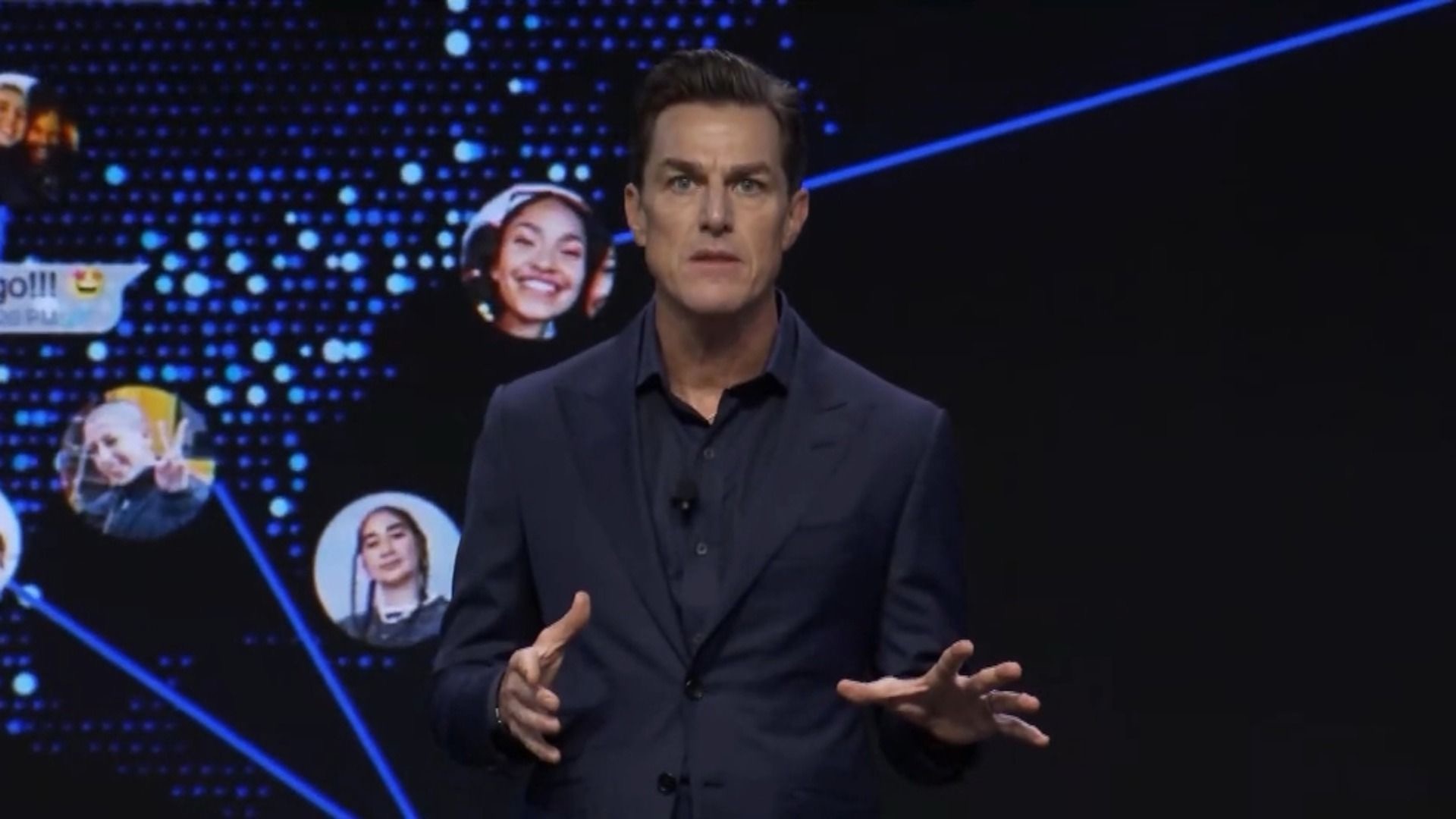
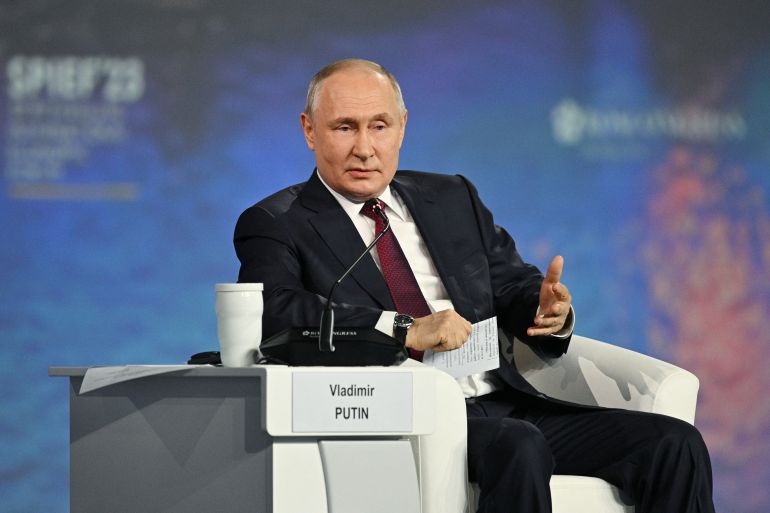
In a groundbreaking development at the intersection of politics and technology, Russian President Vladimir Putin came face-to-face with his artificial intelligence ‘double’ in a highly anticipated meeting held at the Kremlin today. The event marked a historic moment as the world witnessed the convergence of political leadership and advanced artificial intelligence.
The AI ‘double,’ developed using cutting-edge technology, was designed to replicate President Putin’s mannerisms, speech patterns, and decision-making processes. The meeting aimed to explore the potential applications of AI in politics and governance, as well as to gauge the public’s reaction to this futuristic concept.
The lifelike AI ‘double’ was created by a team of Russian scientists and engineers, drawing on extensive data from President Putin’s speeches, interviews, and public appearances. The result was a virtual counterpart that mimicked the president’s gestures and expressions with remarkable accuracy.
/cloudfront-us-east-2.images.arcpublishing.com/reuters/C2ZC5JFQYJJYJEVCVHLMIIYRCE.jpg)
During the encounter, President Putin engaged in a conversation with his AI counterpart on a range of topics, from domestic policies to international relations. The AI ‘double’ responded to questions in real-time, showcasing its ability to process information and generate coherent responses on complex issues.
The meeting underscored the potential of artificial intelligence to assist political leaders in decision-making processes, providing insights and analyses that could enhance governance. However, it also raised concerns about the ethical implications and potential misuse of such technology.
Experts from various fields weighed in on the event, offering diverse perspectives on the implications of AI in politics. Some praised the innovation as a step towards a more efficient and technologically advanced governance model, while others expressed reservations about the potential for abuse and manipulation.
In his remarks after the meeting, President Putin acknowledged the significance of the technological advancement but emphasized the need for caution. He stated, “While AI can offer valuable support, it must be utilized with responsibility and respect for ethical standards. We must ensure that technology serves the well-being of our citizens without compromising their rights and privacy.”
The global community will undoubtedly closely monitor the aftermath of this unprecedented meeting, as discussions about the role of artificial intelligence in political leadership continue to evolve. The event has ignited debates on the ethical use of AI, privacy concerns, and the potential impact on democratic processes.
As the world navigates this uncharted territory where political leaders interact with their AI counterparts, questions about the future of governance and the responsible deployment of advanced technologies linger on the minds of citizens and policymakers alike.