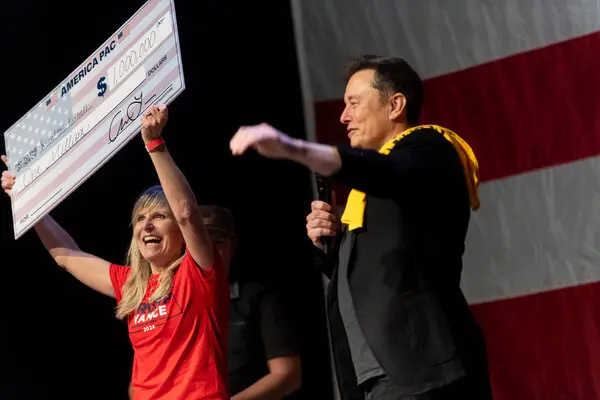
The U.S. Department of Justice (DOJ) has issued a warning to billionaire entrepreneur Elon Musk regarding his recent initiative to give away $1 million to encourage voter participation, suggesting that the move could potentially violate federal election laws.
The warning comes amid growing scrutiny of Musk’s proposal, which he announced via social media, aiming to incentivize young voters to engage in the upcoming elections. The announcement promised that the funds would be distributed through a lottery system, with participants required to demonstrate proof of voter registration and intent to vote.
In a statement released on Monday, a DOJ spokesperson expressed concerns that the giveaway could be interpreted as an illegal attempt to influence the electoral process. “While encouraging voter participation is a laudable goal, any financial incentive tied to the act of voting raises significant legal questions under the Federal Election Commission (FEC) guidelines,” the spokesperson said.
Experts have noted that offering financial rewards for voting could be viewed as coercive, undermining the integrity of the electoral process. “The law is very clear about the potential for voter manipulation through monetary incentives,” said legal analyst Jennifer Collins. “This kind of giveaway may inadvertently cross into illegal territory, which could lead to serious repercussions.”

Musk, the CEO of Tesla and SpaceX, has been no stranger to controversy in recent years, often using his platform to share bold ideas and unconventional initiatives. His voter giveaway, while well-intentioned in its aim to boost turnout among younger demographics, has drawn mixed reactions from both the public and legal experts.
Supporters of the initiative argue that it could effectively motivate more young people to participate in democracy, especially in a time when voter turnout among younger generations has been historically low. However, critics have raised concerns about the ethical implications and the potential for the initiative to backfire, leading to accusations of election interference.
As the situation develops, it remains unclear whether Musk will adjust his plans in light of the DOJ’s warning. In a tweet responding to the concerns, Musk stated, “We just want to encourage more people to vote. Let’s make democracy exciting!”
The DOJ’s warning serves as a reminder of the complex landscape surrounding campaign finance and electoral integrity in the United States. With the 2024 election cycle approaching, the agency has been actively monitoring various initiatives that may influence voter behavior.

As legal experts continue to analyze the implications of Musk’s voter giveaway, many are calling for clearer guidelines regarding financial incentives in elections to prevent confusion and ensure compliance with existing laws. The outcome of this situation could have lasting effects on how high-profile individuals engage with electoral processes in the future.
The conversation surrounding Musk’s initiative underscores the critical importance of safeguarding democratic practices while fostering greater voter engagement, a balancing act that continues to challenge policymakers and stakeholders alike.