In a decisive move to bolster its ad revenue and uphold its Terms of Service, YouTube has intensified its campaign against ad-blockers, shutting down popular loopholes that previously allowed users to watch content without advertisements. The video-sharing giant has rolled out a new wave of enforcement measures aimed at stopping viewers from bypassing ads, prompting a wave of user frustration and reigniting debates over digital advertising and user rights.
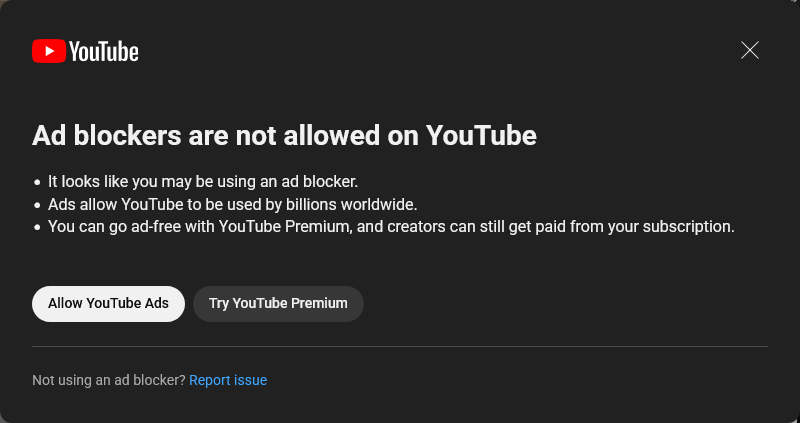
The latest enforcement includes a prominent warning message that appears when users attempt to watch videos with an ad-blocker enabled: “Ad blockers are not allowed on YouTube.” In many cases, the video will not play at all unless the user disables the blocker or subscribes to YouTube Premium, the platform’s paid subscription service that removes ads.
This crackdown marks an escalation in YouTube’s ongoing efforts to protect its advertising model. While the company began actively discouraging ad-blocker use in mid-2023, tech-savvy users quickly found workarounds. Popular browser extensions like uBlock Origin and others offered partial or full success in hiding ads. However, YouTube’s latest updates have rendered many of these tools ineffective, at least temporarily.
According to statements from YouTube, ads are essential to support its free service and to fairly compensate the content creators who rely on ad revenue. “We take disabling playback with ad-blockers seriously because it threatens the sustainability of our ecosystem,” a YouTube spokesperson said in a recent statement. “We’re committed to ensuring ads are shown unless users choose to support creators through YouTube Premium.”
The company has employed more sophisticated detection methods, which can now identify ad-blocking behavior more accurately and in real time. This not only affects the casual viewer but also power users who rely on customized or lesser-known ad-blocking solutions. Some users report success using more advanced setups, such as VPNs or modified browser configurations, but these too may soon be targeted by YouTube’s increasingly aggressive detection tools.
The crackdown has not been without controversy. Online forums and social media platforms are flooded with complaints, with many users accusing YouTube of being overly restrictive. Some argue that the sheer volume and intrusiveness of YouTube ads — including unskippable commercials and back-to-back ad rolls — makes the viewing experience frustrating, especially when compared to the early days of the platform.
“I don’t mind supporting creators, but I refuse to sit through five ads just to watch a 10-minute video,” one Reddit user wrote. “YouTube is pushing people away with this heavy-handed approach.”
Others are more understanding, acknowledging the need for content creators to earn revenue. YouTube Premium, currently priced at around $13.99 per month in the U.S., offers an ad-free experience, offline downloads, and access to YouTube Music. For many, the subscription is becoming the only viable alternative to increasingly restricted ad-blocking.

Industry analysts suggest this move could lead to a surge in YouTube Premium subscriptions — or, conversely, could drive some users away from the platform altogether in search of less restrictive alternatives. The long-term impact will depend on how far YouTube goes in policing ad-blocking, and whether users will adapt or abandon the service.
For now, one thing is clear: YouTube is drawing a firm line in the sand. As the platform tightens its grip on ad-blocking, users face a choice — endure the ads, pay for Premium, or look elsewhere. In the evolving battle over digital advertising and user control, YouTube’s latest move signals a new chapter — one where the free ride may finally be over.