In a dramatic development that sends shockwaves through the global cryptocurrency industry, Do Kwon, the founder of Terraform Labs and the architect behind the catastrophic Terra blockchain collapse, has pleaded guilty in a U.S. federal court. The plea comes after a lengthy legal battle following the implosion of TerraUSD and Luna, which collectively wiped out nearly $40 billion in market value and affected millions of investors around the world.
Kwon, a once-celebrated figure in the crypto space, accepted a plea agreement that includes a 12-year prison sentence and a financial penalty of $19 million. The deal was reached with federal prosecutors and was formally accepted during a court hearing in Manhattan on Monday.
Standing before the judge in a prison uniform, Kwon expressed remorse for his actions, admitting to misleading investors and regulators about the stability and mechanisms of the Terra ecosystem. His confession marks a significant turning point in what many analysts regard as one of the most severe cases of financial fraud in the history of digital assets.
The Rise and Fall of Terra
Kwon co-founded Terraform Labs in 2018, promising to revolutionize finance through decentralized and algorithmic stablecoins. At the heart of the project was TerraUSD (UST), a so-called “algorithmic stablecoin” designed to maintain a $1 value without being backed by actual reserves. Instead, it was paired with a companion token, Luna, in a dual-token model meant to keep UST stable through automatic supply adjustments.
By early 2022, the Terra ecosystem had ballooned in popularity, attracting billions in investor funds and dominating headlines with its promise of high returns and “decentralized” financial innovation. However, in May of that year, the system failed spectacularly. A sudden loss of confidence triggered a death spiral in which both UST and Luna plummeted in value, losing nearly all of their market capitalization within days.
The fallout was immediate and devastating. Individual investors lost life savings, hedge funds were forced into bankruptcy, and the broader crypto market entered a steep downturn, contributing to what is now referred to as the “crypto winter.” Regulators around the world began to scrutinize stablecoins more closely, and attention turned quickly to Kwon and his company.
The Legal Consequences
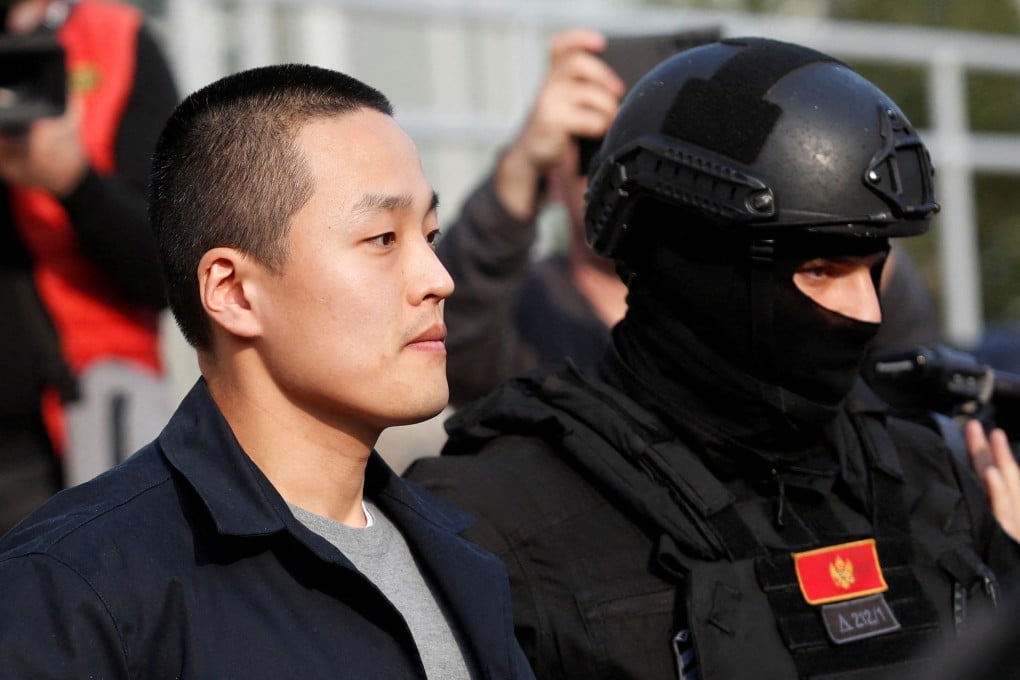
After months on the run, Kwon was arrested in March 2023 in Montenegro for traveling with falsified documents. Following a prolonged extradition battle between South Korea and the United States—both of which sought to prosecute him—Kwon was ultimately handed over to U.S. authorities earlier this year.
The plea agreement centers on charges of conspiracy to commit fraud and wire fraud. Prosecutors accused Kwon of knowingly making false statements to the public and to investors, exaggerating the resilience of the Terra ecosystem and concealing critical failures. Among the most damaging revelations was the claim that Kwon had used a third-party trading firm to artificially prop up UST’s value in the lead-up to its collapse, while publicly claiming the protocol was functioning as designed.
In court, Kwon admitted to orchestrating misleading promotional campaigns and failing to disclose the true risks associated with the Terra platform. He also acknowledged that many of the features advertised as “decentralized” were in fact under centralized control, contradicting the project’s core messaging.
As part of the plea deal, Kwon agreed to forfeit $19 million in assets and may be subject to further financial penalties in civil litigation. He is scheduled to be formally sentenced in December, though the 12-year term was stipulated as part of the agreement. The court also warned that Kwon, a South Korean national, may face deportation following the completion of his sentence.
A Landmark Case for Crypto Regulation
Kwon’s guilty plea is being hailed as a landmark moment in the evolving relationship between cryptocurrency and the legal system. His case highlights the challenges of regulating decentralized finance, where the line between innovation and misconduct can be difficult to define.
Legal experts believe the case will set a precedent for how future crypto fraud cases are handled. It also underscores the growing willingness of international authorities to cooperate in pursuing high-profile financial criminals across borders. The U.S. Department of Justice has made it clear that it considers the Terra collapse not merely a financial misstep, but a calculated act of deception with global consequences.
For many investors, the resolution offers some measure of closure. Victims of the Terra collapse, including retail traders and institutional players, have long sought accountability. While the financial damage may never be fully repaired, Kwon’s admission of guilt is viewed by many as a long-overdue reckoning.
Looking Ahead
Despite the resolution of his U.S. case, Kwon’s legal troubles may not be over. Authorities in South Korea are continuing to pursue charges related to securities violations and fraud. It remains to be seen whether additional sentences or financial penalties will follow once his time in the U.S. prison system concludes.
Meanwhile, the cryptocurrency sector continues to grapple with the implications of the Terra collapse. Regulatory bodies in multiple countries have since introduced stricter oversight measures for stablecoins and DeFi projects, citing the Terra failure as a cautionary tale.
As one of the most dramatic downfalls in crypto history reaches its legal conclusion, Do Kwon’s case stands as a reminder of the risks inherent in speculative finance—and the real-world consequences when those risks are concealed behind the promise of innovation.