Global automotive giant Stellantis has announced an ambitious turnaround strategy that will reshape the company’s global operations over the next decade, including plans for 60 all-new vehicles and 50 refreshed models by 2030. The sweeping transformation is designed to streamline the automaker’s sprawling brand portfolio while concentrating investments on four key marques — Jeep, Ram, Peugeot, and Fiat — which will become the central pillars of the company’s global expansion strategy.
The announcement marks one of the most significant strategic overhauls since the merger of Fiat Chrysler Automobiles and PSA Group created Stellantis in 2021. Faced with mounting competition, rapid electrification, stricter emissions regulations, and changing consumer preferences, the company is now moving aggressively to simplify its business structure and sharpen its focus in the global automotive market.
Under the new roadmap, Stellantis plans to direct the majority of its product development, technological innovation, and international growth efforts toward Jeep, Ram, Peugeot, and Fiat. These brands are viewed internally as having the strongest global recognition, the clearest identities, and the highest long-term growth potential across multiple regions.
Executives said the strategy is aimed at building a more efficient and profitable company capable of adapting quickly to the future of mobility. The automaker intends to reduce overlap between brands, improve operational efficiency, and accelerate the development of electric and software-driven vehicles.
Jeep is expected to remain the centerpiece of Stellantis’ worldwide operations. The SUV brand will lead the company’s expansion into electrified adventure vehicles, with a wide range of hybrid and fully electric models planned over the coming years. Stellantis believes Jeep’s strong brand recognition and loyal customer base make it one of the few automotive names capable of sustained global success across North America, Europe, Latin America, and emerging markets.
The company plans to significantly expand Jeep’s product lineup by introducing smaller urban-focused SUVs as well as larger premium off-road vehicles. Electric drivetrains and advanced connectivity features are expected to become standard across much of the future Jeep range.
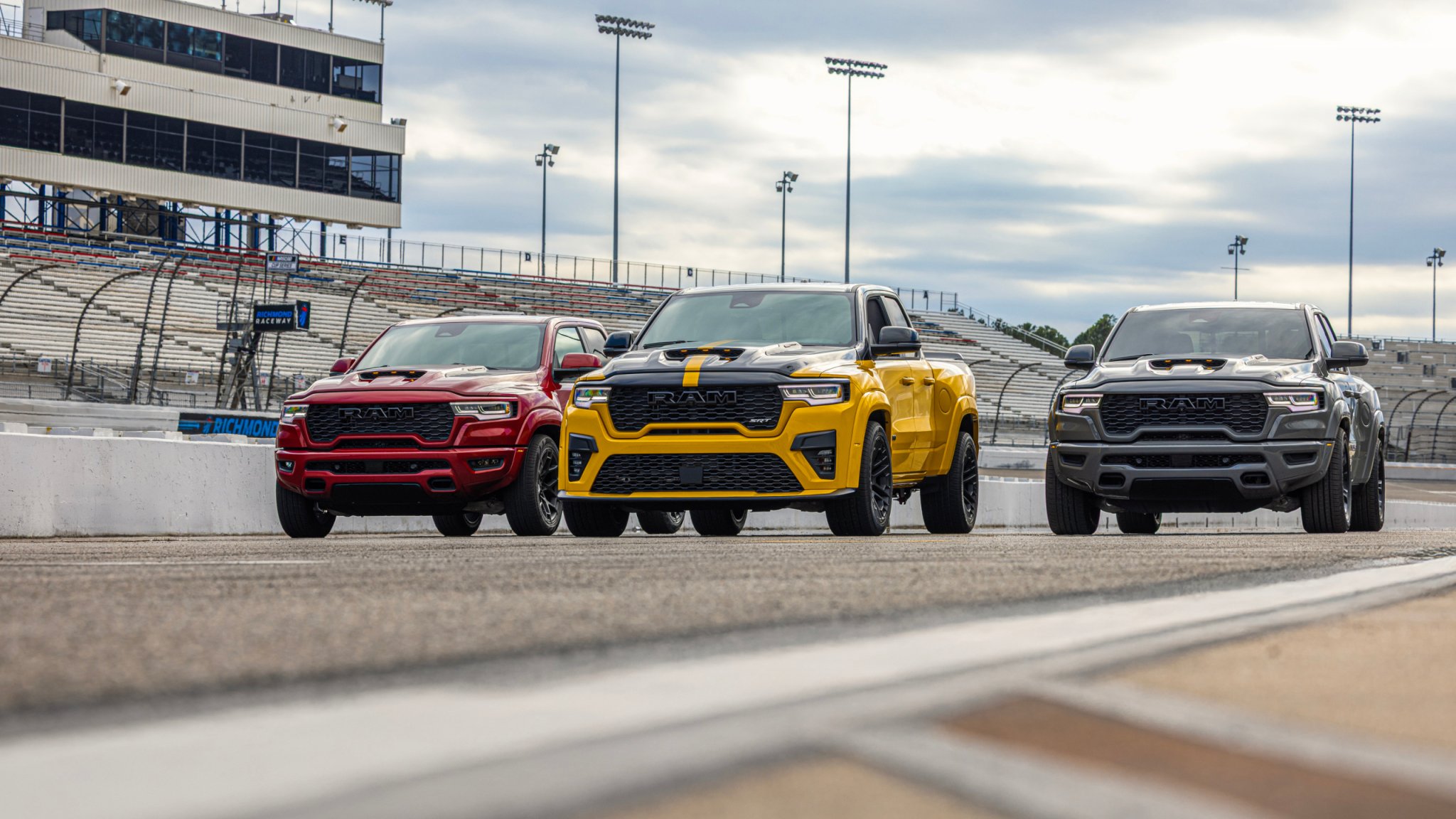
Ram, meanwhile, will continue to serve as Stellantis’ core pickup truck and commercial vehicle brand, particularly in the highly profitable North American market. Company executives said Ram will play a crucial role in maintaining Stellantis’ competitiveness against rivals in the truck segment, especially as the industry transitions toward electrified pickups.
Several new Ram models are expected to debut before the end of the decade, including fully electric trucks and advanced hybrid commercial vehicles. Stellantis believes the combination of utility, performance, and electrification will help Ram maintain strong customer demand in a rapidly evolving market.
French automaker Peugeot is also being positioned as a major international growth brand. Stellantis plans to expand Peugeot’s footprint beyond Europe by increasing its presence in South America, the Middle East, Africa, and selected Asian markets. The company sees Peugeot as a key player in the mainstream passenger vehicle segment, particularly for affordable electric cars and urban mobility solutions.
Fiat, another brand receiving renewed emphasis, will focus heavily on compact vehicles and accessible electric transportation. Stellantis executives believe Fiat’s expertise in small-city cars gives it a strategic advantage as governments worldwide push for cleaner urban transportation and tighter environmental regulations.
The new strategy also introduces a clearer distinction between Stellantis’ global brands and those that will now operate primarily as regional players.
American brands Chrysler and Dodge will no longer be treated as major international expansion brands. Instead, they will focus primarily on North America, where they continue to maintain loyal customer followings. Chrysler is expected to evolve into a more premium technology-focused brand, while Dodge will retain its performance-oriented identity as it transitions into electrified muscle vehicles.
European brands Citroen and Opel will similarly focus on regional markets rather than pursuing aggressive worldwide growth. Stellantis executives acknowledged that maintaining every brand as a full-scale global operation would spread resources too thin and reduce overall competitiveness.
Italian luxury-performance brand Alfa Romeo will also shift toward a more selective and regionally targeted strategy. Rather than chasing volume sales, the brand is expected to prioritize exclusivity, premium positioning, and profitability in carefully chosen markets.
A major part of Stellantis’ turnaround plan centers on electrification. The company intends to launch dozens of battery-electric and hybrid vehicles before 2030, with flexible vehicle platforms designed to support multiple powertrain technologies. Executives said the goal is to remain adaptable in markets where electric vehicle adoption rates vary significantly.
In addition to electrification, Stellantis is investing heavily in software integration, digital services, and connected vehicle technology. Future models are expected to feature advanced infotainment systems, over-the-air software updates, driver assistance technologies, and subscription-based digital services designed to generate recurring revenue beyond vehicle sales.
The company is also pursuing aggressive cost-cutting measures to support its long-term transformation. Stellantis plans to simplify manufacturing operations, reduce platform complexity, and increase parts sharing across brands. Executives believe these efficiencies will help the automaker remain profitable while funding the enormous investments required for electric vehicles and next-generation technologies.
Industry analysts view the strategy as a decisive attempt to solve one of Stellantis’ biggest challenges — managing one of the world’s largest and most diverse automotive brand portfolios during a period of massive technological disruption.
By narrowing its global focus to a smaller group of high-potential brands, Stellantis hopes to eliminate internal competition and create a more coherent global identity. Analysts say the approach could improve profitability and reduce operational inefficiencies, although it may also disappoint loyal customers of brands receiving reduced investment.
The success of the plan will ultimately depend on execution. Stellantis must balance cost reductions with innovation while ensuring that each brand maintains a distinct identity in an increasingly crowded automotive market.
Still, with 60 new vehicles, 50 refreshed models, and a renewed focus on its strongest global brands, Stellantis is making one of the industry’s boldest bets on how the future of the automobile business will evolve over the next decade.