Tools for Humanity, the startup behind the ambitious World identity initiative and Worldcoin cryptocurrency project, is reportedly reducing its workforce at a time when artificial intelligence leader OpenAI is preparing for a highly anticipated stock market debut. The contrasting developments reflect the different trajectories of two ventures closely associated with Sam Altman, one of the most influential figures in the global technology industry.
According to reports, Tools for Humanity has initiated layoffs as part of a broader organizational restructuring aimed at improving efficiency and aligning the company with its long-term strategic goals. While the exact number of employees affected has not been officially disclosed, the move has drawn attention because of the company’s high-profile mission and Altman’s close involvement with the project.
Founded in 2019 by Sam Altman and Alex Blania, Tools for Humanity set out to tackle what its founders viewed as a growing challenge in the digital age: proving that an online user is a real human being. The company developed a biometric identity verification system centered around a device known as the Orb, a spherical scanner designed to capture an individual’s iris pattern. The scan generates a unique digital identifier called World ID, which is intended to confirm a person’s uniqueness without revealing personal information.
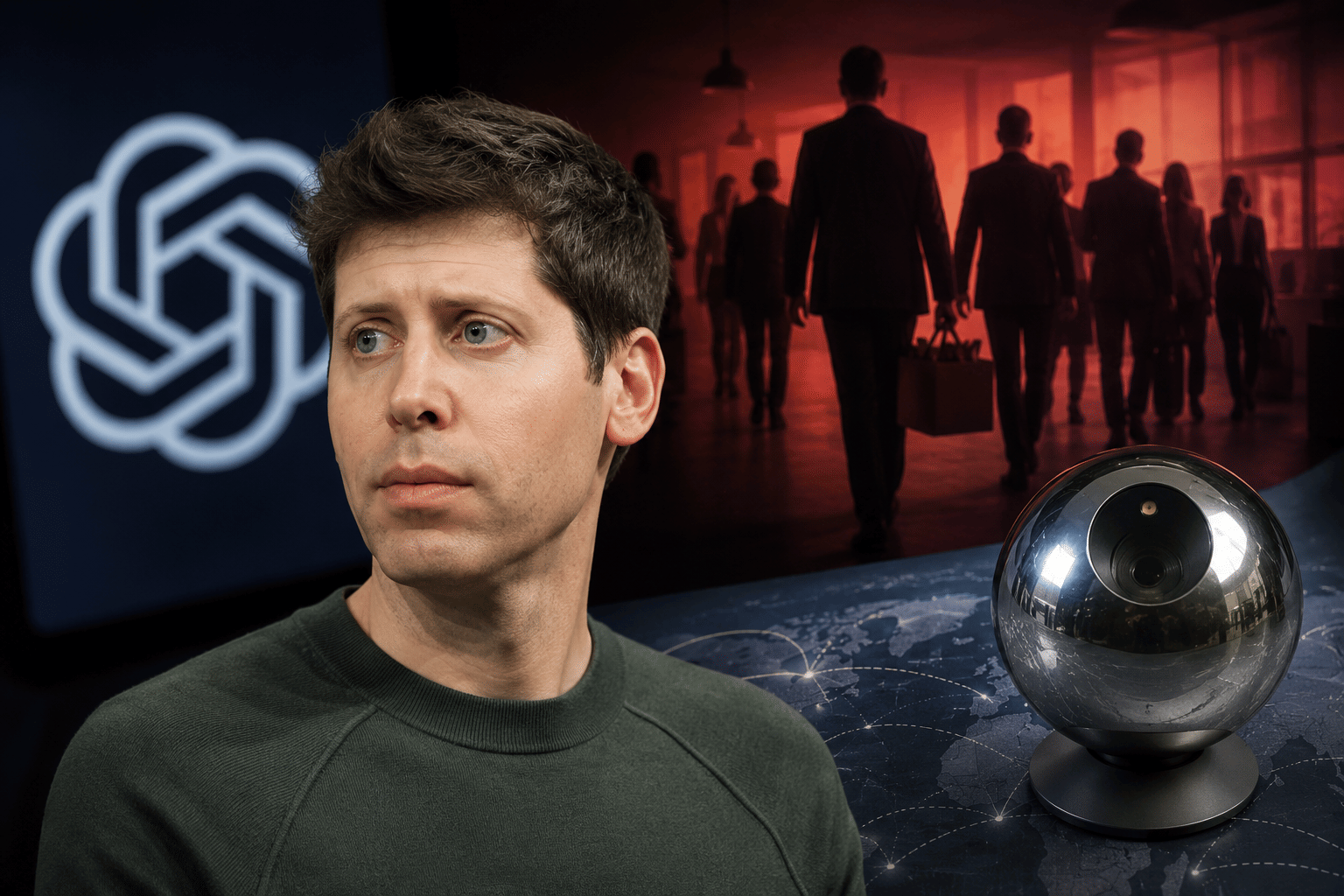
The idea behind the project has become increasingly relevant as artificial intelligence systems grow more sophisticated. With AI capable of generating text, images, videos, and even human-like interactions, concerns about online authenticity have intensified. Tools for Humanity argues that systems capable of distinguishing people from automated agents will become essential for maintaining trust across digital platforms.
At the same time, the initiative has sparked significant controversy. Privacy advocates and regulators have questioned the implications of collecting biometric information, particularly in regions where data protection laws are stringent. Critics have expressed concern about whether individuals fully understand the long-term consequences of sharing sensitive biological data, even when companies insist that privacy safeguards are in place.
The company’s challenges have not been limited to public perception. Operating a global biometric verification network requires extensive infrastructure, regulatory compliance, and ongoing investment. Expanding into new markets has often involved navigating legal complexities and addressing skepticism from governments and civil society organizations.
Against this backdrop, the reported layoffs may represent an attempt by Tools for Humanity to focus resources more effectively. Technology companies frequently restructure during periods of transition, particularly when they are refining their business strategies or responding to changing economic conditions. For startups working on emerging technologies, balancing innovation with financial sustainability can prove especially difficult.
The news also arrives at a moment when OpenAI, where Altman serves as chief executive officer, is reportedly progressing toward an initial public offering. OpenAI has experienced extraordinary growth following the widespread adoption of generative AI technologies. Products built by the company have transformed public awareness of artificial intelligence and fueled intense competition among major technology firms eager to establish leadership in the rapidly evolving sector.
Investor enthusiasm surrounding AI has reached remarkable levels in recent years. Companies associated with artificial intelligence have attracted substantial funding, and market analysts have speculated that an OpenAI IPO could become one of the most significant public offerings in the history of the technology industry. Such a move would mark a new chapter for a company that began as a research-focused organization dedicated to ensuring that advanced AI benefits humanity.
The simultaneous emergence of reports about layoffs at Tools for Humanity and OpenAI’s IPO ambitions highlights the uneven nature of technological innovation. While some areas of the industry enjoy strong commercial momentum, others continue to face uncertainty despite their ambitious visions.
For Sam Altman, the developments underscore the complexity of leading multiple transformative initiatives. Beyond OpenAI, Altman has invested in a range of projects involving clean energy, biotechnology, digital identity, and future-focused technologies. His reputation as a prominent entrepreneur has often generated considerable interest in the ventures he supports, but visibility does not guarantee immunity from operational challenges.
Tools for Humanity’s future may depend on its ability to demonstrate the practical value of its identity system while addressing concerns related to privacy and regulation. The rise of increasingly capable AI systems could strengthen the case for proof-of-personhood technologies. Governments, businesses, and online platforms may eventually seek reliable methods to verify that users are genuine individuals rather than automated programs.

However, widespread adoption will likely require public trust, transparent governance, and clear explanations of how biometric data is collected, stored, and protected. Building that trust may prove just as important as technological innovation itself.
The reported workforce reductions suggest that Tools for Humanity is entering a period of recalibration. Whether the company emerges stronger from this phase remains to be seen. What is clear is that the broader technology landscape continues to evolve at an extraordinary pace, rewarding some bets while testing the resilience of others.
As OpenAI moves closer to the public markets and Tools for Humanity confronts the realities of scaling a controversial but potentially transformative idea, the two stories offer a compelling snapshot of the opportunities and uncertainties shaping the future of technology. In an era defined by artificial intelligence and digital transformation, success may depend not only on groundbreaking ideas but also on the ability to adapt, earn public confidence, and build sustainable organizations capable of turning vision into reality.