


In a major technological milestone, Google announced this week that it has achieved a 33-fold reduction in the energy required to process AI queries—an advancement that could reshape the environmental impact of artificial intelligence and set a new standard for sustainable computing.
The announcement comes at a time when AI usage is soaring across industries, with billions of users depending on intelligent systems for tasks like search, translation, content generation, coding assistance, and customer service. While these tools offer significant value, their rapid growth has raised increasing concerns about energy consumption and environmental cost.
Now, according to Google, that cost may be dramatically lower than it was just one year ago.
A Leap Forward in Efficiency
According to the company, the 33x energy reduction is the result of improvements across multiple areas of its AI infrastructure. Rather than relying on a single breakthrough, Google attributes the achievement to a combination of optimized model architectures, better algorithms, more efficient hardware, and smarter data center management.
Google has invested heavily in custom-built AI chips called TPUs, or Tensor Processing Units. These processors are specifically designed to accelerate machine learning tasks while minimizing energy consumption. The latest generation of TPUs reportedly delivers more performance per watt than ever before, allowing AI models to run faster and with less energy.
In addition to hardware, the models themselves have become more efficient. New techniques in model design mean that AI systems can now generate high-quality responses using fewer computations. This includes lighter transformer architectures, more effective pruning strategies, and improvements in quantization that reduce the size and complexity of the underlying models without sacrificing accuracy.
The result: when a user interacts with one of Google’s AI tools, the energy required to generate a response is a small fraction of what it used to be.
Why It Matters
Artificial intelligence is one of the most resource-intensive technologies in the world today. While most of the public focus is on AI’s capabilities—writing emails, coding, creating images—the behind-the-scenes cost of delivering these services is substantial.
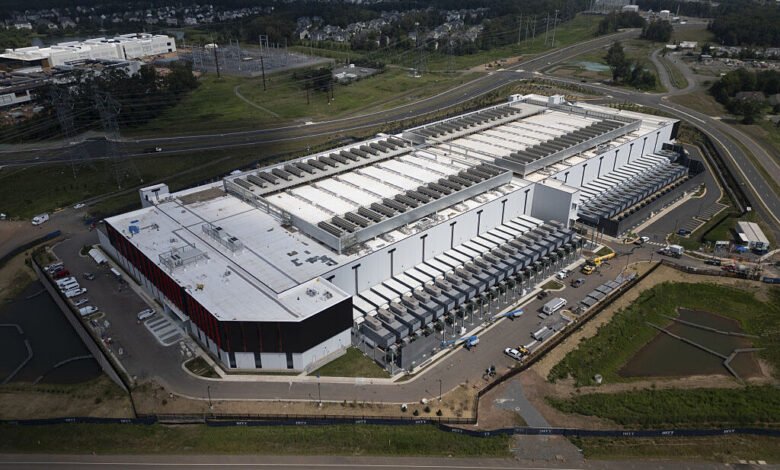
Each time someone uses an AI chatbot or generates an image, servers in massive data centers fire up, consuming energy to process the request. Multiply that by billions of queries per day, and the total environmental impact becomes hard to ignore.
A 33x reduction in energy per query changes the equation. Not only does it lower the cost and carbon footprint of AI, but it also opens up the technology to wider adoption without the same level of environmental concern. In regions where power infrastructure is limited or expensive, more efficient AI could mean greater access without the burden of excessive energy use.
This improvement also benefits Google directly. Lower energy usage per query translates to lower operating costs, allowing the company to scale its services more affordably while staying on track with its sustainability goals.
No Slowing Down for AI
Over the past year, AI has rapidly integrated into daily life. Tools like voice assistants, translation apps, search engines, productivity suites, and even maps rely heavily on AI to deliver smarter, faster, and more personalized results. As people turn to AI for more tasks, the demands on the infrastructure powering these tools continue to rise.
For companies like Google, that means building systems that are not just powerful, but also sustainable. Cutting energy use by such a large margin allows for continued growth in AI services without a proportional increase in environmental impact.
It also positions Google as a leader in sustainable AI at a time when industry scrutiny is growing. The environmental cost of training and deploying large AI models has been a contentious topic, with critics calling for more transparency and accountability. By focusing on energy efficiency and publicly announcing major improvements, Google is aiming to take a leadership role in addressing those concerns.
Challenges Remain
Despite the impressive gains, challenges still remain. The demand for AI is not slowing down—in fact, it’s increasing. As models become more complex and serve more users, the total energy used by AI services will likely continue to grow, even if each individual query uses less energy.
In addition, energy efficiency varies depending on the model, the task, and the hardware in use. Not every AI feature or product may be benefiting equally from the improvements. Google did not specify whether the 33x reduction applies uniformly across all AI tools or only to a specific class of models or applications.
There’s also the matter of how energy efficiency improvements are measured. Without detailed technical documentation, it’s hard to evaluate the exact scope of the reduction or the baseline from which it was calculated. Still, even with some uncertainty, the announcement signals a promising shift toward a more responsible and scalable AI future.
The Bigger Picture
For Google, this announcement fits into a broader effort to align technology innovation with sustainability. The company has long pledged to operate on carbon-free energy around the clock by 2030. Major gains in AI efficiency help bring that goal closer, especially as AI becomes an even larger share of Google’s overall computing workload.

Looking ahead, the focus is likely to remain on efficiency—not just to reduce environmental impact, but to make AI accessible in more settings, from low-power mobile devices to emerging markets with limited infrastructure.
If the rest of the tech industry follows suit, we may see a future where AI grows not just smarter and more powerful, but dramatically greener. Google’s 33x improvement offers a vision of what that future could look like—and proof that sustainability and performance don’t have to be at odds.






