A Tesla factory technician has filed a $51 million lawsuit following a workplace accident that left him unconscious after being struck by an assembly-line robot. The incident, which occurred at Tesla’s Fremont, California, manufacturing plant, has raised serious questions about workplace safety, automation risks, and corporate responsibility in high-tech manufacturing environments.
The technician, Peter Hinterdobler, 50, alleges that the accident happened on July 22, 2023, while he was assisting in the disassembly of a robot that had been relocated from the Model 3 assembly line. According to the lawsuit, a robotic arm unexpectedly released with considerable force, striking Hinterdobler and knocking him unconscious. The impact caused serious injuries, resulting in an extended hospital stay and ongoing medical treatment.
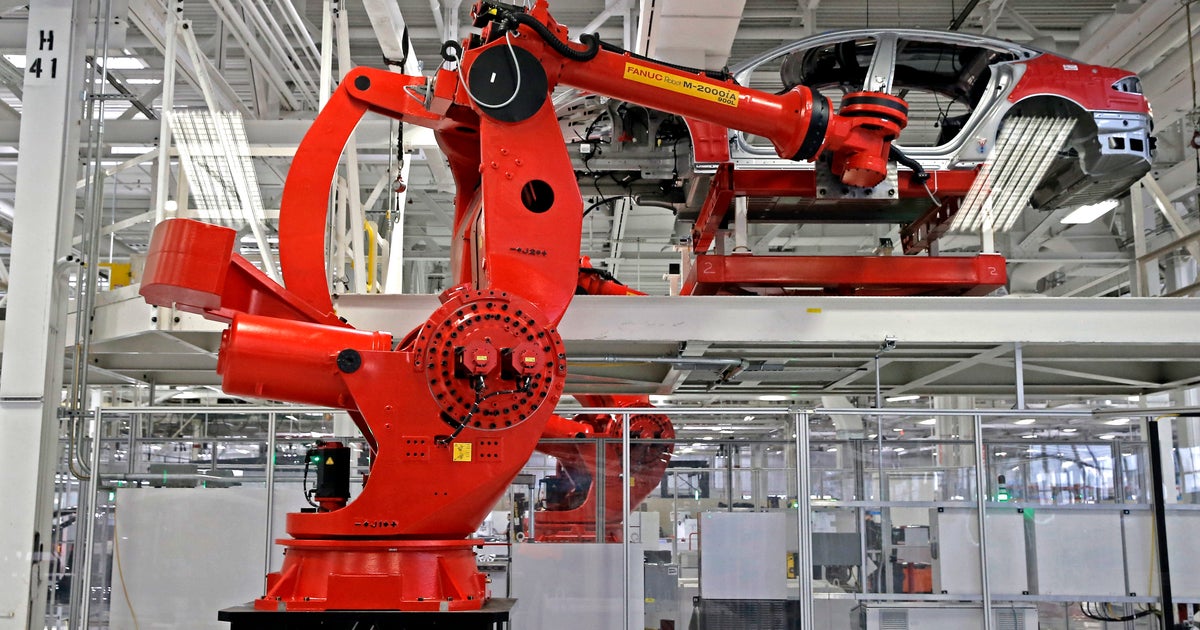
Hinterdobler’s legal complaint claims that Tesla failed to properly de-energize and secure the robot before allowing technicians to work on it. He contends that this negligence directly led to the accident. The lawsuit also names FANUC, the manufacturer of the robot, as a defendant, arguing that the company bears responsibility for potential design flaws or inadequate safety features.
The robotic arm involved was reportedly powered by both mechanical force and an approximately 8,000-pound counterbalance weight. When it unexpectedly moved during the disassembly process, the combined force was enough to throw Hinterdobler to the floor, rendering him unconscious and causing serious physical trauma.
Since the accident, Hinterdobler has incurred more than $1 million in medical expenses and is expected to require an additional $6 million in treatment and rehabilitation costs. The lawsuit seeks damages including $20 million for pain and suffering, $10 million for emotional distress, $1 million for lost wages to date, $8 million for loss of future earning capacity, and $5 million for the past and future inability to perform household services.
This case has brought renewed scrutiny to the safety protocols in Tesla’s factories, which rely heavily on robotic automation to maintain high production speeds and efficiency. While automation has transformed manufacturing by increasing output and reducing human error, it has also introduced new risks—especially when safety procedures fail or machines malfunction.
Tesla’s Fremont plant is one of the most advanced automobile factories in the world, employing thousands of workers alongside hundreds of industrial robots. The company has promoted its automated processes as a key factor in producing electric vehicles quickly and at scale. However, incidents like this one highlight the potential dangers posed to workers who must interact with or maintain these machines.
In recent years, Tesla has faced criticism and regulatory scrutiny over workplace safety issues. Reports have surfaced about injuries and accidents at various Tesla facilities, raising concerns about whether the company’s rapid growth has outpaced its ability to ensure a safe working environment.
The lawsuit also sheds light on the broader challenge of maintaining worker safety in environments dominated by complex machinery. As factories become more automated, technicians and maintenance workers must deal with increasingly sophisticated robots. Ensuring that these machines are safely powered down and secured during maintenance is critical to preventing accidents.
In his legal filings, Hinterdobler alleges that Tesla failed to provide adequate safety training or enforce proper protocols for handling the robot. He asserts that the company should have implemented more rigorous lockout-tagout procedures—standard industry practices that ensure machines are fully deactivated before any work begins.
The lawsuit also questions the design and safety features of the robot itself. Hinterdobler’s attorneys argue that FANUC should be held accountable if the machine lacked sufficient fail-safes to prevent unexpected movements during maintenance.

Tesla has not publicly responded to the lawsuit, and neither has FANUC. The case is currently pending in federal court, where it is expected to involve extensive discovery and expert testimony regarding industrial safety standards, robotic engineering, and workplace protocols.
This lawsuit follows previous reports of robotic-related injuries at Tesla facilities. In one notable incident, a Tesla engineer was reportedly “attacked” by a robot at the company’s Austin, Texas, Gigafactory. The robot allegedly pinned the worker against a wall, requiring a coworker to hit an emergency stop button to free him. Such incidents underscore the inherent risks when humans and machines work in close proximity.
The Occupational Safety and Health Administration (OSHA) has fined Tesla multiple times in recent years for safety violations. These penalties have focused on various workplace hazards, including inadequate training, failure to provide protective equipment, and insufficient safety measures in production areas.
Legal experts suggest that this latest lawsuit could have far-reaching implications. If successful, it may prompt stricter enforcement of safety regulations in factories that use advanced automation. It could also pressure manufacturers and robotics companies to design machines with enhanced safety features specifically tailored for maintenance scenarios.
Beyond the immediate legal battle, the case raises important ethical questions about the balance between innovation and worker safety. As industries increasingly adopt artificial intelligence and robotics, companies must ensure that their employees are protected from new types of harm.
For Peter Hinterdobler, the accident has had a devastating impact on both his health and livelihood. According to the lawsuit, he continues to suffer from physical pain, emotional trauma, and significant limitations on his ability to work and perform everyday tasks. The financial compensation he seeks aims to cover medical costs, lost income, and the long-term consequences of his injuries.
Tesla’s handling of the incident and the lawsuit will be closely watched by industry observers, workers’ advocates, and regulators. The outcome could influence how other companies manage workplace risks in an era defined by rapid technological change.
As automation becomes more integral to manufacturing worldwide, ensuring that human workers remain safe around complex machinery will remain a pressing challenge. The case of the Tesla technician injured by a robot serves as a stark reminder that behind every technological advance, real human lives are at stake.