China has announced a sweeping new regulation that will fundamentally reshape the country’s influencer and social media landscape. Under the new rule, only individuals with verified Chinese academic qualifications or professional credentials will be allowed to produce or share content in fields such as health, law, education, and finance. The move marks one of the most significant tightening of online governance in recent years and underscores the government’s growing focus on promoting “accuracy and professionalism” in digital spaces.
A New Era of Regulated Influence
According to the new policy, any influencer or content creator who wishes to discuss or offer advice in professional domains must possess relevant educational degrees or licenses issued by recognized Chinese institutions. This means that individuals without medical, legal, or educational certifications from domestic universities will no longer be permitted to share related content, even if they have international credentials or extensive experience abroad.
The regulation applies not only to long-form content such as blogs, podcasts, and livestream lectures, but also to short-form videos — the dominant medium in China’s influencer economy. Platforms like Douyin, Kuaishou, Xiaohongshu, and Bilibili are now responsible for verifying the qualifications of their creators before they can post in these sensitive areas.
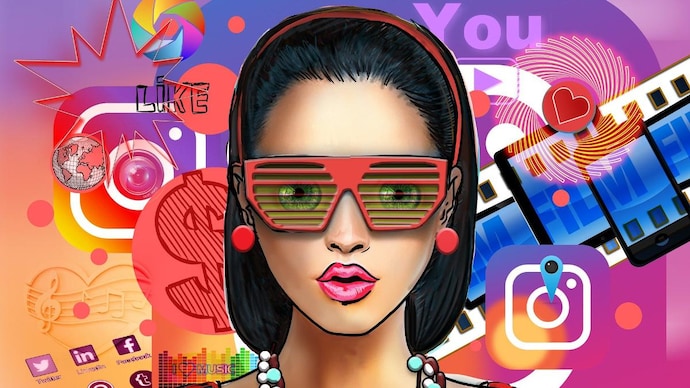
Officials from the Cyberspace Administration of China (CAC) have justified the decision as part of a broader campaign to reduce misinformation and ensure that professional knowledge is shared only by individuals with legitimate expertise. The authorities argue that the rapid rise of social media has blurred the line between entertainment and education, allowing unqualified influencers to give health tips, legal guidance, and financial advice without accountability — often leading to public confusion and, in some cases, harm.
Protecting Accuracy or Restricting Access?
The Chinese government’s official explanation centers on safeguarding the public. With hundreds of millions of citizens turning to short videos for daily information, regulators insist that it is vital to establish trust in professional advice disseminated online. They cite growing incidents of medical misinformation, unverified investment schemes, and unqualified “law commentators” as justification for the policy.
However, while many experts agree that the intention to combat misinformation is valid, others see deeper implications. Critics worry that the rule could become a mechanism for information control, allowing authorities to shape narratives around sensitive social issues. By requiring state-recognized qualifications — particularly those obtained within China — the policy effectively excludes foreign-educated professionals, independent experts, and self-taught educators who might present alternative perspectives.
This requirement for Chinese qualifications, rather than general expertise, suggests an effort to maintain ideological alignment with national standards. It also reflects Beijing’s broader push to ensure that online content reflects the government’s vision of “social responsibility” and “positive values.”
Impact on China’s Influencer Economy
China’s influencer industry, often referred to as the “digital economy of trust,” has grown into a multibillion-yuan sector employing millions of content creators. Health and education influencers, in particular, have built large audiences by sharing practical advice — from fitness and nutrition to exam preparation and child development. Many of these creators lack formal credentials but have earned public trust through relatable storytelling and personal experience.
With the new restrictions, such creators may face bans, content removals, or account suspensions unless they can provide formal proof of their qualifications. Platforms are being held accountable for implementing these checks, with penalties for allowing unverified professional content to circulate. As a result, social media companies are rapidly building verification systems and reviewing thousands of accounts.
Some creators have already begun to pivot, focusing on lifestyle or entertainment content to avoid scrutiny. Others have expressed frustration online, arguing that expertise is not solely defined by degrees, and that real-world experience can sometimes provide greater value than formal education. Nonetheless, compliance is no longer optional — the new rules have the force of law, and violations can result in permanent account deletions or even legal consequences.
The Broader Political and Cultural Context
This policy aligns with a wider pattern in China’s approach to digital regulation. Over the past five years, the government has introduced a series of measures aimed at standardizing online behavior, reducing “vulgar” entertainment, and promoting what officials call “rational and orderly discourse.” The latest regulation extends that logic to professional knowledge, reinforcing the state’s authority over who is allowed to educate or advise the public.
By limiting influencer participation in professional fields to those with Chinese-accredited qualifications, the government also reinforces its emphasis on domestic expertise and national standards. In education and law, for example, this ensures that online discussions adhere to the ideological frameworks established by Chinese institutions. In health and finance, it reinforces accountability within systems already regulated by the state.
This move is not purely restrictive — it also reflects a broader effort to professionalize the influencer industry. Regulators hope that by setting clearer standards, the public will gain access to higher-quality content, while the influencer economy itself becomes more credible. Yet the balance between control and creativity remains delicate, and some worry that overregulation could stifle innovation in a field that has thrived precisely because of its diversity and openness.
Looking Ahead
For China’s millions of content creators, the message is clear: the era of free commentary on professional subjects is over. The new qualification rule draws a sharp line between “expert” and “entertainer,” forcing influencers to choose their lanes carefully. Those with the credentials may gain prestige and opportunities in an increasingly formalized industry; those without may fade from relevance or be pushed toward less regulated niches.
For audiences, the change may lead to more reliable — but less diverse — content. Viewers seeking authentic, grassroots voices might find fewer independent creators tackling serious topics. Meanwhile, international observers are watching closely to see whether this model of credential-based regulation will inspire similar policies elsewhere, especially as misinformation becomes a global concern.
Ultimately, China’s latest influencer regulation captures the tension at the heart of the digital age: the desire for trustworthy information versus the instinct to control it. Whether this new system will elevate the quality of online discourse or simply narrow its boundaries remains to be seen.