In what appears to be one of the most significant shifts in its recent performance strategy, Mercedes-AMG is reportedly preparing to end production of several of its four-cylinder AMG models by 2026. While the company has not yet issued an official public statement, multiple internal reports and industry leaks suggest that Mercedes is undertaking a major course correction—one driven by regulatory pressure, customer feedback, and a renewed commitment to the emotional identity that built the AMG brand.
For the past several years, Mercedes-AMG has leaned heavily into downsized, electrified performance engines. The company’s 2.0-litre turbocharged four-cylinder, notably in its hybrid form used in the C-Class and GLC-Class, was touted as a marvel of engineering: compact, powerful, and efficient. Yet despite its technical sophistication, the four-cylinder AMG era has been met with a mixed reception from longtime enthusiasts. Many praised the engineering accomplishment, but others argued that the downsized engines lacked the soul, sound, and character traditionally associated with AMG’s larger powertrains.
Now, as 2026 approaches, it appears the company may be ready to pivot.

A Gradual Wind-Down
According to the information circulating within automotive circles, several four-cylinder AMG models are scheduled to wind down production in two phases. The first phase is expected to occur in early 2026, with models such as the AMG C 43, GLC 43, and certain AMG 35-series crossovers ending their production runs. These vehicles, equipped with AMG-tuned versions of Mercedes’ compact four-cylinder engines, have served as entry points into the brand’s performance lineup. Their discontinuation suggests a restructuring of AMG’s lower-tier offerings.
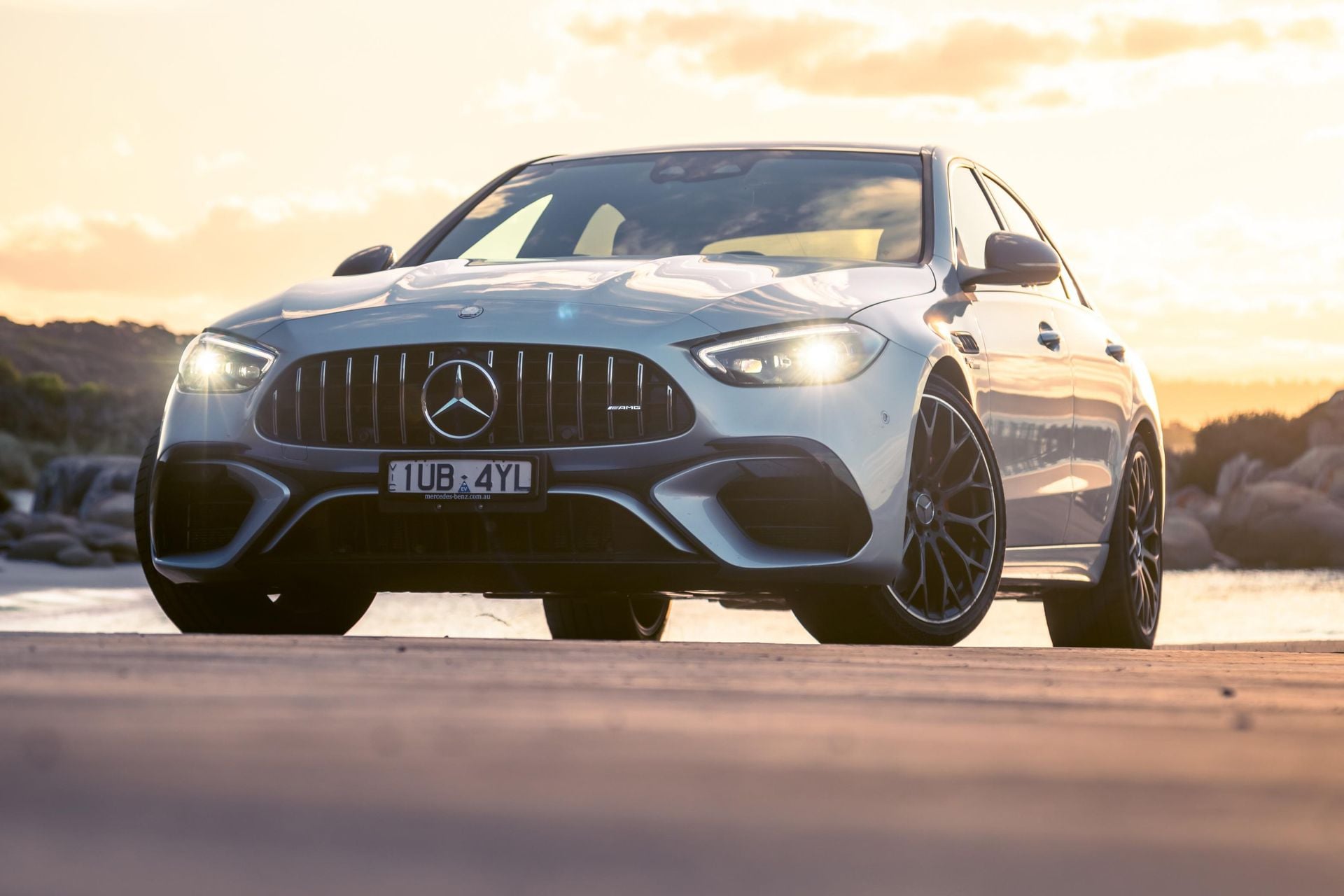
The second phase reportedly involves the higher-end four-cylinder plug-in hybrid models, including the current-generation C 63 and GLC 63. These models represent some of the most technologically advanced—and controversial—AMGs ever produced. Replacing a beloved V8 with a highly boosted four-cylinder hybrid system was always a bold move, and while the performance figures were impressive on paper, the reception was far from universally positive. Now, reports indicate that these halo models may cease production as early as mid-2026.
Interestingly, not every four-cylinder AMG model is expected to be discontinued. Some performance-oriented compact models may continue into the next generation, likely due to their strong sales and the practicality of maintaining a four-cylinder lineup for smaller vehicle segments.
Regulatory Pressure Mounts
One of the driving forces behind this shift appears to be tightening global regulations—particularly in Europe. New noise and emissions standards set to take effect around 2026 are expected to impose even stricter limits on performance vehicles. The four-cylinder AMG powertrains, especially those tuned to high output levels, face additional challenges in meeting these standards without significant reengineering.
Noise regulations, in particular, have become a critical obstacle. High-performance four-cylinder engines tend to produce sharper, more aggressive sound signatures than their six- or eight-cylinder counterparts. While some of this can be mitigated through software-driven exhaust tuning, there are limits to what can be achieved without compromising performance or adding expensive new components.
Rather than pouring more development resources into keeping these engines compliant, Mercedes-AMG may be choosing to refocus its efforts elsewhere.
A Return to AMG’s Roots
Beyond regulatory considerations, industry insiders suggest that Mercedes-AMG has recognized a deeper issue: the loss of emotional appeal. AMG built its reputation on hand-crafted, high-displacement engines with a distinctive character. While downsizing may have satisfied efficiency standards, it came at the cost of brand identity.
Reports now indicate that AMG may be preparing to revive larger powertrains for its mid- and high-tier models. This could include the return of an inline-six engine, as well as a new generation of V8 powertrains—potentially featuring advanced technology such as a flat-plane crank and hybrid assistance. Such engines would offer the performance expected of AMG while restoring the unmistakable sound and character enthusiasts crave.
Customer Response and Market Dynamics
Sales performance also plays a major role in the reported discontinuations. The four-cylinder hybrid versions of the C 63 and GLC 63, despite their technical prowess, have reportedly struggled to meet expectations in several key markets. Many customers remained attached to the outgoing V8s, and others were deterred by the complexity and price premiums associated with the hybrid system.
In contrast, AMG’s six- and eight-cylinder models continue to dominate the brand’s public image. This imbalance makes it easier for the company to justify a strategic retreat from its more experimental four-cylinder performance offerings.
What This Means for AMG’s Future
If the reported plans come to fruition, AMG’s lineup by 2026 could look dramatically different. A more streamlined portfolio may emerge—one built around engines that better align with AMG’s historical strengths. Electrification will still play a role, but likely as an enhancer rather than a replacement for rich sound and visceral performance.
This shift may also spark new excitement among performance enthusiasts who have long hoped for the return of larger engines. At the same time, the company must still balance regulatory demands and environmental expectations, making the next generation of AMG engines more complex—and more technologically ambitious—than anything before them.
Conclusion
Mercedes-AMG’s reported decision to end production of many four-cylinder AMG models marks a pivotal moment for the brand. It signals a recognition that performance is as much about emotion as engineering and that customer loyalty cannot be taken for granted.
As the automotive world moves toward 2026, all eyes will be on Stuttgart to see how AMG reinvents itself. The next chapter may very well bring a renaissance of sound, character, and visceral excitement—backed by cutting-edge technology and a renewed commitment to what made AMG iconic in the first place.