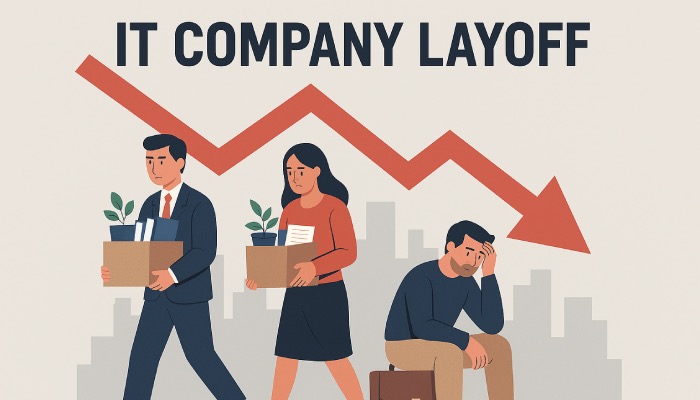
Verizon has initiated another round of layoffs across the United States, cutting several hundred employees only months after the telecommunications giant eliminated approximately 13,000 jobs in one of the largest workforce reductions in the company’s recent history. The latest move highlights the continued pressure facing major telecom companies as they attempt to balance rising operational costs, slowing subscriber growth, and rapid technological transformation.
The company confirmed the latest cuts this week, stating that the layoffs affect a small percentage of its overall workforce. While Verizon did not provide an exact number of employees impacted, reports indicate that workers across multiple departments and regions were affected, including corporate operations and administrative divisions.
The layoffs come at a time when Verizon is aggressively restructuring its business to improve efficiency and strengthen profitability. Executives have repeatedly emphasized the need to streamline operations while continuing to invest heavily in network expansion, 5G infrastructure, and digital transformation initiatives.
In a statement, Verizon said it continues to hire in areas of strategic growth while reducing positions in sections of the business where resources are being consolidated. Company representatives described the decision as part of a broader effort to position Verizon for long-term competitiveness in an evolving telecommunications market.
The latest workforce reduction follows Verizon’s massive round of job cuts announced late last year, when the company eliminated around 13,000 positions through layoffs and voluntary separation programs. At the time, executives said the restructuring was necessary to reduce costs and adapt to changing consumer behavior and market conditions.
Industry analysts say the continued layoffs demonstrate how telecom companies are under mounting pressure to operate more efficiently while maintaining massive investments in infrastructure. Verizon, like many of its competitors, is spending billions of dollars expanding 5G coverage and upgrading network capabilities while also facing fierce competition from rivals such as AT&T and T-Mobile.
Although wireless demand remains strong overall, growth in the industry has slowed compared to previous years. Consumers are holding onto devices longer, competition for subscribers has intensified, and companies are offering increasingly aggressive promotions to retain customers. These trends have squeezed profit margins and forced telecom providers to search for new ways to cut expenses.
Verizon executives have indicated that reducing operational costs remains a major priority for the company. Leadership has previously stated that the organization is working toward becoming “leaner” and more agile, particularly as technology continues to reshape the industry.
Artificial intelligence and automation have become important components of Verizon’s broader business strategy, though the company has denied that AI was the primary reason behind the recent layoffs. Executives have acknowledged, however, that AI tools are already helping improve productivity and reduce certain operational expenses.
The telecommunications sector as a whole is increasingly adopting AI-driven systems for customer support, network monitoring, software development, and business operations. While companies argue that these technologies improve efficiency and customer experience, critics worry they may eventually reduce the need for human workers across several functions.
The latest layoffs have sparked concern among employees and labor advocates, many of whom argue that repeated job cuts are damaging morale within the company. Workers have expressed frustration online, with some questioning why layoffs continue despite Verizon’s ongoing investments in technology and network expansion.
Industry observers note that the telecommunications workforce has changed dramatically over the past decade. Traditional roles tied to legacy phone services have steadily declined, while demand for employees with expertise in cybersecurity, cloud computing, data analytics, and AI has increased. As a result, companies are restructuring not only to reduce costs but also to shift talent toward newer areas of growth.
Despite the layoffs, Verizon says it still has numerous open positions available throughout the United States. The company has encouraged affected employees to apply for other internal roles where possible. However, for many workers, the latest cuts have reinforced concerns about long-term job security in the telecom sector.
The layoffs also reflect a wider trend occurring across corporate America, where companies in technology, finance, media, and telecommunications have all announced workforce reductions over the past two years. Many businesses that expanded aggressively during the pandemic are now reevaluating staffing levels amid economic uncertainty and changing consumer habits.
For Verizon, the challenge lies in balancing financial discipline with continued innovation. The company remains one of the largest telecommunications providers in the United States and continues to invest heavily in 5G services, fiber expansion, and enterprise technology solutions. Analysts say Verizon’s future growth will depend largely on its ability to attract higher-value customers and expand beyond traditional wireless services.
Investors have generally responded positively to Verizon’s cost-cutting efforts, viewing the restructuring as a sign that management is focused on improving efficiency and protecting profitability. However, repeated layoffs also risk damaging the company’s public image and employee confidence at a time when competition for skilled workers remains intense.

As the telecom industry continues evolving, further restructuring across major providers may be inevitable. Companies are increasingly under pressure to modernize operations while navigating economic uncertainty, technological disruption, and changing consumer expectations.
For thousands of workers affected by Verizon’s layoffs, however, the broader industry transformation carries immediate personal consequences. The latest cuts serve as another reminder that even established corporate giants are continuing to reshape their workforces in response to a rapidly changing business environment.