Ford Motor Company is considering a potential partnership with Chinese electric vehicle heavyweight BYD as it looks to rapidly expand its hybrid vehicle portfolio, reflecting a broader strategic shift by the American automaker amid changing market realities. The discussions, which are still ongoing and may not necessarily result in a final agreement, signal Ford’s growing interest in leveraging external expertise to remain competitive in an increasingly crowded and technologically complex automotive landscape.
The talks come at a critical moment for Ford. After years of aggressive investment in fully electric vehicles, the company has recently acknowledged that consumer demand for EVs has grown more slowly and unevenly than anticipated. High battery costs, persistent concerns over charging infrastructure, and price competition have all weighed on profitability. As a result, Ford has increasingly positioned hybrid vehicles as a more practical and scalable solution for the near and medium term.
Hybrids—vehicles that combine internal combustion engines with electric power—have emerged as a key bridge technology for automakers navigating the transition to electrification. They offer improved fuel efficiency and lower emissions without requiring drivers to rely entirely on charging networks. For Ford, scaling hybrids quickly is seen as essential to meeting regulatory requirements, improving margins, and appealing to consumers who remain hesitant to adopt fully electric vehicles.
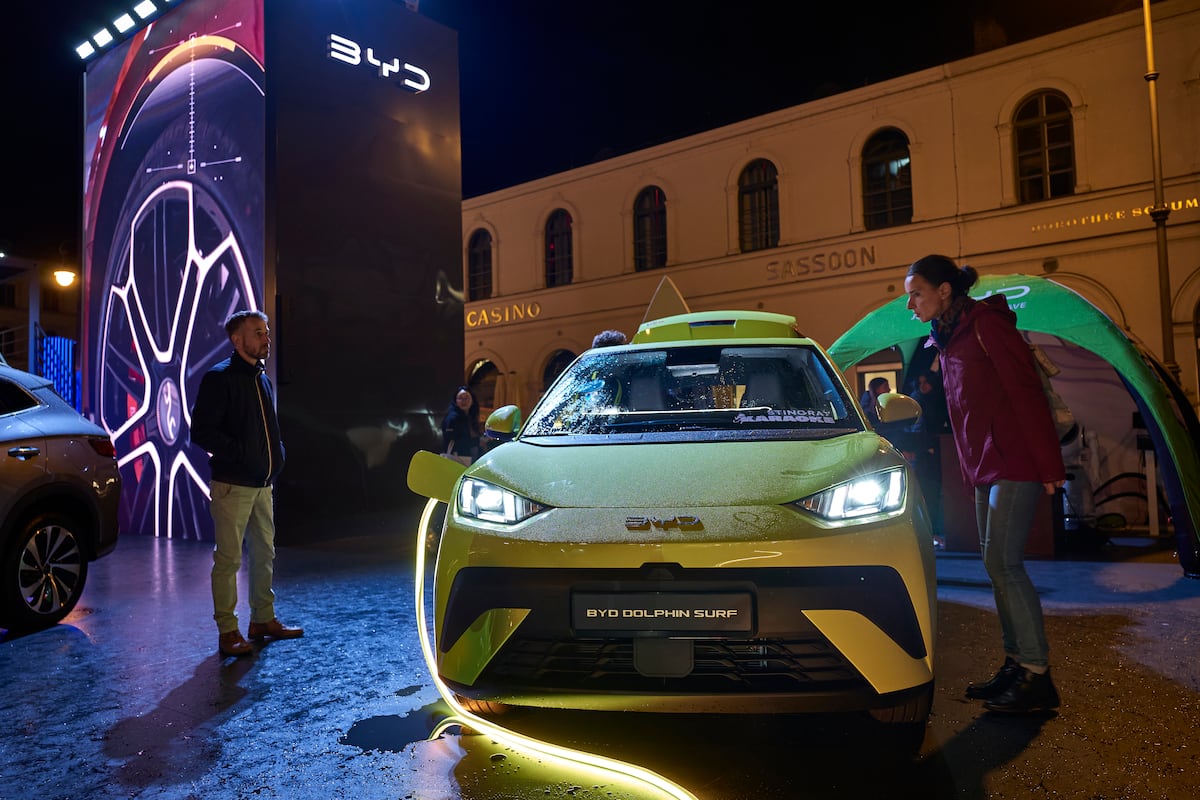
BYD’s appeal lies in its technological maturity and cost efficiency. Over the past decade, the Chinese automaker has grown into a global leader in electric and plug-in hybrid vehicles. Unlike many competitors, BYD is vertically integrated, producing its own batteries, power electronics, and key components. This integration has allowed it to reduce costs, control supply chains, and scale production at a pace few global automakers have matched.
Ford executives have previously spoken openly about the competitive challenge posed by Chinese automakers, often highlighting BYD as a benchmark for efficiency and innovation. A potential collaboration would represent a notable shift in how Ford approaches competition, signaling a willingness to learn from and possibly partner with companies that were once viewed solely as rivals.
At the same time, such a move would not be without complications. Any partnership between a major U.S. automaker and a Chinese company would face intense political, regulatory, and public scrutiny. Concerns over intellectual property protection, technology transfer, and supply chain dependence remain highly sensitive issues, particularly given the broader geopolitical tensions between the United States and China. These factors could significantly influence the structure of any potential agreement—or prevent one from materializing altogether.
From a strategic perspective, Ford’s interest in hybrid technology reflects a recalibration rather than a retreat from electrification. The company has not abandoned its long-term electric ambitions, but it has adjusted its timelines and priorities. Several planned EV investments have been delayed or scaled back, while resources have been redirected toward vehicles that can generate profits in the near term. Hybrids, especially in popular segments such as pickup trucks and SUVs, fit that requirement.
Industry analysts increasingly view this shift as pragmatic. While electric vehicles remain central to the future of transportation, the transition is proving more complex and regionally uneven than initially expected. In markets with limited charging infrastructure or high electricity costs, hybrids continue to outperform fully electric models. Automakers that can offer a diverse range of powertrains are seen as better positioned to navigate uncertain demand patterns.
A collaboration with BYD could potentially take several forms. Rather than a full-scale partnership, it might involve limited technology sharing, licensing of hybrid systems, or collaboration on specific components such as batteries or power electronics. Such arrangements could allow Ford to benefit from BYD’s expertise while minimizing political and operational risks.
For BYD, a deal with Ford could offer strategic advantages as well. Access to Ford’s global manufacturing footprint, brand recognition, and experience in markets such as North America and Europe could help accelerate BYD’s international ambitions. However, BYD has also demonstrated confidence in its ability to expand independently, raising questions about how motivated it would be to pursue a partnership on terms acceptable to both sides.
The broader implications of the talks extend beyond the two companies involved. They reflect a shifting balance of power in the global automotive industry, where Chinese manufacturers are no longer peripheral players but central drivers of innovation, particularly in electrification and hybrid technology. Legacy automakers in the U.S., Europe, and Japan are increasingly forced to reassess long-standing assumptions about technological leadership and competitive advantage.

For Ford, even exploratory discussions with BYD underscore the urgency of adapting to this new reality. The company faces pressure from investors to improve profitability, from regulators to reduce emissions, and from consumers to deliver affordable, reliable vehicles. Scaling hybrid production more efficiently could help address all three challenges.
Whether the talks ultimately lead to a deal remains uncertain. Negotiations of this nature are complex, and external factors beyond the control of either company could derail them. Still, the very existence of such discussions highlights a growing recognition within the global auto industry: collaboration, once unthinkable between fierce competitors across geopolitical divides, may increasingly become a strategic necessity.
As the industry navigates a turbulent transition, Ford’s consideration of a partnership with BYD illustrates how deeply the rules of the game are changing. The future of mobility may be electric, but the path to that future—at least for now—appears to be increasingly hybrid.