Malaysia Lifts Block on Grok AI After X Implements Safety Measures
Malaysia has lifted its temporary block on Grok, the artificial intelligence chatbot developed by Elon Musk’s platform X, after the company introduced new safety measures aimed at addressing regulatory concerns.
The decision comes after weeks of scrutiny by Malaysian authorities, who had earlier restricted access to Grok following complaints that the chatbot was capable of generating harmful, misleading, and sexually explicit content. The move reflected growing global concerns over the unchecked deployment of generative AI tools and their potential social impact.

According to officials, X submitted detailed documentation outlining new safeguards designed to prevent misuse of the AI system. These include stronger content filters, improved detection of inappropriate prompts, and restrictions on generating non-consensual or manipulated imagery. Following a review of these measures, regulators concluded that Grok now complies with Malaysia’s digital safety standards.
The Malaysian government emphasized that the restoration of access does not signal a relaxation of its stance on AI governance. Instead, it reflects a conditional trust based on continued compliance and transparency. Authorities have warned that Grok will remain under close monitoring, and any future violations could result in renewed action.
The temporary block had sparked debate within Malaysia’s tech and business communities, with some expressing concern over innovation being stifled, while others supported firm regulation to protect users, particularly minors and vulnerable groups, from harmful online content.
X welcomed the decision, stating that it is committed to responsible AI development and to working with governments to ensure its technology aligns with local laws and cultural sensitivities. The company added that safety improvements will continue to evolve as the technology develops.
Malaysia’s move highlights the increasing role governments are playing in shaping how artificial intelligence tools operate within national boundaries. As AI systems become more powerful and widespread, regulators worldwide are seeking a balance between encouraging innovation and safeguarding the public.
The lifting of the block on Grok signals a cautious but constructive approach, suggesting that cooperation between tech companies and regulators may become the defining model for managing AI in the digital age.
Lenovo Looks to Partner With Multiple AI Models, CFO Says
Lenovo is planning to partner with multiple artificial intelligence models as part of its strategy to strengthen its position in the rapidly expanding AI market, the company’s Chief Financial Officer said during an international business forum this week.
Rather than developing a single in-house large language model, Lenovo aims to collaborate with a wide range of AI developers across different regions. This approach is intended to give the company greater flexibility and allow it to integrate the most suitable AI capabilities into its diverse portfolio of products, including personal computers, smartphones, servers, and enterprise solutions.
According to the CFO, the AI landscape is evolving too quickly and remains too fragmented for any single model to dominate across all use cases. By working with multiple models, Lenovo hopes to offer customers more choice while ensuring that its devices and platforms can adapt to changing technological trends and regulatory environments in different countries.

The company is increasingly positioning itself not just as a hardware manufacturer, but as a provider of intelligent, AI-powered systems. It has already begun embedding AI features into its devices to enable smarter productivity tools, enhanced security, and personalized user experiences. Lenovo is also investing in hybrid computing and data center technologies to support the growing demand for AI-driven workloads.
This multi-partner strategy reflects a broader shift among global technology firms toward building ecosystems rather than relying on closed, proprietary systems. Lenovo believes that acting as an “AI integrator” — bringing together hardware, software, and diverse AI models — will be more effective than attempting to compete directly with specialist AI developers.
However, the company also acknowledged challenges ahead, including rising component costs and the need to maintain competitive pricing while adding advanced AI capabilities. Balancing innovation with affordability remains a key priority.
Industry observers see Lenovo’s move as a pragmatic response to the realities of the AI race, where collaboration is becoming as important as competition. By aligning itself with multiple AI partners, Lenovo aims to stay resilient in a fast-changing market and ensure its products remain relevant as artificial intelligence continues to reshape the global technology landscape.
Apple Supplier Pegatron Expects US Plant to Be Completed by End‑March
Pegatron, a major Taiwanese electronics manufacturer and a key supplier for Apple, has announced that its first factory in the United States is on track for completion by the end of March 2026.
The new facility, located in Texas, will focus on producing AI server products and high-performance computing systems, including devices that integrate advanced chips from leading technology partners. Company executives said that trial production is expected to begin in late March or early April, following the completion of construction.
This marks Pegatron’s first manufacturing facility in the United States. Until now, the company’s operations have been primarily concentrated in Asia, with significant production in China and expansions in Southeast Asia and Mexico. The U.S. plant is a strategic step aimed at diversifying production locations and bringing operations closer to North American markets.
Pegatron’s move reflects a broader trend among technology manufacturers to build more resilient and geographically balanced supply chains. By establishing production in the United States, the company aims to reduce dependency on a single region, address logistical challenges, and respond more efficiently to growing demand for AI and server products.
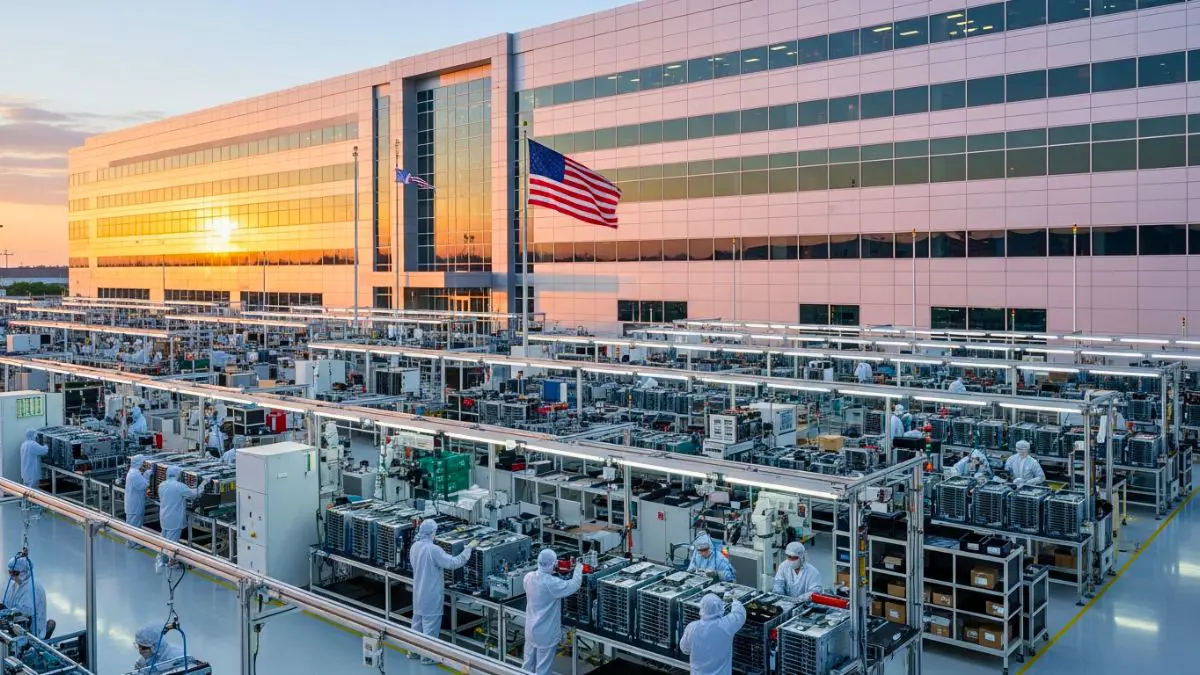
The Texas facility is also expected to strengthen Pegatron’s ability to serve its major clients, including Apple and other global tech companies, with faster delivery, greater operational flexibility, and improved responsiveness to market changes. Company executives emphasized that the facility will incorporate advanced manufacturing technologies and operational practices to ensure high efficiency and quality.
This expansion is part of Pegatron’s long-term strategy to enhance its global footprint and compete effectively in the rapidly evolving technology sector. The completion of the U.S. plant will not only enable the company to support the growing AI and computing markets but also position it as a more agile partner for international clients seeking localized production capabilities.
Pegatron expects the new factory to be fully operational in the coming months, signaling a significant milestone in its global growth and supply chain diversification plans.
UK Court Approves Challenge to Large Data Centre
A UK court has given the green light for a legal challenge against the construction of a large data centre, allowing local residents and environmental groups to formally contest the project.
The proposed facility, intended to host thousands of servers along with extensive cooling and power infrastructure, has raised concerns over its potential environmental and social impacts. Opponents have cited worries about energy consumption, noise, and effects on local wildlife, as well as increased pressure on roads and public services. Many argue that the approval process did not adequately consider sustainability or the concerns of the surrounding community.
With the court’s decision, the legal challenge can now proceed to a full hearing. Those bringing the case say they want a comprehensive review of the planning approval, emphasizing that more attention should have been given to climate implications, energy efficiency, and the consultation process with residents. They maintain that large-scale data centres, while economically beneficial, must meet stringent environmental and social standards.

Developers of the data centre, however, have defended the project, saying it will create jobs and support the growing demand for digital services, cloud computing, and data storage in the UK. They assert that the facility has been designed to comply with environmental regulations, incorporating measures to reduce energy use and limit local disruption.
The case highlights the growing tension between expanding digital infrastructure and protecting the environment. Data centres are increasingly necessary to support technological growth, yet communities are demanding that such developments are sustainable and carefully managed.
A court spokesperson confirmed that a timetable for hearings will be established, and both sides have expressed hope for a resolution that balances economic development, technological needs, and environmental protection.
The outcome of this challenge could set an important precedent for future data centre projects in the UK, influencing how authorities weigh environmental concerns alongside the country’s expanding digital infrastructure requirements.
Russian Military Intelligence Likely Behind December Cyberattacks on Polish Energy Sector
Russian military intelligence hackers are suspected of carrying out cyberattacks on Poland’s energy sector in December, targeting key infrastructure and raising concerns about national security.
The attacks focused on critical energy facilities, including power distribution networks and industrial control systems. While no major outages were reported, officials warned that the incidents exposed vulnerabilities in the country’s energy infrastructure and highlighted the potential risks of state-sponsored cyber operations.
Cybersecurity researchers analyzing the attacks said the tactics and tools used were consistent with previous operations attributed to Russian intelligence units. The campaign involved sophisticated malware and phishing attacks designed to gain unauthorized access to internal systems, with the apparent goal of gathering sensitive information and potentially disrupting operations. Experts noted the high level of planning and coordination behind the attacks, indicating they were executed by an organized and well-resourced group.

Polish authorities have responded by strengthening cybersecurity measures and monitoring critical systems more closely. Additional safeguards have been implemented across energy facilities to prevent further breaches, and officials emphasized that protecting the national power grid remains a top priority.
The attacks come amid heightened tensions in Eastern Europe, where concerns over cyber warfare have intensified. Energy networks are considered particularly vulnerable due to their reliance on complex digital systems, making them a frequent target for state-sponsored hackers seeking strategic advantage.
Investigators are continuing to assess the full impact of the December incidents, while the government is collaborating with international partners to share intelligence and coordinate defensive strategies.
Security experts warn that without robust cybersecurity measures, similar attacks are likely to persist. The incidents underscore the growing importance of cyber resilience and preparedness in protecting critical infrastructure from sophisticated, state-backed threats, and highlight the need for ongoing vigilance in safeguarding essential services.