Roblox’s rollout of AI-powered age verification tools is drawing criticism from parents and users in the United Arab Emirates, with mounting complaints that the system is producing inaccurate results and creating new safety and privacy worries instead of solving them. The gaming and social platform, popular with children and teenagers worldwide, introduced automated age checks as part of a broader effort to strengthen protections and limit inappropriate interactions. But early user experiences suggest the technology may be misfiring in ways that could undermine its purpose.
Roblox introduced AI-based age estimation to better separate users into age groups and apply chat and interaction limits accordingly. The system typically asks users to verify their age either through a facial scan analyzed by AI or by submitting official identification. Based on the result, accounts are placed into age categories that determine which social features, chat tools, and experiences they can access. The goal is to prevent younger children from interacting freely with adults and to reduce exposure to harmful content or behavior.
However, many UAE parents report that the automated checks are incorrectly estimating ages, sometimes by wide margins. In several reported cases, children have been classified as adults, while adults have been flagged as underage. These mismatches can trigger the wrong set of permissions and restrictions, potentially exposing minors to broader chat access or, conversely, locking legitimate users out of key features.
Parents say the most troubling issue is when a child’s account is mistakenly placed in an older age bracket, which can automatically loosen safety filters and reduce parental control settings. Families who rely on built-in protections say this creates confusion and risk, especially if they are not immediately aware that the classification has changed. Some report that correcting these errors is difficult, with limited appeal options and slow support responses.
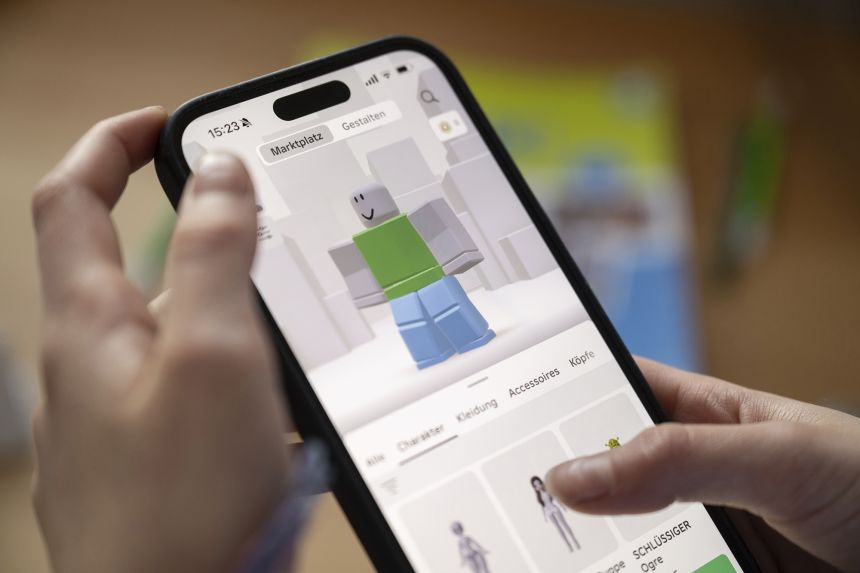
The backlash is particularly strong in the UAE, where digital child safety has become a growing focus for both regulators and families. Parents are increasingly aware of online risks and are expected to take an active role in supervising their children’s digital activity. Tools that promise automated protection are therefore held to a high standard. When those tools fail or behave unpredictably, trust erodes quickly.
Privacy concerns are adding another layer to the controversy. The age-check system relies in part on facial analysis, which requires users to submit a live image or video selfie. Although the company says the data is processed for age estimation and not stored long-term, many parents remain uncomfortable with biometric scanning of children. Questions about how the data is handled, how long it is retained, and whether it could be misused or breached have circulated widely in parent groups and online forums.
Some technology experts warn that AI-based age estimation is still an imperfect science. Factors such as lighting, camera quality, facial expression, ethnicity, and physical development can affect how algorithms interpret age. Children going through early or late puberty may be especially prone to misclassification. These technical limitations mean that even well-designed systems can produce inconsistent results at scale.
Another unintended consequence has emerged: some users are reportedly trying to “game” the system. Online discussions show people experimenting with angles, makeup, filters, or using another person’s face to obtain a preferred age rating. This behavior raises concerns that determined users could bypass safeguards entirely, weakening the effectiveness of the age-gating strategy.
UAE parents also worry about the broader social effects. Roblox is not just a game but a social ecosystem where children chat, collaborate, and build virtual experiences. If age checks wrongly restrict communication, children may be cut off from friends. If checks wrongly expand access, they may encounter older strangers. Either outcome disrupts the balance parents are trying to maintain between safe exploration and social connection.
Child safety advocates in the region say technology should support — not replace — layered protection. They emphasize that AI checks should be combined with strong parental dashboards, clear consent flows, human moderation, and rapid correction mechanisms. Without these backup systems, automated verification can become a single point of failure.
Roblox has indicated that its age verification tools are still evolving and will improve over time as the models are refined. The company frames the rollout as part of a long-term safety investment and says multiple verification options are available so users are not forced to rely on one method alone. Still, critics argue that deploying such systems widely before they are consistently reliable puts the burden of errors on families.
The episode highlights a larger challenge facing digital platforms used by children: how to enforce age-appropriate experiences at global scale. Governments are pushing for stricter age controls, but the available technologies — AI estimation, ID checks, and document uploads — each come with trade-offs in accuracy, privacy, and accessibility. No method is frictionless, and no method is foolproof.

For UAE families, the current moment feels like a test case. Many support stronger safeguards in principle but want more transparency, control, and accountability in practice. They are calling for clearer explanations of how AI decisions are made, easier ways to reverse incorrect age ratings, and stronger parental override powers.
Until those improvements arrive, some parents say they are limiting their children’s use of chat features or postponing age verification altogether. Others are increasing direct supervision and reviewing settings more frequently. The promise of automated safety remains appealing, but recent missteps have shown that when AI tools get something as basic as age wrong, the consequences can ripple quickly through a child’s online experience.
As platforms race to deploy AI-driven protections, the Roblox age-check controversy serves as a reminder that safety technology must be not only innovative, but dependable — especially when children are involved.