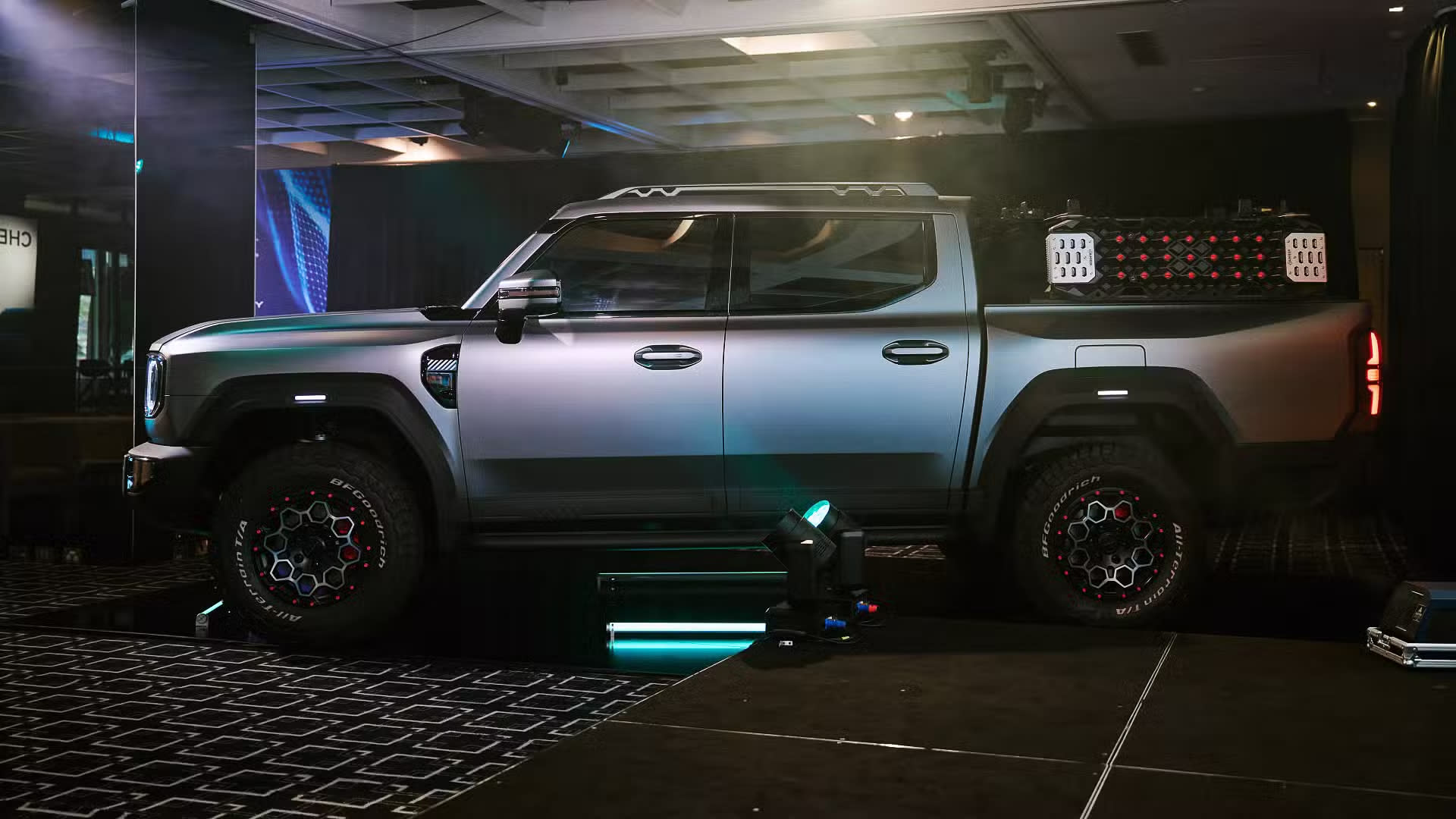
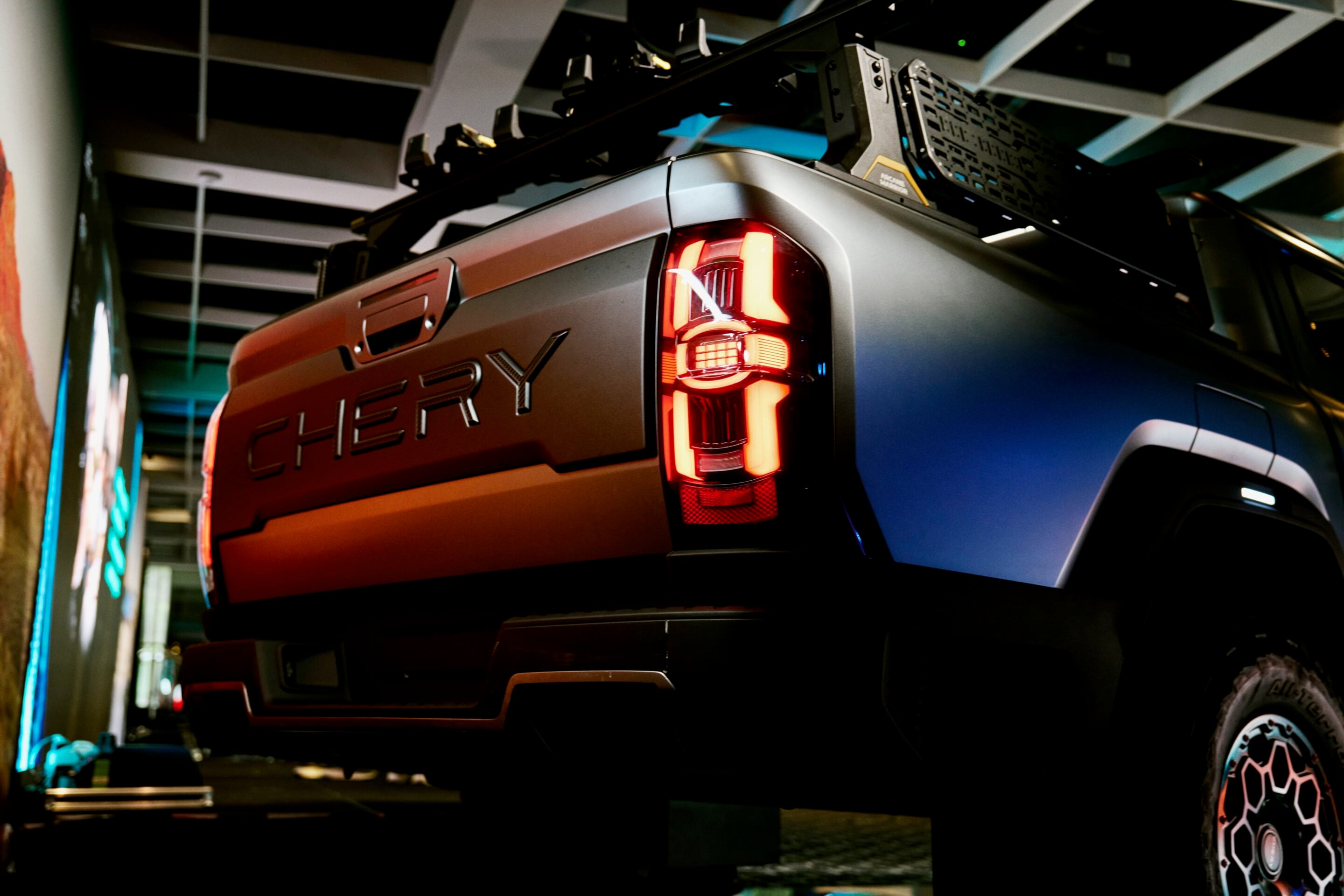
Chinese automotive manufacturer Chery Automobile has announced plans to introduce what it describes as the world’s first diesel plug-in hybrid dual-cab ute, with the groundbreaking vehicle scheduled to arrive in Australian showrooms by late 2026. The move signals a major technological shift in Australia’s highly competitive utility vehicle market, where diesel power and rugged capability have traditionally dominated buyer preferences.
The upcoming model, previewed under the development name KP31, represents Chery’s first serious entry into the global pickup segment and reflects the company’s broader ambition to challenge established brands in one of Australia’s most commercially significant automotive categories. Dual-cab utes remain among the country’s best-selling vehicles, widely used across construction, agriculture, mining, and recreational off-road driving.
A New Approach to Electrification
Unlike most plug-in hybrid vehicles currently available, which rely on petrol engines paired with electric motors, Chery’s new ute combines a turbo-diesel engine with plug-in hybrid technology. The company claims this configuration offers the durability and long-range performance expected from diesel work vehicles while significantly reducing fuel consumption and emissions during everyday driving.
Industry analysts say the concept could address one of the biggest challenges facing electrification in utility vehicles: balancing environmental targets with real-world practicality. Fully electric pickups have faced skepticism among buyers concerned about towing range, charging infrastructure in remote areas, and heavy-load performance. By retaining diesel power alongside battery capability, Chery aims to bridge the gap between traditional and next-generation drivetrains.
The diesel plug-in hybrid system is expected to allow drivers to complete short urban commutes using electric power alone while switching seamlessly to diesel propulsion for longer journeys or demanding workloads. This dual capability could appeal strongly to Australian consumers who require versatility across both city and rural environments.
Built for Work and Adventure
Chery has emphasized that electrification will not compromise capability. Early development targets indicate the ute will match industry benchmarks with approximately one-tonne payload capacity and towing capability of up to 3.5 tonnes — figures considered essential for competitiveness in the segment.
The vehicle is expected to ride on a ladder-frame chassis designed for durability under heavy loads and off-road stress. Prototype designs suggest a rugged exterior with high ground clearance, reinforced underbody protection, and advanced four-wheel-drive systems aimed at maintaining performance across harsh terrain.
Company representatives have indicated that the model is being engineered with Australian conditions in mind, including long-distance travel, extreme temperatures, and demanding off-road usage. Australia has increasingly become a testing ground for global ute innovation due to its unique combination of urban commuting and remote industrial activity.
Australia as a Strategic Launch Market
Choosing Australia as one of the first launch markets highlights the importance of the country’s ute sector. Vehicles such as the Toyota HiLux and Ford Ranger have dominated national sales charts for years, making the segment both lucrative and fiercely competitive.
Chery’s entry introduces fresh competition at a time when emissions regulations and fuel efficiency pressures are reshaping manufacturer strategies. Automakers globally are racing to develop electrified alternatives that retain the functionality tradespeople and fleet operators depend upon.
The diesel plug-in hybrid concept may provide a transitional pathway for buyers hesitant to move directly to fully electric vehicles. Analysts believe hybrid work vehicles could become increasingly attractive as governments tighten emissions standards while infrastructure for large-scale EV adoption continues to develop.
Expanding Product Strategy
The diesel PHEV ute forms part of Chery’s broader global expansion strategy. Over the past few years, the company has rapidly increased its international footprint through competitively priced SUVs and hybrid models. Entering the dual-cab market represents a significant escalation in ambition, placing the brand directly against long-established Japanese, American, and emerging Chinese competitors.
Following the initial diesel plug-in hybrid launch in late 2026, additional variants are expected to follow, potentially including petrol hybrid and fully electric versions. This multi-powertrain approach reflects a growing industry trend toward offering customers multiple electrification pathways rather than a single technological solution.
Executives suggest that flexibility will be critical during the transition period toward lower-emission transport, particularly in regions where commercial vehicles must remain operational under demanding conditions.
Industry Implications
If successful, Chery’s diesel plug-in hybrid ute could redefine expectations for work vehicles worldwide. Combining electric driving capability with diesel endurance challenges the assumption that electrification necessarily requires abandoning traditional fuels in heavy-duty applications.
Automotive experts note that while hybrid passenger cars have become commonplace, applying plug-in technology to diesel-powered utility vehicles represents a significant engineering milestone. The approach may influence future development strategies across the global pickup industry, especially in markets where diesel remains dominant.
The vehicle’s arrival also reflects intensifying competition among Chinese automakers seeking to establish credibility beyond budget offerings by introducing technologically advanced products capable of competing with legacy brands on performance as well as price.
Looking Ahead
Final specifications, pricing, and official model naming are expected closer to launch, but anticipation is already building among industry observers and fleet operators. With electrification rapidly transforming passenger vehicles, the utility segment is widely viewed as the next frontier of innovation.
Should Chery deliver on its claims, the late-2026 debut could mark a turning point for the dual-cab market — introducing a new generation of vehicles capable of combining efficiency, sustainability, and heavy-duty practicality without compromise.
As Australia prepares for the arrival of what may become the world’s first diesel plug-in hybrid ute, the battle for the future of the workhorse vehicle appears set to enter an entirely new phase.