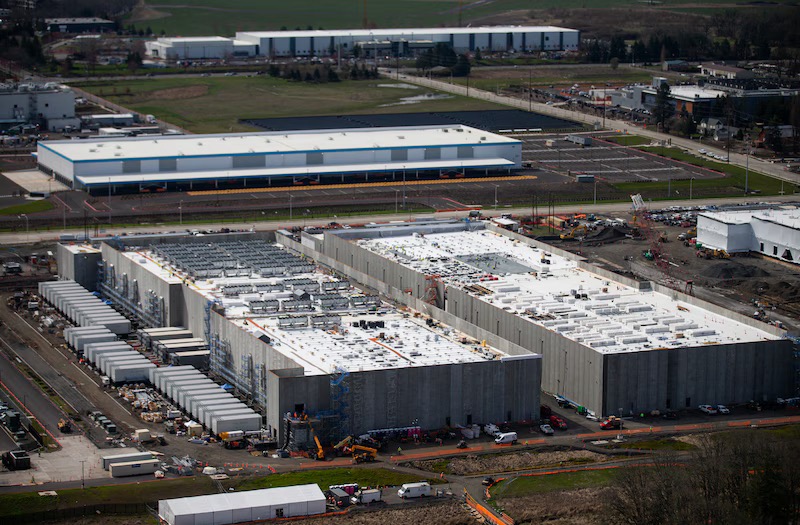
The state of Maine is on the brink of a landmark policy decision that could reshape how digital infrastructure expands across the United States. Lawmakers are advancing legislation that would impose a temporary ban on the construction of large new data centers, potentially halting development until November 2027.
If passed, the bill would make Maine the first state in the country to formally pause the growth of one of the fastest-expanding sectors of the global economy. The move reflects rising concern among policymakers and residents about the environmental, economic, and infrastructural pressures associated with large-scale data facilities.
Data centers—vast complexes filled with servers and cooling systems—are essential to powering cloud computing, artificial intelligence, and the modern internet. Tech giants such as Amazon Web Services, Microsoft, and Google have spent years building these facilities across the U.S. to support growing digital demand. However, their rapid expansion has brought unintended consequences, particularly in regions with limited energy and water resources.

In Maine, a state known for its natural landscapes and commitment to environmental sustainability, the debate has become especially intense. Supporters of the proposed moratorium argue that the state must take a cautious approach before allowing an influx of energy-hungry infrastructure. They point out that data centers require enormous amounts of electricity to operate and maintain cooling systems, often running around the clock.
Lawmakers backing the bill say the temporary ban is not intended to reject technological progress but to create space for careful evaluation. During the moratorium period, state agencies would conduct studies on how large-scale data centers affect local power grids, water supplies, land use, and greenhouse gas emissions. The goal is to develop a regulatory framework that ensures future projects align with Maine’s long-term sustainability goals.
Another concern driving the legislation is the potential impact on electricity prices. As data centers draw significant power from the grid, there are fears that increased demand could lead to higher costs for residents and small businesses. In rural areas especially, where infrastructure may already be stretched, the arrival of a major data facility could require substantial upgrades to transmission systems.
Environmental groups have strongly supported the proposed ban, arguing that unchecked data center growth could undermine Maine’s efforts to transition to renewable energy. While many tech companies have pledged to use clean energy, critics note that the actual implementation often lags behind commitments, and grid capacity remains a limiting factor.
At the same time, opposition to the bill has emerged from business leaders and industry advocates who see data centers as a major economic opportunity. They argue that such facilities can bring investment, construction jobs, and long-term tax revenue to host communities. In a state that has historically faced economic challenges in certain regions, these benefits are difficult to ignore.
Critics also warn that a moratorium could send a negative signal to investors, suggesting that Maine is not open to large-scale technological development. With other states actively competing to attract data center projects through tax incentives and streamlined approvals, there is concern that companies may simply choose alternative locations, leaving Maine behind in the digital economy.
Despite these arguments, public sentiment appears divided but leaning toward caution. Local communities have raised questions about the long-term implications of hosting massive industrial complexes that may employ relatively few people once operational. Concerns about noise, land use changes, and the visual footprint of these facilities have also contributed to skepticism.
The timing of the proposed legislation is particularly significant. The global surge in artificial intelligence and cloud computing has driven unprecedented demand for data processing power, fueling a boom in data center construction. Industry analysts predict that electricity consumption by data centers could rise dramatically over the next decade, intensifying debates about sustainability and resource allocation.
Maine’s approach could have ripple effects beyond its borders. If the moratorium is enacted, it may encourage other states to reconsider their own policies and weigh the trade-offs between economic development and environmental protection. It could also prompt greater scrutiny of how tech companies plan and operate their infrastructure, especially in regions with sensitive ecosystems.

At the national level, there is currently no unified policy governing the expansion of data centers, leaving states to navigate the issue independently. This has resulted in a patchwork of strategies, with some states aggressively courting the industry while others adopt a more cautious stance.
For Maine, the decision represents a pivotal moment. By choosing to pause and study rather than accelerate development, the state is signaling a willingness to challenge the assumption that technological growth must always come at full speed. Whether this strategy ultimately strengthens Maine’s position or limits its economic prospects will depend on the outcomes of the studies conducted during the moratorium.
As the bill moves closer to a final vote, it has already sparked a broader conversation about the future of digital infrastructure in an era defined by rapid technological change. Maine’s choice may well become a case study for policymakers across the country, illustrating the complex balance between innovation, sustainability, and community impact in the 21st century.