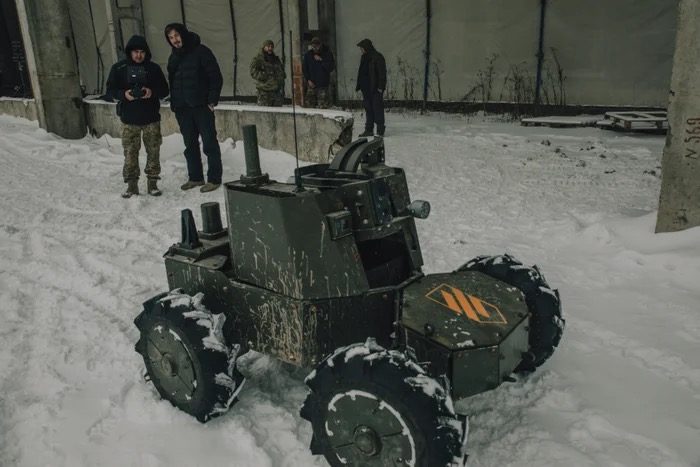
Ukraine is preparing for a major تحول in battlefield strategy, announcing plans to deploy up to 25,000 unmanned ground robots to the front lines as part of its ongoing war with Russia. The initiative, driven by the government of Ukraine, aims to reduce troop casualties, compensate for manpower shortages, and accelerate the modernization of its armed forces.
Officials say the large-scale deployment will focus on replacing soldiers in high-risk roles, including supply delivery, reconnaissance, mine clearance, and casualty evacuation. Rather than eliminating human presence entirely, the strategy seeks to reposition soldiers further from immediate danger while robotic systems handle the most hazardous tasks.
The announcement reflects lessons learned over more than two years of intense combat, during which Ukraine has faced mounting pressure on its frontline forces. Military planners have increasingly turned to technology—particularly drones and robotic systems—to offset disadvantages in personnel and resources. The expansion of ground robots marks the next phase in that evolution.
“These systems are designed to save lives,” a defense official said, emphasizing that robots can operate in environments where survival rates for soldiers are low. “If a machine can do the job, a soldier shouldn’t have to risk their life unnecessarily.”
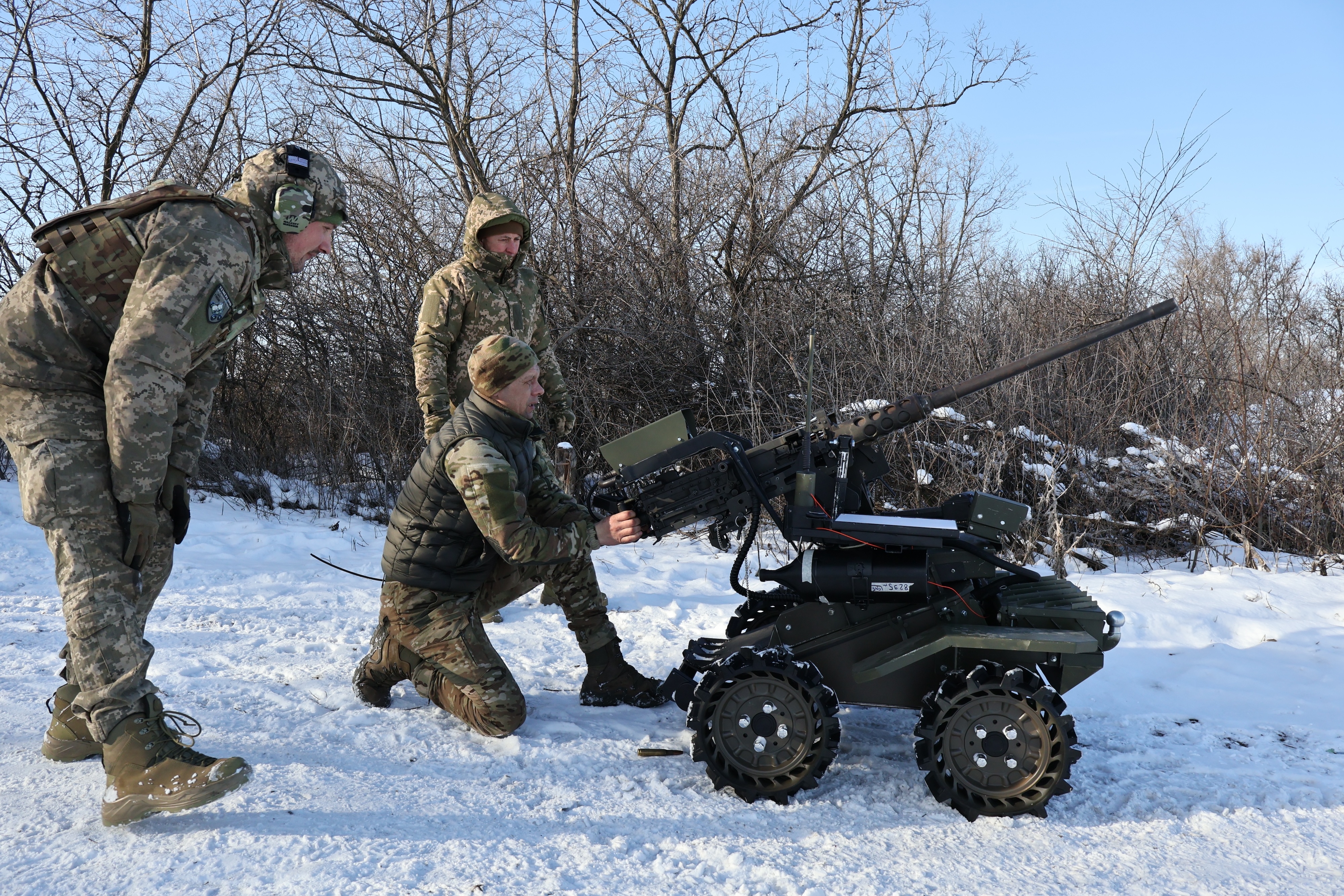
Ukraine has already experimented with robotic systems on a smaller scale. Unmanned ground vehicles, or UGVs, have been used to transport ammunition, deliver food and water, and retrieve wounded soldiers under fire. In some cases, remotely operated robots equipped with weapons have engaged enemy positions, providing cover for advancing troops or defending key areas.
The new plan dramatically expands those efforts. By scaling production and deployment to tens of thousands of units, Ukraine hopes to create a semi-automated battlefield where machines take on routine and dangerous functions, allowing human forces to focus on strategy and coordination.
The robots themselves vary widely in size and capability. Smaller units resemble compact tracked vehicles, capable of navigating rough terrain while carrying supplies. Larger platforms may include mounted weapon systems, surveillance equipment, or advanced sensors for detecting mines and obstacles. Many are designed to be relatively inexpensive and easy to replace, reflecting the realities of a high-intensity conflict where equipment losses are frequent.
A key advantage of these systems is their adaptability. Unlike traditional military hardware, which can take years to design and manufacture, many robotic platforms are built using commercially available components and can be modified quickly based on battlefield feedback. This flexibility has allowed Ukrainian engineers and startups to rapidly iterate on designs, creating machines tailored to specific operational needs.
However, the push toward automation is not without challenges. Most current ground robots rely on remote human operators, making them vulnerable to signal interference, particularly in a war where electronic warfare plays a significant role. Disruptions to communication links can render robots ineffective or even cause them to malfunction.
To address this, developers are working to increase levels of autonomy, enabling robots to perform certain tasks independently. Yet fully autonomous systems remain limited, and ethical concerns surrounding their use continue to spark debate.
Critics warn that the rapid expansion of robotic warfare could blur the line between human and machine decision-making in combat. While Ukraine’s current systems are largely controlled by operators, the long-term trajectory points toward greater automation, raising questions about accountability and the rules of engagement.
There are also logistical hurdles. Deploying 25,000 robots requires not only manufacturing capacity but also infrastructure for maintenance, repair, and operator training. Ensuring that these systems can function reliably in harsh battlefield conditions—mud, extreme temperatures, and constant shelling—will be critical to their success.
Despite these obstacles, the Ukrainian government sees the initiative as essential. With ongoing pressure on recruitment and the need to sustain prolonged operations, reducing dependence on frontline troops has become a strategic priority. Robots offer a way to extend operational capabilities without placing additional strain on human resources.
The move is being closely watched by military analysts around the world, many of whom view Ukraine as a testing ground for the future of warfare. The integration of large-scale robotic systems into active combat could influence how other nations structure their forces and invest in defense technology.
Some experts argue that Ukraine’s approach represents a broader shift toward “human-machine teaming,” where soldiers and robots work together rather than replacing one another entirely. In this model, humans retain control over critical decisions while machines handle execution and support tasks.

Others caution that the proliferation of such technologies could trigger an arms race, with countries rushing to develop their own robotic capabilities. As more advanced systems enter the battlefield, the nature of conflict itself may change, becoming faster, more automated, and potentially less predictable.
For Ukrainian soldiers, the impact is already tangible. The presence of robots on the front lines has begun to alter daily operations, reducing exposure to danger in certain situations while introducing new forms of coordination between human and machine units.
As Ukraine moves forward with its ambitious plan, the success of the initiative will depend on how effectively it can integrate these technologies into its broader military strategy. If successful, the deployment of 25,000 ground robots could mark a turning point—not only in the current conflict but in the evolution of modern warfare.
In a war defined by innovation and adaptation, Ukraine’s embrace of robotic systems underscores a simple but powerful objective: preserving human life while maintaining the capacity to fight.