Nebius to Acquire Eigen AI for $643 Million, Bolstering Inference Capabilities
AI infrastructure company Nebius Group has announced it will acquire startup Eigen AI in a deal worth $643 million, marking a major step in its strategy to strengthen high-performance AI deployment.
The acquisition focuses on enhancing inference—the stage where trained AI models are applied to real-world tasks. As demand for generative AI services grows, efficient inference has become essential for reducing costs and improving speed, especially for enterprise-scale applications.

Founded recently, Eigen AI has quickly built a reputation for developing tools that improve how AI models run after training. Its technology focuses on optimizing GPU usage, reducing computational load, and increasing response efficiency. The startup’s team includes researchers with ties to Massachusetts Institute of Technology, bringing deep technical expertise in model optimization and systems design.
Following the acquisition, Eigen AI’s engineers and researchers will join Nebius, forming a dedicated research hub aimed at advancing inference systems. This move is expected to accelerate Nebius’s development of scalable AI infrastructure, particularly its platforms designed to handle large volumes of real-time AI queries.
Industry observers see the deal as both a technological upgrade and a talent acquisition. As competition intensifies among AI cloud providers, companies are increasingly investing in specialized teams capable of improving efficiency at scale. Inference optimization is emerging as a key battleground, where even small gains can significantly reduce operational costs.
Nebius, which has been expanding its global footprint in recent years, is positioning itself as a major player in the AI infrastructure space. By integrating Eigen AI’s capabilities, the company aims to deliver faster, more cost-effective AI services to businesses worldwide.
The deal is expected to close pending standard regulatory approvals.
Accenture and Adobe Back Netomi’s $110M Series C to Scale Enterprise Agentic CX
Customer experience AI company Netomi has raised $110 million in a Series C funding round backed by Accenture and Adobe, underscoring growing enterprise demand for autonomous, AI-driven customer engagement solutions.
The funding marks a significant milestone for Netomi as it looks to scale its “agentic AI” platform—systems designed not just to respond to customer queries but to independently resolve issues, anticipate needs, and take action across digital channels. Unlike traditional chatbots, agentic AI tools are built to operate with a higher degree of autonomy, enabling faster and more efficient customer support.
Founded in 2015, Netomi has positioned itself as a leader in AI-powered customer experience, serving enterprises across industries such as e-commerce, finance, and travel. Its platform integrates with existing customer support systems to automate high volumes of interactions across chat, email, messaging apps, and voice interfaces, helping companies reduce response times and operational costs.

The involvement of Accenture and Adobe signals a strategic alignment beyond financial backing. Accenture is expected to leverage Netomi’s platform within its consulting and enterprise solutions ecosystem, enabling large-scale deployments for global clients. Meanwhile, Adobe’s participation points to potential integrations with its digital experience and marketing platforms, where personalized, real-time customer engagement is becoming increasingly critical.
Netomi plans to use the new capital to expand its research and development efforts, particularly in advancing proactive AI capabilities that can predict and resolve customer issues before they arise. The company also aims to grow its global footprint and strengthen partnerships with enterprise clients.
As businesses face rising customer expectations and increasing interaction volumes, the shift toward intelligent, autonomous systems is accelerating. Netomi’s latest funding round highlights how agentic AI is emerging as a key driver in the future of enterprise customer experience.
a16z co-leads Segura’s $8M round to use WhatsApp for insurance distribution
Insurance technology startup Segura has raised $8 million in a seed funding round co-led by Andreessen Horowitz and Kaszek, as investors continue to bet on messaging-first infrastructure for financial services.
Founded in 2024, Segura is building a digital layer for insurance distribution that operates directly through WhatsApp, a platform already deeply embedded in everyday communication across Latin America. Instead of requiring brokers or customers to adopt new software, Segura integrates core insurance workflows into chat-based interactions, aiming to reduce friction in a traditionally paperwork-heavy industry.
The platform enables brokers to generate quotes, compare insurance products, process applications, manage renewals, and handle policy documentation entirely within messaging threads. By embedding these workflows into WhatsApp, Segura seeks to make insurance more accessible and responsive, particularly for independent brokers and small agencies that rely heavily on fast communication with clients.

A central component of Segura’s system is its AI assistant, which helps interpret policy details, suggest coverage options, and automate administrative tasks. The company frames this as a “co-pilot” model—supporting brokers rather than replacing them—while improving speed, accuracy, and scalability in customer interactions.
The funding reflects growing investor interest in “agentic” and workflow-oriented AI systems, where software not only responds to queries but actively executes multi-step tasks across business processes. In Segura’s case, this means turning conversational interfaces into operational tools for financial services distribution.
With the new capital, Segura plans to expand its engineering team, deepen integrations with insurance carriers, and scale operations across Latin America. The company is also focused on enhancing its AI capabilities to support more complex underwriting and policy management tasks.
As insurance markets modernize, Segura is betting that the future of distribution will not depend on standalone applications, but on embedding financial workflows directly into the messaging platforms people already use every day.
Nvidia becomes world’s most valuable company at $5 trillion market cap
NVIDIA has reached a historic milestone, briefly touching a $5 trillion market capitalization and becoming the world’s most valuable company. The valuation reflects the company’s dominant position at the center of the global artificial intelligence boom, where demand for advanced computing hardware continues to accelerate.
The surge is driven primarily by Nvidia’s leadership in designing high-performance graphics processing units (GPUs) that power modern AI systems. Once best known for gaming hardware, the company’s chips have become essential infrastructure for training and running large-scale generative AI models used in enterprise software, cloud platforms, scientific research, and consumer applications.
Over the past several years, Nvidia has expanded beyond hardware into a broader ecosystem that includes software frameworks, development tools, and optimized libraries for AI workloads. This integrated approach has strengthened its position in data centers, where cloud providers and AI companies rely heavily on its technology to meet increasing computational demands.
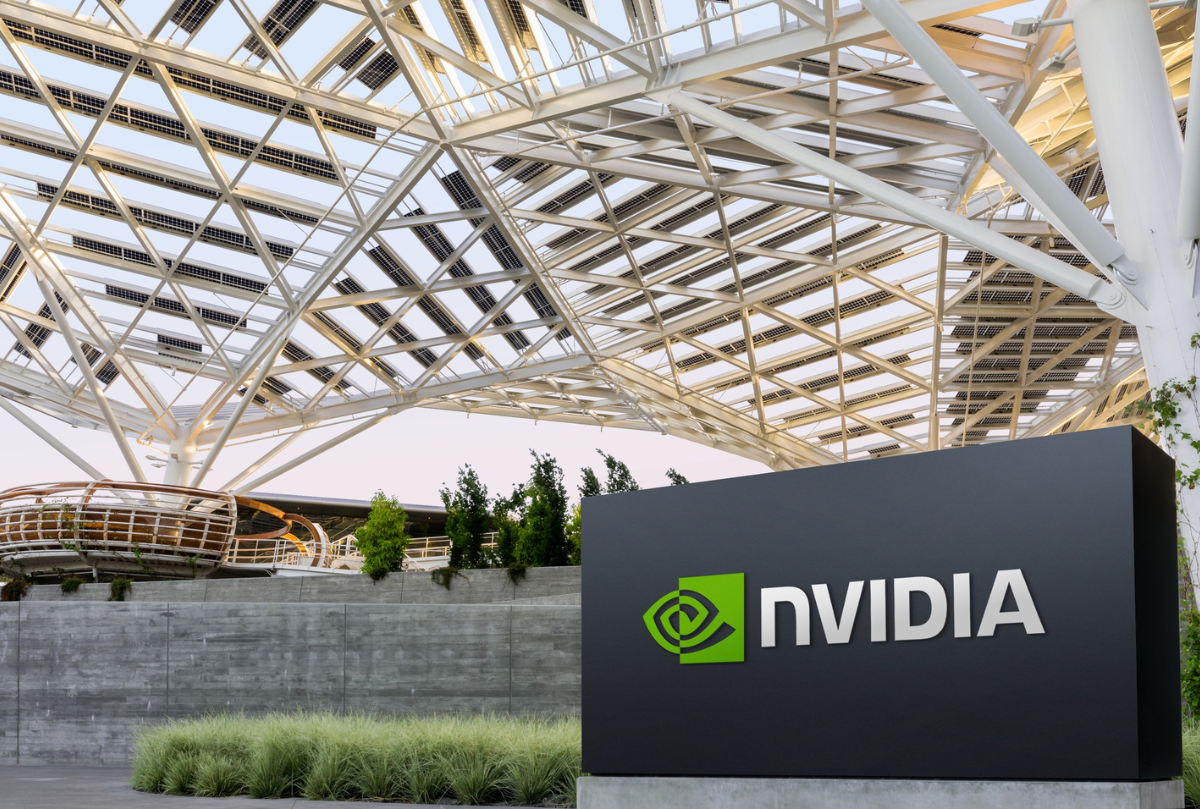
The company’s rapid growth reflects a structural shift in the technology industry. As artificial intelligence becomes embedded across sectors such as healthcare, finance, logistics, and entertainment, compute infrastructure has emerged as one of the most critical layers of the digital economy. Nvidia sits at the center of this transition, effectively supplying the “picks and shovels” for the AI gold rush.
Investor enthusiasm has been fueled by sustained revenue growth and strong forward-looking demand signals from major technology firms expanding their AI capabilities. At the same time, supply constraints in advanced chip manufacturing have added to pricing power and market optimism.
Despite its record valuation, Nvidia faces challenges, including geopolitical risks affecting semiconductor supply chains and rising competition from companies developing alternative AI accelerators. However, its entrenched ecosystem and developer base continue to give it a significant advantage.
The $5 trillion milestone underscores a broader reality: artificial intelligence is no longer just a software revolution, but a hardware-driven transformation reshaping global economic power structures.
Vinted hits €8B valuation in €880M secondary share sale led by EQT
Vinted has reached a valuation of €8 billion after an €880 million secondary share sale led by EQT, marking one of the largest liquidity events in Europe’s consumer internet sector this year.
The transaction does not inject new capital into the company but instead provides liquidity to early investors and employees, reflecting strong demand for stakes in late-stage private tech firms. Secondary sales of this scale are increasingly used by high-growth companies that want to reward stakeholders while delaying a public listing.
Founded in 2008, Vinted operates a peer-to-peer marketplace focused on secondhand fashion and lifestyle goods. The platform allows users to buy and sell pre-owned clothing, accessories, and other items, positioning itself as a major player in the circular economy. Over time, it has expanded beyond basic listings into logistics, payments, shipping integration, and buyer protection services.

The company’s rapid rise has been driven by changing consumer preferences, particularly among younger demographics that prioritize affordability, sustainability, and digital-first shopping experiences. The shift away from fast fashion toward resale and reuse has significantly boosted demand across Europe and other international markets where Vinted operates.
The €8 billion valuation highlights growing investor confidence in digital resale platforms as durable, scalable businesses rather than niche sustainability ventures. Strong network effects—where more buyers attract more sellers and vice versa—have helped Vinted solidify its position in the competitive online marketplace space.
With EQT leading the secondary deal, institutional investors are increasingly viewing resale commerce as a long-term structural trend in retail. Vinted is expected to use its momentum to expand into additional product categories, enhance its logistics infrastructure, and improve trust and safety systems, including fraud detection and item verification.
As global e-commerce evolves, Vinted’s latest valuation underscores a broader shift: secondhand marketplaces are becoming mainstream pillars of digital retail rather than alternative consumption channels.